AI Agents Coordinate Multistep Lab Experiments With Little Human Input, Early Work Shows
A Shanghai team's automated DNA workflow and a Stanford-led commentary point toward self-running labs, but the work is preliminary and the underlying peer-reviewed paper was not found for this report.
Published
Last updated / Fact-checked on
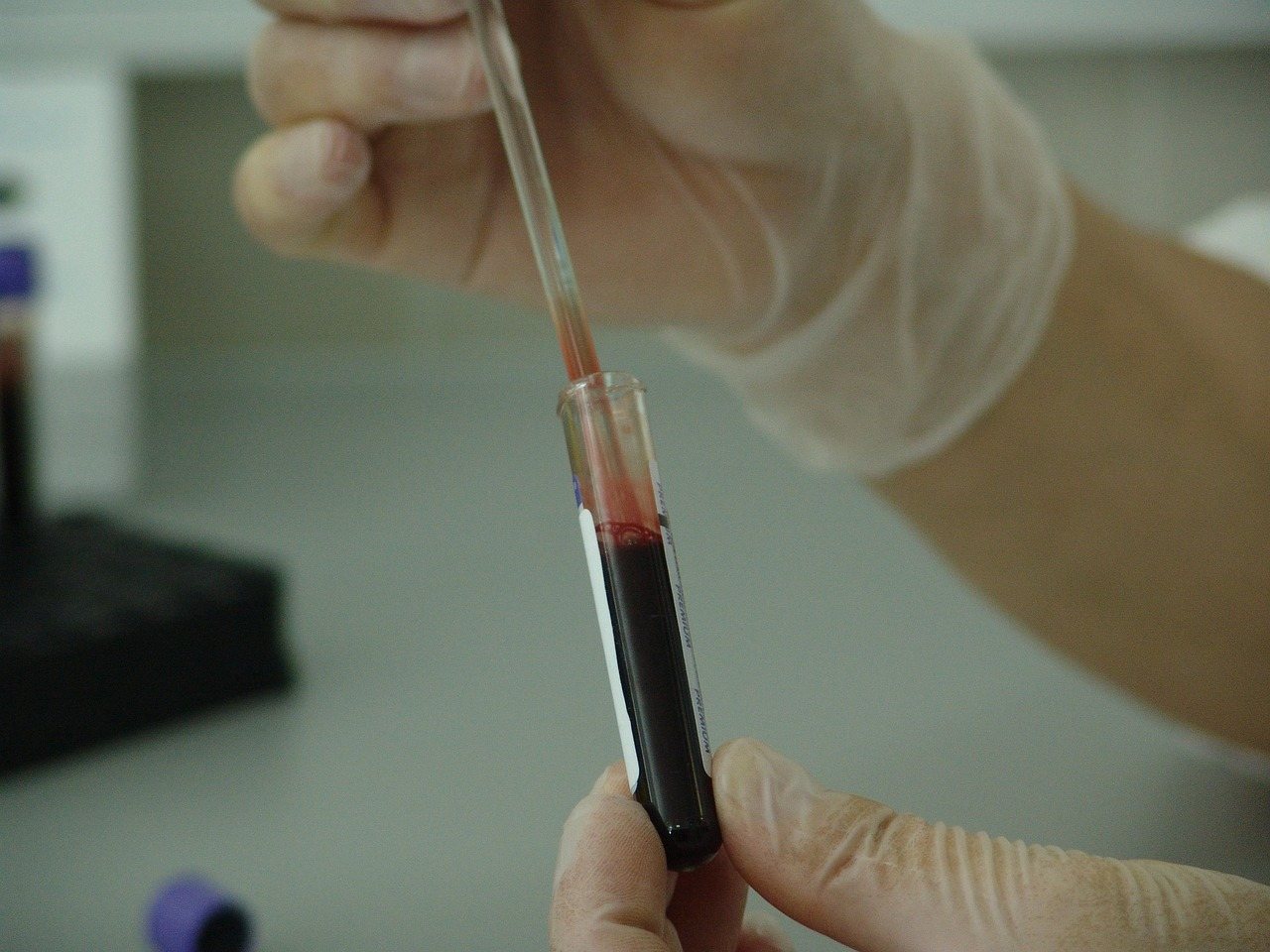
Artificial intelligence systems are beginning to run laboratory work that once required a technician to carry samples from machine to machine. A News & Views piece in Nature Medicine dated November 9, 2026, written by James Zou of Stanford University, describes an AI system that coordinates laboratory instruments to carry out multistep molecular biology experiments with limited human intervention. Coverage from Singularity Hub on November 10 describes a system built by a team at Shanghai Jiao Tong University, which the report calls AutoDNA. In that account, AI agents guide a liquid-handling robot that mixes samples with reagents, moves them between instruments, and runs operations to synthesize, amplify and sequence DNA.
The distinction matters. Most AI tools in biology so far have worked on computational problems, such as predicting protein structures or analyzing sequencing data. The Singularity Hub account says the Shanghai team designed its setup from the ground up for AI control rather than adapting a lab built for people. An outside expert quoted in that coverage, Reshma Shetty of Ginkgo Bioworks, described the work as a teaser of what may be possible. That is a fair summary of where things stand: an early demonstration, not a validated replacement for skilled scientists.
The peer-reviewed paper or preprint behind the Shanghai system was not located for this report. The description here rests on the Nature Medicine commentary's summary and on the Singularity Hub report, which says it draws on Nature's reporting. The full commentary text was not retrieved for this report. Readers should treat the details, including how many steps ran without human help, error rates and reproducibility, as unconfirmed until the primary paper is available.
How the agents fit into the workflow is the central question. In a self-driving lab, software plans an experiment, sends instructions to robots, reads back the results and decides what to try next. Humans set the goal and check the outcome. The value comes from speed and consistency: a machine can repeat a long protocol without the fatigue and small slips that can cost a researcher hours or days. The cost is that a flawed plan can also be repeated quickly, so logging, error checks and human review carry more weight.
The approach has a longer lineage at Stanford. In May 2026, Stanford researchers led by Zou described the Virtual Lab, a system in which multiple AI agents act as a research team. According to Stanford Daily coverage, the Virtual Lab designed 92 candidate nanobodies against evolving COVID-19 variants, and several showed promising results in experimental testing. The design phase took a few days rather than weeks or months, the coverage says, but the agents could not carry out the wet-lab tests themselves, and the researchers said automated robotic labs were the next step. The same reporting noted limits. The agents sometimes missed context, suggested impractical experiments and were too agreeable with one another, according to co-developer Kyle Swanson.
Zou has described a division of labor in interviews with McKinsey. In his account, AI agents are better at combining tools that humans have already built, while human researchers are better at going deep and building new tools. That framing fits the evidence so far. The Shanghai system reportedly relies on existing instruments and chemistry, with AI doing the coordination.
Other groups are working on similar problems. An arXiv preprint describes an agent system called ProtoPilot that generates and executes biological protocols. It reports that wet-lab experts preferred its protocols in blind comparisons and that it was tested on robotic platforms. That work has not been peer reviewed, and its claims should be read as preliminary.
Automated synthesis and sequencing of DNA also raise biosafety and oversight questions. The coverage reviewed did not address these in depth, and a published policy for autonomous labs of this kind was not found for this report.
For medicine, the relevance is indirect for now. Faster design-build-test cycles could shorten early drug discovery, and automated labs could make hard-to-repeat experiments more standard. But the systems described so far work on research tasks, not on patients. Nothing in these reports shows a new treatment reaching people, and nothing here should be read as a clinical result.
What to watch: whether the Shanghai team publishes its methods and data in a peer-reviewed journal or on a preprint server, with independent error rates; whether other groups reproduce automated multistep workflows with different instruments; whether journals and funders set standards for logging, human oversight and biosafety in autonomous labs; and whether the Virtual Lab's experimental hit rates hold up in larger tests.
Sources
- Nature Medicine, News & Views, "AI agents enter the 'wet lab'," November 9, 2026, volume 32, pages 3962-3963, by James Zou. Seen through the Nature machine learning listing page; full article not accessed
- Singularity Hub (Shelly Fan), "AI Agents Ran a Biology Lab. Humans Popped in to Empty the Trash," November 10, 2026
- Stanford Daily, "Stanford researchers develop AI scientists for therapeutic discovery," May 6, 2026
- McKinsey, "James Zou on integrating AI agents into biology R&D and drug discovery" (podcast transcript; date not shown in retrieved text)
- Stanford Medicine, "Agentic AI in biomedical research: What is it and can it expedite science?", July 21, 2026
- arXiv preprint, "A Self-Evolving Agentic System for Automated Generation and Execution of Biological Protocols" (ProtoPilot), arXiv:2606.31763. Preprint, not peer reviewed