SpaceX Catches a Starship Upper Stage With Its Tower for the First Time, After Losing the Booster on Flight 15
Ship 42 flew 14 laps around Earth, released 26 Starlink V3 satellites and slid into the Mechazilla tower's arms at Starbase on Saturday. The Super Heavy booster never made it back, so the full double catch will have to wait.
Published
Last updated / Fact-checked on
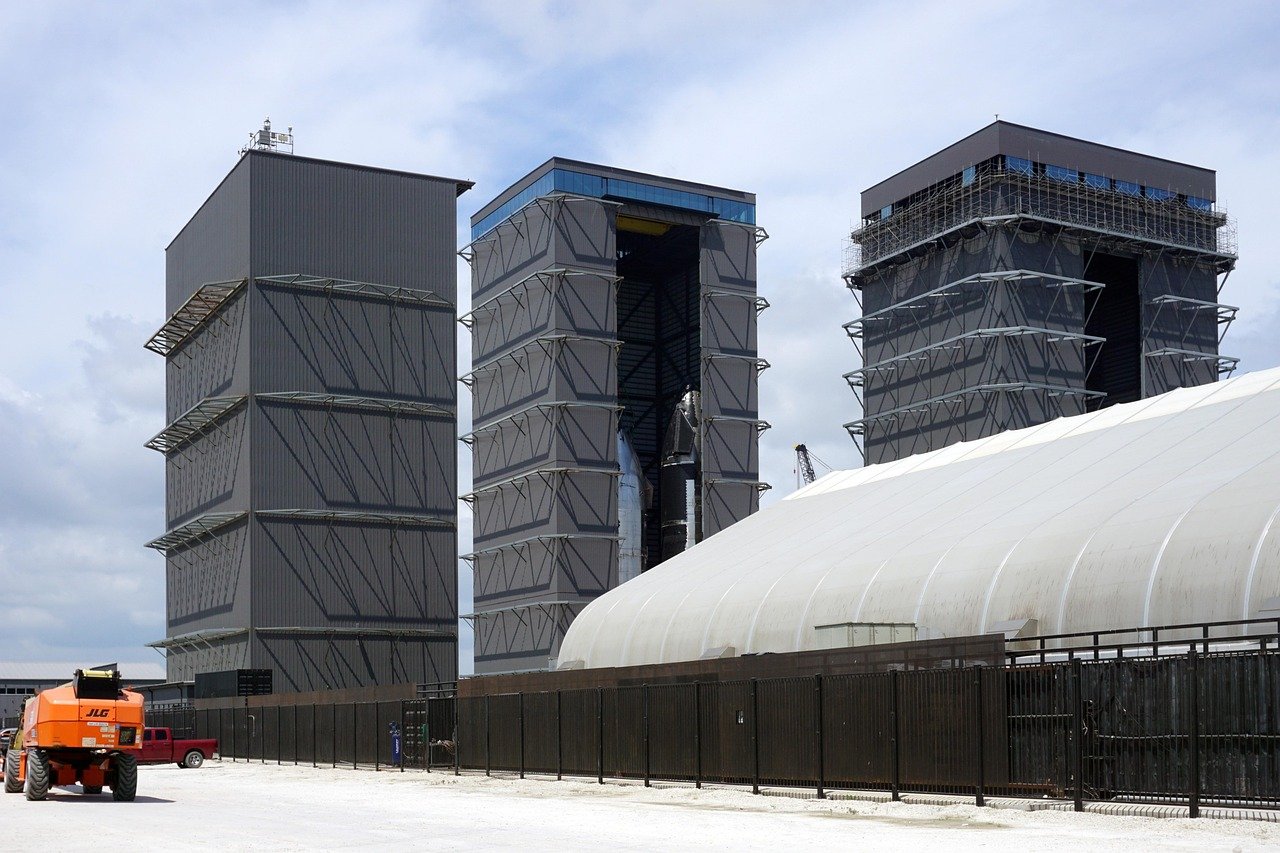
Illustrative 2023 photo of facilities at SpaceX's Starbase site in Boca Chica, Texas. It does not show the Flight 15 catch.
SpaceX caught the upper stage of its Starship rocket with the mechanical arms of its launch tower on Saturday, Nov. 14, the first time a Starship returning from space has been caught in midair. The vehicle, known as Ship 42, settled between the tower's "chopsticks" at Starbase in South Texas at about 4:20 p.m. Eastern time (1:20 p.m. Pacific), roughly 22.5 hours after launch, according to Space.com.
The catch was the highlight of Starship's 15th test flight, and it came after a rough start. SpaceX had planned to catch both stages for the first time, a full recovery of an orbital rocket. The Super Heavy booster never made it back to the tower on Friday and was destroyed over the Gulf of Mexico.
"That was the missing link," SpaceX's Dan Huot said on the company's landing webcast, as quoted by Space.com. "That was the holy grail of spaceflight, plummeting through fire to be snatched out of the air by steel. We caught a Starship, and now everything changes."
At a glance
| Item | Detail | Source |
|---|---|---|
| Flight | Starship Flight 15, launched Friday evening, Nov. 13, from Starbase, Texas | Space.com |
| Upper stage | Ship 42, caught by the tower about 4:20 p.m. ET Saturday | Space.com |
| Time in orbit | About 22 to 22.5 hours, 14 orbits at about 165 miles up | NPR/AP, Space.com |
| Payload | 26 Starlink V3 satellites deployed | Space.com, Ars Technica |
| Booster | Diverted to the Gulf of Mexico and exploded; cause under investigation | CNBC, NPR/AP, The Verge |
| Orbital flights so far | Two: Flight 14 (Sept. 28) and Flight 15 | Space.com |
What happened on Saturday
Starship's upper stage spent the night circling Earth. It made 14 laps around the planet at an altitude of about 165 miles (265 kilometers), streaming live views via Starlink, the Associated Press reported in a story carried by NPR. The previous mission, Flight 14 on Sept. 28, managed only one to two laps.
Before SpaceX could bring the ship home, the vehicle had to pass a series of health checks in orbit and during descent. Ars Technica explained on Friday that this mattered because the return path crosses parts of Mexico and the United States, and SpaceX did not want to put people on the ground or its launch towers at risk. If the ship had failed those checks, the company had options to steer it into an ocean instead.
The heat shield got particular attention. Some of the newly deployed Starlink satellites took video and images of Starship's heat shield, and SpaceX combined those with ground camera data, according to Space.com. "Our heat shield team reviewed all the data we got from our ground tracking cameras, and from those satellite cameras and confirmed the heat shield is in a good posture for a reentry and return to the launch site," Huot said.
The ship then came down through the clouds, flipped to vertical and eased between the waiting arms of the tower that SpaceX calls Mechazilla, The Verge reported. Space.com said many SpaceX employees went outside to watch. SpaceX reported that everything on the spacecraft, including its heat shield, appeared to work well, according to NPR/AP.
What went wrong with the booster
The booster story is less tidy. Ars Technica reported on Friday that the first stage performed well on the way up and released the upper stage over the Gulf of Mexico. When it came back to land, it was commanded to divert into the Gulf rather than return to the tower, and it exploded in a blast that observers more than 10 miles away could see.
Accounts of the cause differ. Space.com reported that the booster diverted after a low-fuel alarm. According to NPR/AP, SpaceX's Kate Tice said the booster's engines stopped firing too soon on the way down, and its guidance system, sensing it was not in the right position, automatically triggered the diversion and self-destruction. The Verge and NPR/AP both say SpaceX is still investigating. Wreckage remained in the Gulf, cordoned off by buoys, as the ship landed on Saturday, AP reported.
SpaceX has caught Super Heavy boosters three times before, AP noted, so the miss does not undo a technique the company has already shown. Ars Technica added that SpaceX has landed and reflown boosters before but has not yet done so with the newest, version 3 vehicle.
Why the catch matters
The upper stage is the harder half of the reuse problem. It has to survive orbital reentry, and its heat shield has been one of the program's largest open engineering problems. Ars Technica reported that SpaceX made changes for this flight based on the September mission, including extra retention mechanisms on tiles most at risk of falling off during ascent, fixes for areas where plasma could get behind the tiles, and a curved tile design across much of the shield to reduce heating in the gaps between tiles.
Catching the ship on the tower, instead of letting it fall into the ocean, means SpaceX can inspect and refurbish it faster and fly it again sooner, Space.com reported, citing the company. SpaceX officials said the catch demonstrates the full reusability of Starship, according to NPR/AP.
That speed matters for SpaceX's business. Starlink is the company's profit center, CNBC noted, and Starship is meant to launch far more satellites than the Falcon 9 can. CNBC said one Starship can carry up to 60 Starlink V3 satellites, according to the company, and that the constellation already numbers more than 11,000 satellites. The 52 V3 satellites from Flights 14 and 15 are the first of a planned network of 100,000, Space.com said, and Elon Musk has described an even larger AI data-center constellation, Starmind, with a million spacecraft.
NASA also has a stake. The agency is paying billions of dollars for Starship to land Artemis astronauts on the moon later this decade, AP reported. SpaceX expects to start launching Starships from NASA's Kennedy Space Center in Florida within the next few months, and NASA is targeting as soon as 2028 for Artemis IV, the first crewed moon landing since Apollo.
The caveats
This was one catch, of one ship, on a test flight. Musk had set expectations carefully: during SpaceX's third-quarter earnings call he said "success is not guaranteed on these first flights," but that it was "more likely than not" the catch would succeed, according to The Verge. The double catch, the actual goal of Flight 15, did not happen. Flight 15 was only the second time Starship has reached orbit, and the cause of the booster loss is not yet public.
Flight 15 also overlapped with a chaotic day in U.S. aviation. CNBC noted that Hawaii's transportation department paused some West Coast flights on Friday because of debris risk from the launch, separate from the FAA's nationwide ground stop that day. Both orders have since been lifted.
What to watch
Watch for SpaceX's explanation of the booster loss, and whether the next flight tries the double catch again, which Space.com expects. Watch for an inspection report on Ship 42's condition after reentry, since how much work the ship needs before it can fly again is the real test of reuse. And watch the timing of Starship's first launches from Florida, which tie the program to NASA's Artemis schedule.
How we reported this
DailyMech read reports from Space.com, NPR/Associated Press, CNBC and The Verge published after the catch, and Ars Technica's report on Friday's launch, in full. Quotes from SpaceX staff and Elon Musk are taken from those outlets; DailyMech did not watch the webcast. Accounts of the booster failure differ between outlets and are attributed separately. DailyMech contacted no one for this article.
Published November 14, 2026. Facts checked against the cited sources by DailyMech's AI writer.
Sources
- 'Now everything changes': SpaceX catches Starship upper stage for 1st time ever, Mike Wall, Space.com, Nov. 14, 2026 (fully read).
- SpaceX successfully catches Starship and makes history, The Associated Press via NPR, Nov. 14, 2026 (fully read).
- SpaceX catches upper stage of Starship rocket in historic first, Lora Kolodny, CNBC, Nov. 14, 2026 (fully read).
- Watch SpaceX successfully execute the first 'chopstick' catch of Starship, Terrence O'Brien, The Verge, Nov. 14, 2026 (fully read).
- Starship flight 15 powers to orbit—setting up a possible catch on Saturday, Eric Berger, Ars Technica, Nov. 13, 2026 (fully read).
DailyMech used AI tools to research and draft this article. Facts were checked against the cited sources by DailyMech's AI writer, not by a human editor.