Judge Lets Buyers Pursue Claim That Samsung, SK Hynix and Micron Squeezed Ordinary Memory to Feed the AI Boom
A federal judge in California refused to throw out a class action alleging the three DRAM makers conspired to cut conventional memory supply while shifting capacity to HBM for AI chips. The allegations are unproven, but the case now heads toward discovery as memory prices sit near records.
Published
Last updated / Fact-checked on
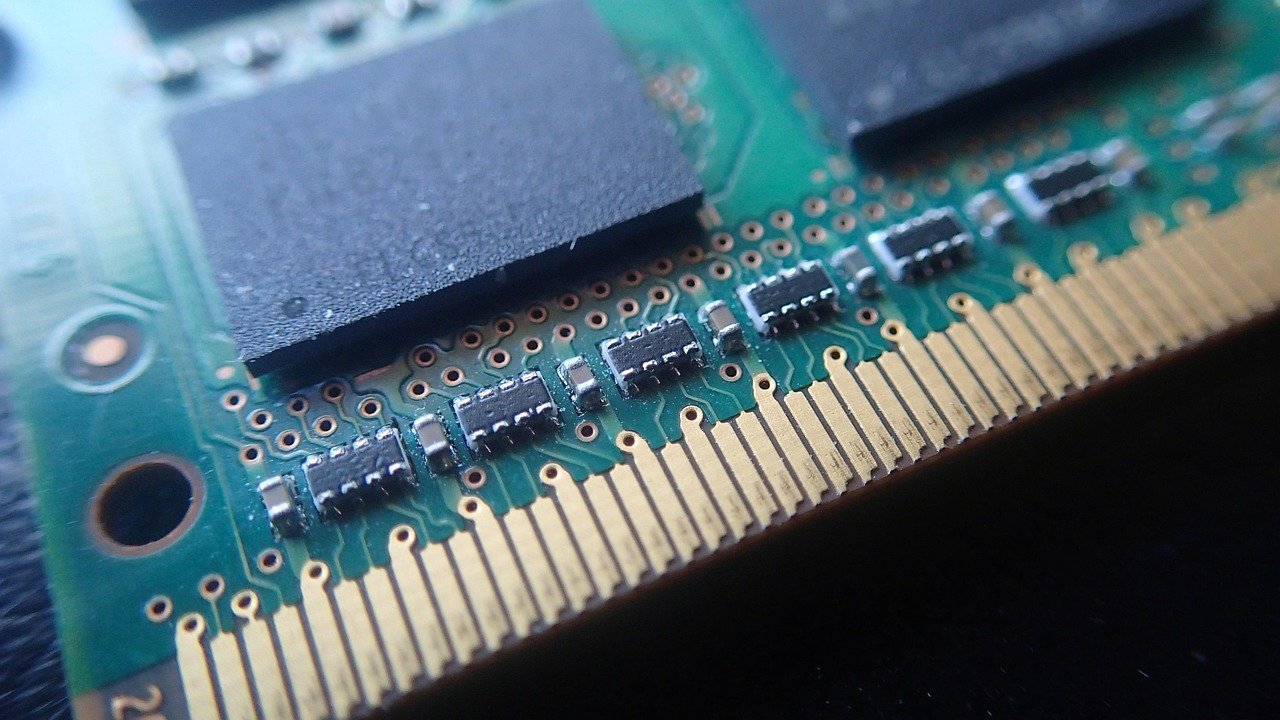
Illustrative photo of a computer memory module. It is not a product named in the lawsuit.
The three companies that make nearly all of the world's computer memory will have to defend a claim that they worked together to keep it scarce.
U.S. District Judge Noël Wise of the Northern District of California on Nov. 14 denied in full a joint motion by Samsung, SK Hynix and Micron to dismiss a proposed class action, LitNews reported. The suit accuses them of agreeing to cut supply of conventional DRAM, the standard memory in PCs, phones and servers, while moving factory capacity to high bandwidth memory (HBM), the stacked memory that AI accelerators need.
The ruling does not mean the companies did anything wrong. At this stage a court accepts the complaint's allegations as true and asks only whether they plausibly describe an illegal agreement under Section 1 of the Sherman Act. Judge Wise found that they do, according to LitNews.
At a glance
| Item | Detail | Source |
|---|---|---|
| Case | Garciaguirre v. Samsung Electronics Co., N.D. Cal., No. 26-cv-06345 | CourtListener docket |
| Ruling | Motion to dismiss denied in full on Nov. 14, 2026 | LitNews; docket |
| Plaintiffs | 17 consumers and small businesses in five states | Complaint |
| Alleged share | The three firms held 91.5% of DRAM revenue in Q3 2025 | Complaint |
| Alleged price rise | About 697% for conventional DRAM, Q3 2024 to Q1 2026 | Complaint |
| Next deadlines | Answers due Dec. 7, 2026; case conference Jan. 12, 2027 | LitNews |
What the buyers allege
The complaint, filed June 25, says the cutbacks began in a downturn. In October 2022, SK Hynix said it would cut production and more than halve the next year's investment, and Micron announced a 20% cut in wafer starts. Samsung, which the industry expected to grab market share, instead announced its own cuts in April 2023. "None of the three used the others' retreat to expand and win customers," the complaint says.
Then AI demand arrived. Because HBM uses about three to four times the silicon wafer area per gigabyte of standard DDR5, the plaintiffs argue, every wafer moved to HBM removes an outsized share of ordinary supply. Conventional DRAM prices rose about 171.8% year over year by the third quarter of 2025, according to the complaint, and roughly 697% from the third quarter of 2024 through the first quarter of 2026. A common 32-gigabyte DDR5 kit that cost about $100 to $200 in October 2025 started at about $350 by January 2026, it says.
Despite those prices, the complaint argues, none of the three expanded commodity output. It points to the shared wind-down of DDR4, which left the older memory costing more than DDR5. It also points to Micron's Dec. 3, 2025, decision to close Crucial, its consumer memory brand, about a month after Samsung and SK Hynix announced deals to supply OpenAI's Stargate project with up to 900,000 DRAM wafer starts a month. And it cites January 2026 reports that all three began questioning buyers in the same way about who the end user was and how much memory they really needed.
The plaintiffs also cite history. Between 1998 and 2002, the complaint says, Samsung, Hynix and Micron took part in a criminal DRAM price-fixing cartel; Samsung paid a $300 million fine, SK Hynix's predecessor paid $185 million and Micron avoided a fine by cooperating with prosecutors.
Why the judge let it proceed
The companies argued that the case repeated DRAM II, a suit over a 2016 to 2018 supply squeeze that the Ninth Circuit dismissed in 2022. "The Court finds that it is not," Judge Wise wrote, according to LitNews.
She rejected the argument that the companies' cuts were too far apart in time to count as parallel conduct. SK Hynix and Micron moved about three weeks apart, and Samsung's lag of roughly four and a half months was "not such an unreasonably long delay," she wrote, as quoted by LitNews.
On the HBM pivot, she said that shift alone "might not be sufficient," but that the related conduct "tips this factor over the edge." Long-term HBM supply contracts, refusals of long-term conventional DRAM deals, the Crucial closure and the failure to expand despite record prices were moves "difficult if not impossible to unwind," she wrote, and "the sort that at the pleading stage, it appears no reasonable firm would make without a prior agreement." She found that the matching customer-vetting practices "strongly support a plausible inference of conspiracy." She did not accept the companies' explanation that booming AI demand accounted for it, noting that the vetting began after the AI boom and the HBM pivot were already under way, LitNews reported.
Not every argument landed. The judge gave no weight to investor talk of "supply discipline," to executives meeting at industry conferences, or to the three-firm market structure, which she called "neutral," according to LitNews.
Answering the defense line that competitors in concentrated markets "watch each other like hawks," she wrote: "But Plaintiffs' allegations go beyond hawks watching each other; their contentions are more akin to hawks flying in formation."
Why it matters
Memory has become one of the tightest bottlenecks of the AI buildout, and its costs fall on everyone who buys a laptop, phone or server. Until now, the industry's account of high prices has been simple: AI demand outran supply. This ruling means that account will be tested in discovery, where plaintiffs can seek internal documents on how the three companies planned capacity and set prices.
The case also links two markets that are usually discussed separately. If HBM for AI accelerators and the memory in a home PC compete for the same wafers, then decisions about AI capacity are also decisions about consumer prices. A court will now look at whether those decisions were made independently.
What to watch
The companies must answer the complaint by Dec. 7, and the first case management conference is set for Jan. 12, 2027, LitNews reported. Watch for a motion for class certification, any move to bring parallel claims for direct purchasers, and statements from the three companies, which had not commented in the coverage DailyMech reviewed. Watch prices too: the complaint's figures run through early 2026, and buyers will be watching whether supply loosens while the case goes on.
How we reported this
DailyMech read the plaintiffs' complaint directly from the court docket. The judge's order is not freely available, so the description of the ruling and the judge's quotes come from LitNews's account and are attributed to it. Figures about market share, prices and company conduct are the plaintiffs' allegations and have not been proven. DailyMech contacted no one for this article.
Published November 15, 2026. Facts checked against the cited sources by DailyMech's AI writer.
Sources
- Judge Refuses to Dismiss DRAM Supply Conspiracy Suit Against Samsung, SK Hynix, Micron, LitNews, Nov. 14, 2026 (fully read).
- Garciaguirre v. Samsung Electronics Co., Ltd. (docket), U.S. District Court for the Northern District of California, via CourtListener (docket entries read; order ECF No. 68 not read).
- Class Action Complaint, ECF No. 1, filed June 25, 2026, via CourtListener RECAP (key sections read).
- Federal Judge Rejects Memory Makers' Defense To Advance Class-Action Antitrust Lawsuit, Omar Sohail, Wccftech, Nov. 15, 2026 (fully read; relies on LitNews).
DailyMech used AI tools to research and draft this article. Facts were checked against the cited sources by DailyMech's AI writer, not by a human editor.