Hong Kong Police Switch On AI Facial Recognition Across Their SmartView Camera Network on Monday
From Nov. 16, officers can search footage from thousands of public cameras for a specific face and get live alerts when a wanted or missing person appears. Police Commissioner Joe Chow says masks won't help suspects avoid it, and that every search needs a senior officer's approval. The network is meant to reach about 60,000 cameras by 2028.
Published
Last updated / Fact-checked on
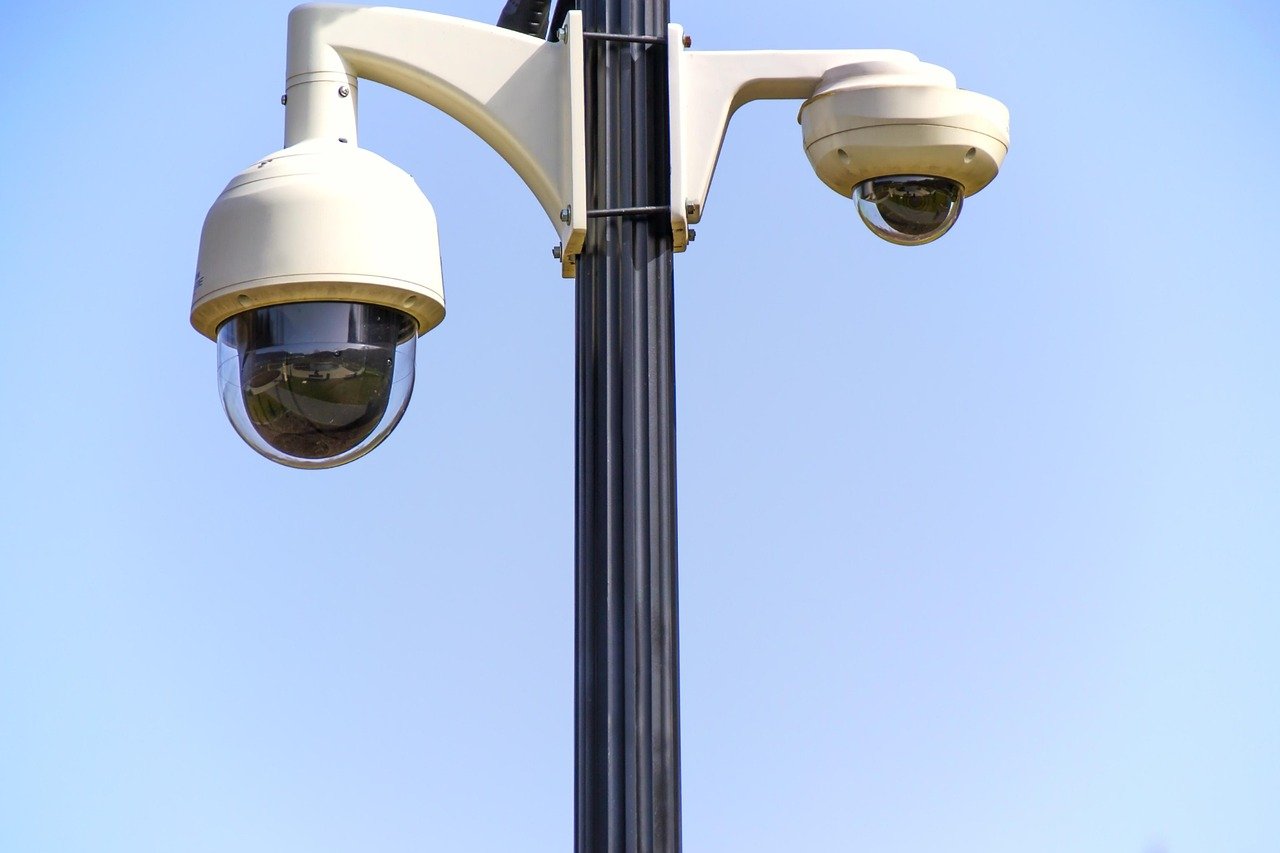
Illustrative photo of dome surveillance cameras on a pole. They are not SmartView cameras and the photo was not taken in Hong Kong.
Hong Kong's police force will turn on artificial intelligence facial recognition across its SmartView public camera network on Monday, Nov. 16, giving officers the ability to pick a person's face out of footage from thousands of cameras and to be alerted in real time when that face appears.
Commissioner of Police Joe Chow Yat-ming confirmed the date on Saturday, Nov. 14, after a passing-out parade at the Hong Kong Police College, The Standard and the South China Morning Post reported. Asked whether people could beat the system by covering their faces, he was blunt. "No matter what methods you use, if you commit a crime, we actually have the capability to arrest you," he said, according to the Post. He described facial recognition as "a safeguard for law-abiding citizens and a form of surveillance against those who attempt to commit crimes."
On Sunday, Nov. 15, Chow went on television to address the other side of the question: privacy. Officers will need approval before they use the new function, he said, and approval will be given only when an investigation needs it, The Standard reported.
At a glance
| Item | Detail | Source |
|---|---|---|
| Start date | Monday, Nov. 16, 2026 | Police Commissioner Joe Chow, via The Standard |
| What it does | Searches past footage for a person; live alerts when a target is seen | Police, via Biometric Update / SCMP |
| Approval | Inspector rank or above, linked to set purposes | Police, via SCMP and Biometric Update |
| Footage kept | Up to 31 days | Biometric Update |
| Face-match records kept | Up to 180 days | SCMP, Biometric Update |
| Network today | About 5,000 police cameras plus about 6,000 third-party feeds | The Standard |
| Target | About 60,000 cameras by 2028 | The Standard |
How the system will work
SmartView is a government-led camera program run by the police. It started in 2024 with cameras at known crime blackspots and busy public spaces, according to The Standard. Its first phase ended late last year with about 5,000 police cameras across 18 districts, connected to roughly 6,000 more feeds from other government departments and public bodies.
Facial recognition adds two capabilities, as police described them in early November and Biometric Update summarized. The first is a search tool. Officers can look for a particular person across historical footage within a set time window. The second is a live function. It alerts police when the network spots a missing person or a "person of interest."
Police say the face matching will not run continuously on every camera. It will be switched on for specific searches, and the force has cited limits on computing resources as one reason, according to Biometric Update. Eric Leung Ming-leung, a senior superintendent in the force's operations wing, said earlier this month that using AI "would cut the time we spend reviewing the closed-circuit television footage to track down target persons," the Post reported.
The system already uses AI for other jobs, such as counting people and reading licence plates, Biometric Update reported.
The safeguards police are promising
The rules police have described rest mainly on internal approval. Every facial recognition search must be signed off by an officer of inspector rank or above, Biometric Update reported, citing the Post. Each search must be tied to a stated purpose, such as preventing or detecting crime, public safety or national security, and officers must justify how wide the search is.
Ordinary footage will be kept for up to 31 days. Facial recognition records, which include images, timestamps and locations, can be kept for up to 180 days to support investigations.
Police say SmartView cameras record only public areas and that its operating procedures are based on privacy impact assessments carried out in consultation with Hong Kong's privacy regulator, according to Biometric Update. The regulator, the Office of the Privacy Commissioner for Personal Data, said in general terms that anyone collecting personal data, including through facial recognition, must follow the city's privacy law.
What police will not share is how well the system works. When reporters asked on Saturday whether it could identify people wearing masks or disguises, Chow said the force would not disclose technical details or limits, so that people with criminal intent could not use that information to avoid being caught, The Standard reported. No accuracy rates, error rates or vendor names have been published in the reports DailyMech read.
Bigger, and reaching into private property
The camera count is set to climb fast. Under the 2025 Policy Address, the second phase of the program aims to add more than 20,000 cameras a year, building a network of about 60,000 cameras across the city by 2028, The Standard reported.
The network is also moving beyond government cameras. Police said at least four shopping malls have agreed to connect their systems, with the first links expected by the end of 2026, Biometric Update reported. Chow said on Sunday that SmartView already includes cameras at some malls and that he hopes more organizations will join once they understand its purpose. Malls must put up general CCTV notices, but police say telling the public that their cameras feed SmartView will be voluntary, according to Biometric Update.
Chow also pointed to other plans in the policy address, including a central drone management system with 200 drone docks around the city that would let police send drones quickly to incidents, The Standard reported.
What police say it has achieved
Police credit SmartView with helping solve serious crimes, though the figures vary by source and date. The Standard, citing police records, said footage from the network had helped solve 1,659 criminal cases as of June 30, 2026, including murder, robbery and wounding. Biometric Update reported police figures of nearly 2,200 cases solved and more than 2,800 arrests since launch. On Sunday, Chow said the system's video analysis had helped solve recent robberies and could help find elderly people with dementia who go missing.
Why it matters
Hong Kong is joining a growing list of police forces using face matching on public cameras, but its approach combines several things that are usually debated separately: a very large and growing camera network, live alerts as well as after-the-fact searches, connections to private cameras, and national security listed as an approved reason for a search. The checks described so far are internal approvals and retention limits set by the police themselves. None of the reports DailyMech read mention a court warrant or an independent body reviewing individual searches.
For the AI industry, the lack of published performance data is the key gap. Face matching systems can make mistakes, and error rates can differ across lighting, camera angle and face coverings. Without numbers, the public has only the commissioner's word that masked suspects can be found and that innocent people won't be flagged.
What to watch
Watch for how many searches police run once the system is live and whether the force publishes any figures on approvals, matches or errors. Watch for which malls and private operators connect their cameras, whether people are told, and whether the privacy regulator says anything more specific. The city also hosts the INTERPOL General Assembly from Nov. 30, Chow said, which will put Hong Kong's policing in front of an international audience.
How we reported this
DailyMech read The Standard's reports on Commissioner Joe Chow's Saturday and Sunday remarks and Biometric Update's summary of the operating rules in full. The South China Morning Post's Nov. 14 and Nov. 6 reports were read only up to their paywalls, and the details taken from them are attributed. Figures on cases solved differ between sources and are given with their sources. Police have not published accuracy data, and DailyMech contacted no one for this article.
Published November 15, 2026. Facts checked against the cited sources by DailyMech's AI writer.
Sources
- Police to activate facial recognition on SmartView security cameras next week, The Standard, Nov. 14, 2026 (fully read).
- Police chief emphasizes privacy safeguards over new AI surveillance function, The Standard, Nov. 15, 2026 (fully read).
- Hong Kong police to activate AI facial recognition across surveillance network, William Yiu, South China Morning Post, Nov. 14, 2026 (read to paywall).
- Hong Kong police to enable AI facial recognition on CCTV network this month, South China Morning Post, Nov. 6, 2026 (read to paywall).
- Hong Kong to activate AI facial recognition across expanding SmartView network, Biometric Update, Nov. 10, 2026 (fully read).
DailyMech used AI tools to research and draft this article. Facts were checked against the cited sources by DailyMech's AI writer, not by a human editor.