LG Signs Up to Help Write Korea's Humanoid Safety Tests, and Will Put Its Own CLOiD Robot Through Them Before a Walking Robot Debuts Next Year
LG Electronics and the Korea Institute for Robot Industry Advancement agreed to build safety and usability evaluations for humanoid robots. LG will help set up the institute's new humanoid safety certification center, work on national and international standards, and seek a pilot safety certification for CLOiD ahead of a bipedal robot built on Nvidia's reference design in early 2027.
Published
Last updated / Fact-checked on
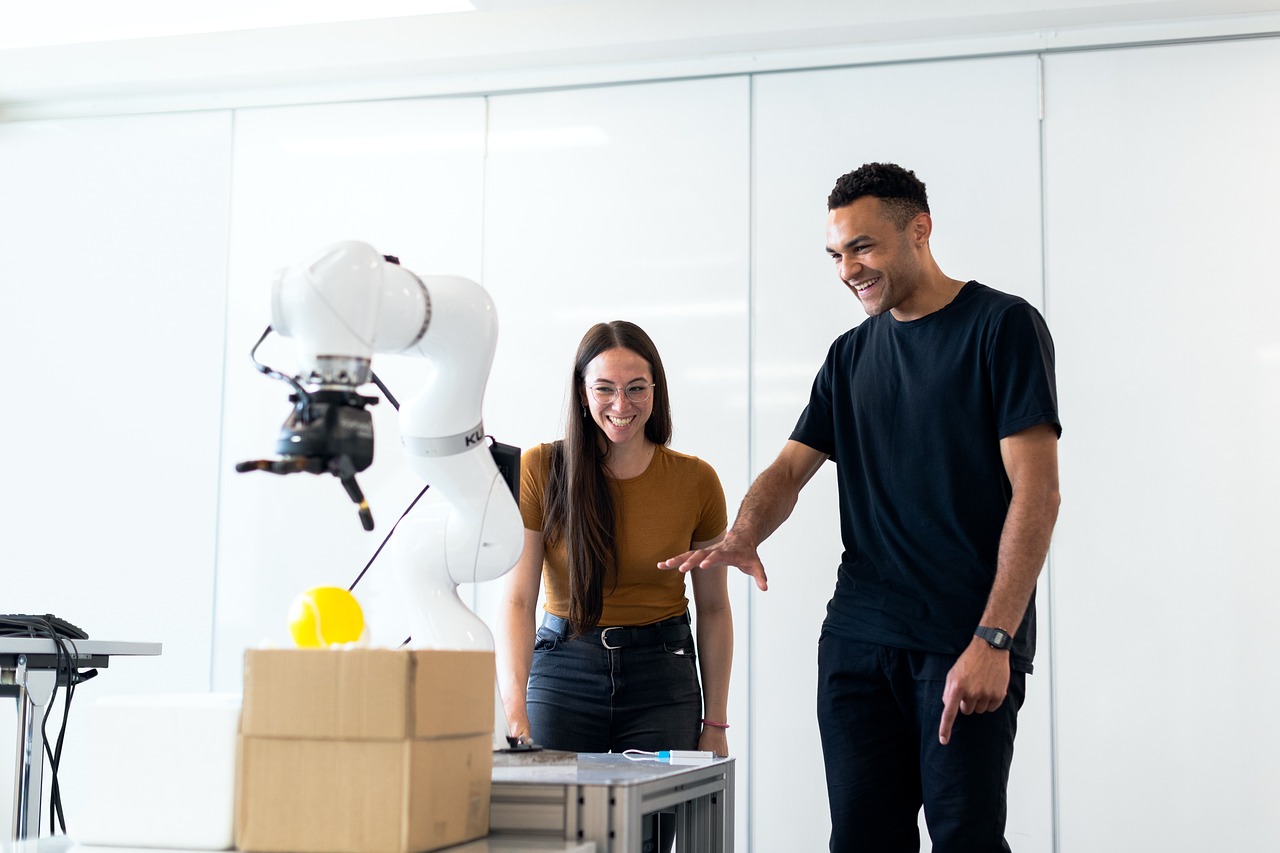
Illustrative photo of engineers testing a robot arm in a lab. It does not show LG's robots or KIRIA's certification center.
LG Electronics wants its humanoid robots to arrive with a safety record already attached. The South Korean company said on Monday, Nov. 16, Seoul time, which was Sunday evening in the United States, that it has signed an agreement with the Korea Institute for Robot Industry Advancement (KIRIA) to build ways of testing humanoid robots for safety and usability, and to help write the standards those tests will be based on.
The memorandum of understanding was signed on Friday, Nov. 13, at LG Twin Towers in Yeouido, Seoul, according to LG's newsroom and Korean business outlets. KIRIA president Cho Young-hun and Kim Chang-min, executive vice president and head of LG's Quality Management Center, attended.
The deal arrives while LG is building a two-legged humanoid on Nvidia's reference platform, which it aims to unveil in the first quarter of 2027, ChosunBiz and Aju Press reported.
At a glance
| Item | Detail | Source |
|---|---|---|
| Parties | LG Electronics and the Korea Institute for Robot Industry Advancement (KIRIA) | LG |
| Signed | Nov. 13, 2026, LG Twin Towers, Seoul; announced Nov. 16 KST | LG, ChosunBiz |
| LG's role | Help build the evaluation system for KIRIA's humanoid robot safety certification center | LG, Asia Business Daily |
| Standards | Joint work on national and international humanoid standards | LG |
| Pilot | Domestic pilot safety certification for LG humanoids, including CLOiD | LG |
| Next robot | Bipedal humanoid based on Nvidia's reference robot, targeted for Q1 2027 | LG, Aju Press |
What the agreement covers
The two sides agreed to work together on raising the quality of humanoid robots and on building a system to evaluate their safety and usability, according to LG's release.
LG's first job is to help KIRIA set up the evaluation system for its Humanoid Robot Safety Certification Center, the Asia Business Daily reported. The company will also work with the institute on developing national and international standards for humanoid robots.
Then LG will put its own machines through the process. It plans to seek a domestic pilot safety certification for its humanoid robots, including LG CLOiD. The aim, LG said, is to have safety capabilities checked objectively by a specialist body, gain trust in safety and quality early, and get ready for commercial launches.
LG did not say what the tests will measure, when the certification center will be ready or when CLOiD might be certified. No money was mentioned.
Why LG is doing this now
The timing is tied to LG's own robot plans. LG is speeding up development of its bipedal Nvidia reference robot ahead of the planned first-quarter reveal, according to LG's release, and the company wants safety and quality built in from the start of development rather than added later.
ChosunBiz explained why that matters for humanoids in particular. Because these robots share space with people at home and on factory floors, things such as avoiding collisions and keeping motion stable are seen as key hurdles to selling them. Aju Press made a similar point: unlike industrial robots working in controlled settings, humanoids are meant to work beside people, which makes safety testing harder.
"Through our collaboration with the Korea Institute For Robot Industry Advancement (KIRIA), we will proactively strengthen the safety and quality competitiveness of Humanoid Robots and establish ourselves as a robot brand customers can use with confidence," Kim said, in the translation published by ChosunBiz.
KIRIA's Cho said trust was the precondition for growth. "To expand Humanoid Robots into daily life and industrial sites, it is crucial to build trust in their safety and quality," he said, according to ChosunBiz, adding that the institute would reflect companies' experience in its evaluation framework.
LG's wider robot push
LG is treating robotics as a future growth business built on what it calls physical AI. The company has expanded from industrial and commercial robots into home robots, and it makes key robot parts itself, including actuators, the drive components that move a robot's joints, according to the Asia Business Daily.
It also runs the LG Data Factory, which collects and manages the large amounts of data needed to train and run robots. In August, CLOiD was shown there learning a washing machine manufacturing process, according to photo captions in LG's release. LG says it wants to become a "total robotics solutions provider" with both hardware and software.
A wider move toward rules
LG is not the only robot maker planning for certification. In Europe, the new Machinery Regulation replaces the Machinery Directive from Jan. 20, 2027, and adds requirements for machines with self-evolving behavior and for those working close to people, Humanoids Daily reported earlier this month. A robot cannot be sold as a finished machine in the EU until it carries the CE mark. Swiss startup Embodied AI, for example, has said it plans to get its wheeled factory robot CE-marked in 2027, the same outlet reported.
The common thread is that humanoids are moving from demos toward sales, and buyers and regulators will want proof that they are safe around people. A maker that helps design the tests also gets an early look at what will be asked of it.
Why it matters
For now this is a memorandum of understanding, not a certification. But it shows how South Korea plans to handle humanoid safety: through a dedicated humanoid safety certification center run by a specialist robot-industry institute, with big manufacturers helping shape the rules.
That has two sides. LG's engineers know what humanoids can and cannot do, which can make the tests more practical. But a company that helps write a test it will later take raises questions of independence, and LG and KIRIA have not said how they will keep the two roles apart.
If LG's walking robot appears in the first quarter with a pilot certification behind it, the company will be able to tell customers something few humanoid makers can yet: that an outside body has checked it.
What to watch
Watch for details on the safety certification center and its tests, whether other Korean robot makers sign similar agreements, and whether LG's bipedal robot is unveiled on schedule with any safety certification.
How we reported this
DailyMech read LG Electronics' Korean-language newsroom release and English reports from ChosunBiz, The Asia Business Daily, The Herald Business and Aju Press, all published on Nov. 16 Seoul time. Quotes are the English translations ChosunBiz published. The context on European rules comes from an earlier Humanoids Daily report. DailyMech contacted no one for this article.
Published November 15, 2026. Facts checked against the cited sources by DailyMech's AI writer.
Sources
- LG전자, 한국로봇산업진흥원과 손잡고 휴머노이드 로봇 품질 경쟁력 강화 나선다 (LG Electronics teams up with KIRIA to strengthen humanoid robot quality competitiveness), LG Electronics Newsroom, Nov. 16, 2026 (fully read; Korean).
- LG, KIRIA sign MOU to bolster humanoid robot safety and quality, ChosunBiz, Nov. 16, 2026 (fully read).
- LG Electronics, Korea Institute for Robot Industry Advancement to Strengthen Humanoid Robot Quality and Safety, Kim Jinyeong, The Asia Business Daily, Nov. 16, 2026 (fully read).
- LG Electronics, Korea Robot Industry Promotion Institute team up to boost humanoid robot safety, Lee Jeong-wan, The Herald Business, Nov. 16, 2026 (fully read).
- LG moves to test humanoid robot safety ahead of 2027 debut, Candice Kim, Aju Press, Nov. 16, 2026 (fully read).
- Swiss Startup Embodied AI Unveils AIR, a Wheeled Robot Built to Work Beside Factory Staff Without a Cage, Pontus Armini, Humanoids Daily, Nov. 6, 2026 (fully read; background).
DailyMech used AI tools to research and draft this article. Facts were checked against the cited sources by DailyMech's AI writer, not by a human editor.