UBTech and MetaX's Robot-Chip Startup Xilect Raises 500 Million Yuan Before Its First Chip
The angel round values the months-old company at 4 billion yuan. Xilect wants a single on-robot processor that handles perception, decisions and motion control, with partner test platforms in 2027 and a first chip in 2028.
Published
Last updated / Fact-checked on
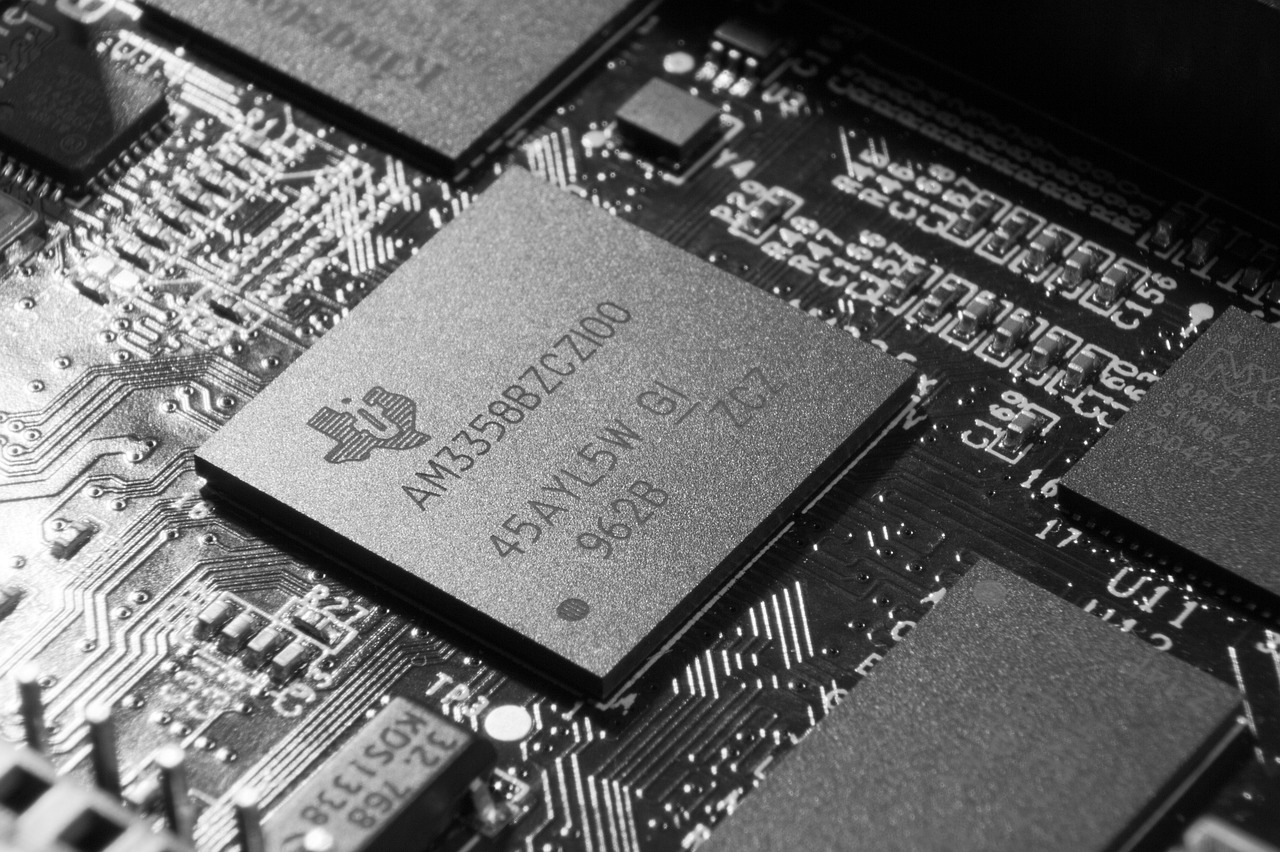
Illustrative photo of a Texas Instruments processor on a small computer board. It is not a Xilect chip, which has not yet been built, and is not used in any UBTech robot.
Xilect, a Chinese startup designing processors to run inside robots, has raised 500 million yuan in an angel round, a large sum for a company that has not yet released a chip. The startup was set up by humanoid robot maker UBTech Robotics and GPU designer MetaX, together with a third backer, Fenglong.
The round gives Xilect a post-money valuation of 4 billion yuan, according to 36Kr, which first reported the deal on Nov. 12 Beijing time, and the auto-industry outlet Gasgoo. 36Kr said the round was jointly led by GGV Capital and Matrix Partners China, with several other institutions joining. RoboticsIntl put the raise at roughly $70 million at current exchange rates. English-language reports from TechNode, Gasgoo and RoboticsIntl followed on Friday, Nov. 13.
At a glance
| Item | Detail | Source |
|---|---|---|
| Company | Xilect (Chinese name Xixuan Chuangzhi) | 36Kr; TechNode |
| Founders | UBTech Robotics, MetaX and Fenglong; founded May 2026 | Gasgoo; 36Kr |
| Round | 500 million yuan angel round | 36Kr; TechNode |
| Valuation | 4 billion yuan post-money | 36Kr; Gasgoo |
| Leads | GGV Capital and Matrix Partners China | 36Kr |
| Product | A system-on-chip combining perception, decision-making and motion control on the robot | TechNode; Gasgoo |
| Timeline | Partner development platforms in 2027; first chip in 2028 | TechNode; Gasgoo; 36Kr |
What Xilect is building
Xilect is designing what 36Kr and Gasgoo describe as an integrated "large-and-small-brain" chip, or in 36Kr's translation, a "cerebrum-cerebellum integrated" SoC. In robotics shorthand, the "large brain" handles perception, understanding and planning, while the "small brain" handles fast, low-level motion control. Today those jobs are often split across separate computers in a robot.
TechNode said the planned system-on-chip combines multimodal perception, decision-making and motion control on the robot itself, and that Xilect's software toolchain is meant to help robot makers run their existing AI models on the platform. Gasgoo reported that the company's stated development goal is to surpass Nvidia's Thor, the chip at the heart of Nvidia's current robotics computing platform.
Gasgoo said Xilect is still working on the architecture of its main control chip. Its first targets are robots working in semi-structured environments, places with some order but not the fixed layout of a traditional factory cell. The company describes a general-purpose edge computing platform built around robots' needs for perception, understanding and autonomous decisions across different tasks.
Where the money goes
The company says the funds will pay for developing its core chips and computing platforms, building software toolchains and expanding its research team, according to Gasgoo. It also plans joint validation with robot makers and industry customers ahead of mass production and delivery. TechNode said the startup will test its platform with robot manufacturers.
The timeline is long. Under its roadmap, Xilect plans to give industry partners development and verification platforms in 2027 for adaptation and testing, and to launch its first SoC with a full embodied-intelligence solution in 2028, according to all three outlets.
Why a robot maker wants its own chip
The pairing behind Xilect is the story. Gasgoo said the company draws on MetaX's experience in GPU architecture, chip engineering and software ecosystems, and on UBTech's experience with robot hardware, system integration and real-world deployments. The idea is to bring a robot's physical requirements into the chip's design from the start, balancing the needs of AI models against power use, interface compatibility and how the system is deployed.
RoboticsIntl argued that this gives Xilect something most chip startups lack: a customer with shipping robots from day one. It also noted the risk that a chip tuned closely to one company's robots could struggle to win other robot makers. Many humanoids today combine a Jetson-class module for heavy AI inference with separate hardware for real-time control, the outlet said, an approach it called workable but costly and power-hungry.
There is also a supply-security angle. RoboticsIntl noted that MetaX belongs to a group of Chinese chipmakers building domestic alternatives as U.S. export controls restrict access to leading Nvidia and AMD parts, and that Beijing has made domestic robotics and domestic chips twin priorities. The same week, a separate forensic report argued that several Chinese AI labs had gained access to export-controlled Nvidia Blackwell chips, a reminder of how much China's AI industry still leans on U.S. hardware.
The hard part
Raising money is the easy step. RoboticsIntl pointed out that Xilect has announced no tape-out and that designing a competitive processor is a multi-year, capital-heavy effort, especially if access to advanced manufacturing stays constrained. It also argued that software may be the steeper climb, because Nvidia's hold on robotics rests heavily on CUDA, its simulation tools and its developer ecosystem. Persuading outside robot makers to move their perception and control software to a new architecture is very different from serving a sister company.
What to watch
The near-term signals are concrete. Watch for details of Xilect's chip architecture and manufacturing process, which would show how realistic the 2028 date is. Watch whether robot makers beyond UBTech sign on as test partners in 2027, which would show whether Xilect becomes a merchant supplier or an in-house one. And watch Nvidia's response: a startup openly aiming past Thor is a direct challenge to the company's plan to own the robot "brain."
For the robotics industry, Xilect is a bet that humanoid and service robots will ship in large enough numbers to justify chips built only for them. That bet now has 500 million yuan behind it, and no silicon yet.
How we reported this
DailyMech read 36Kr's newsflash and the reports from Gasgoo, TechNode and RoboticsIntl in full. The lead investors come from 36Kr only, and the Nvidia Thor goal and founding date from Gasgoo only. Xilect's own Chinese-language statement was not read directly. Analysis attributed to RoboticsIntl is that outlet's view. DailyMech contacted no one for this article.
Published November 13, 2026. Facts checked against the cited sources by DailyMech's AI writer.
Sources
- "Xixuan Chuangzhi" has secured 500 million yuan in its angel round of financing., 36Kr, Nov. 12, 2026, Beijing time (fully read).
- UBTECH, MetaX Launch Chip Venture; Angel Round Raises 500 Million Yuan at 4 Billion Valuation, Gasgoo, Nov. 13, 2026 (fully read).
- MetaX and UBTech-backed robotics chip startup Xilect raises RMB 500 million, TechNode, Nov. 13, 2026 (fully read).
- Xilect Raises RMB 500M Angel Round for Robot Chips From MetaX, UBTech, RoboticsIntl, Nov. 13, 2026 (fully read).
DailyMech used AI tools to research and draft this article. Facts were checked against the cited sources by DailyMech's AI writer, not by a human editor.