Drogue Raises $20 Million to Run Floating AI Data Centers on the Ocean's Own Heat
The six-month-old Washington, D.C., startup plans to put a multi-megawatt ocean thermal energy conversion plant and servers on a converted ship by early 2028, betting that the sea can sidestep the grid delays slowing AI buildouts on land.
Published
Last updated / Fact-checked on
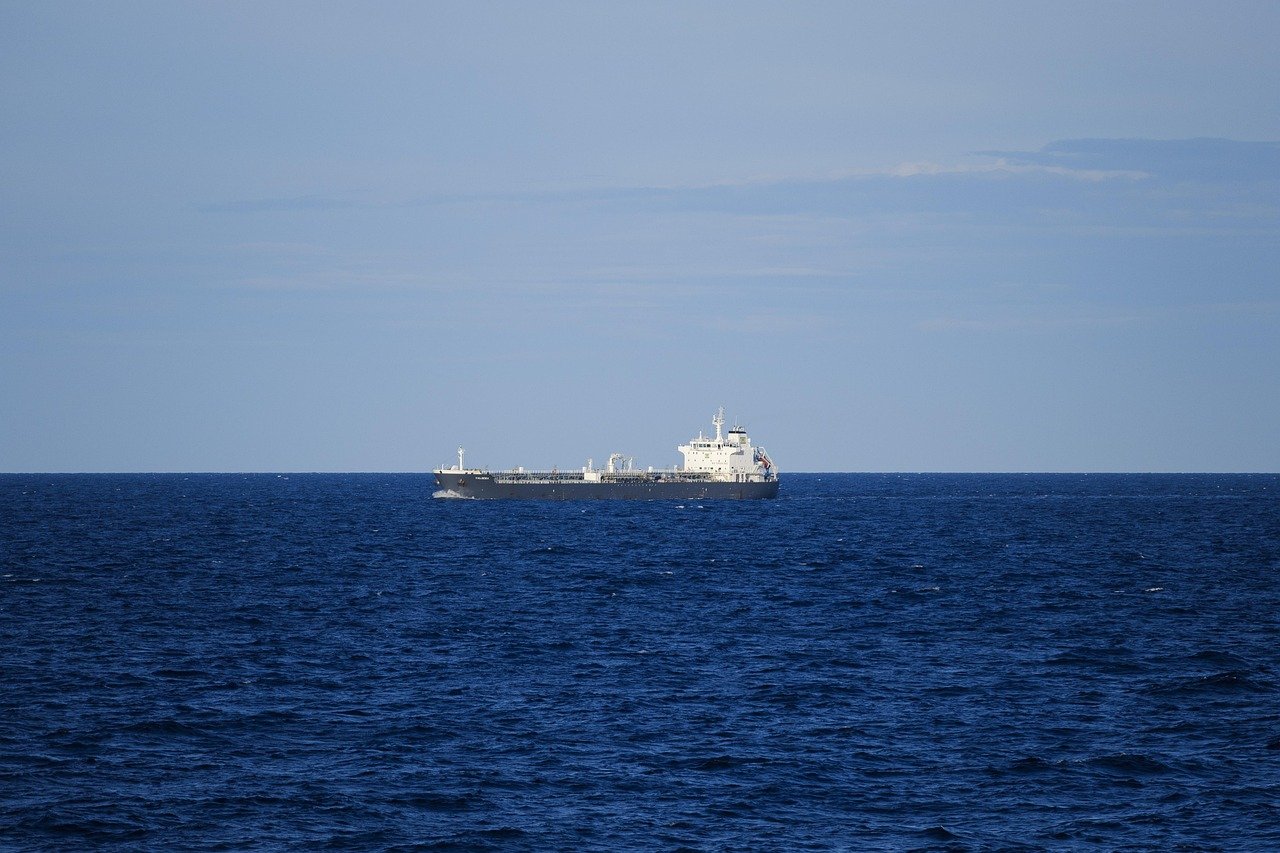
Illustrative photo of an oceangoing tanker; it is not a Drogue vessel or prototype.
The AI industry's hunt for electricity has already sent data center planners to gas plants, nuclear restarts and, in some proposals, orbit. A new startup called Drogue wants to try the open ocean instead, generating power from the temperature difference between warm surface water and the cold deep sea and using it to run servers on floating platforms.
Drogue, founded six months ago in Washington, D.C., told TechCrunch in an exclusive report published Friday, November 13, that it has raised $20 million. Investors include XYZ Venture Capital, Toyota Ventures, Tamarack Global, Dream, FDVC, Garuda Ventures, Flexcap, Boost VC and Slow Ventures, among others. The company did not disclose a valuation or the type of round in the report.
The plan: a ship first, platforms later
According to TechCrunch, Drogue has used its first six months to design a multi-megawatt prototype that will be installed on a conventional oceangoing ship and sent to sea in early 2028. Later versions would sit on floating structures closer in form to offshore oil platforms. Each vessel would stay at sea for about a decade, founder and chief executive Sam Sipe said.
The company says it already holds "approval in principle," a preliminary sign-off, from the American Bureau of Shipping, the classification society that sets and checks safety standards for vessels. It is now in the process of buying its first ship.
Sipe's pitch is about speed rather than novelty. "The data center industry is a real estate game, and so they're playing on 8- to 10-year timelines, including interoperability with utilities and [independent system operators]," he told TechCrunch, referring to the organizations that run regional power grids. "AI demand has increased 10x in just the last three years. It's completely incompatible."
That mismatch is the core of the bet. On land, a new data center campus can wait years for a grid connection or new generation. A self-powered vessel would bring its own electricity and need only a data link to shore.
How ocean thermal energy conversion works
The technology Drogue is reviving is ocean thermal energy conversion, or OTEC, which dates to the mid-20th century; TechCrunch traces its development to the 1950s. The U.S. Energy Information Administration describes OTEC as a way to make electricity from the temperature gap between sun-warmed surface water and colder deep water, and notes that systems need a difference of at least 20 degrees Celsius (36 degrees Fahrenheit) to drive a turbine. The EIA says surface water in tropical regions can be much warmer than deep water, which is where that gap is easiest to find.
Drogue's version, as described to TechCrunch, uses a sealed loop. Warm surface water is pumped in and first used to cool the servers. The now-warmer water then boils ammonia, which turns to gas at about minus 28 degrees Fahrenheit. The ammonia gas spins a turbine to generate electricity, then passes through a condenser, where cold water drawn from about 1,000 meters deep, roughly 4 degrees Celsius on average, turns it back into liquid. The warmed deep water is released to dissipate in the ocean, and the ammonia returns to the start of the loop.
In that design, the ocean does double duty: the same warm-water intake that feeds the power cycle also carries heat away from the servers.
Sipe argued the resource is effectively bottomless at the scale he has in mind. "There's basically no amount of heat we can pull out of that that will collapse that temperature differential," he told TechCrunch. The outlet noted that, as the planet warms, the oceans absorb an additional 5.8 million terawatt-hours of energy each year, compared with roughly 180,000 terawatt-hours that all of human civilization uses annually.
Why OTEC stalled before, and why Drogue thinks now is different
OTEC is not new, and it has never become a mainstream power source. The EIA notes that the United States began OTEC research in 1974 with the creation of the Natural Energy Laboratory of Hawaii Authority, which ran a 250-kilowatt demonstration plant for six years in the 1990s. A 105-kilowatt plant supported by the U.S. Navy began operating there in 2015 and feeds the local grid. Larger systems have been planned in several countries, mostly to supply power and desalinated water to islands.
TechCrunch said the basic concept Drogue uses was tested in the 1980s and then set aside. Sipe said he tracked down people who worked on those early efforts to learn what went wrong and right. "Everyone was like, dude, this stuff works. It's just a matter of being able to raise enough capital to build something big enough, because there's a sweet spot," he recalled. He also credited advances in manufacturing for the large cold-water pipes and heat exchangers OTEC needs.
The other historic problem has been getting the power to customers. Running long subsea cables to shore is expensive, and building factories at sea means shipping materials out and products back. Data centers avoid both problems: servers are compact for the power they consume, and sending data off a platform is cheap.
Sipe, who flew E-2D Hawkeye aircraft off U.S. Navy carriers before founding Drogue, acknowledged the obvious objections. "Most people think, oh, ocean — hard waves, storms, corrosion, biofouling," he said. "And I just see this majestic place and resource that we just ignore."
What to watch
Drogue's concept resembles other proposals to move compute to cheap power, including orbital data centers. TechCrunch drew that comparison directly, noting that a ship does not need a rocket launch to reach its power source.
The hard tests are still ahead. The prototype has not been built, the first ship has not been bought, and the company has not published efficiency figures, the cost per megawatt, or the size of the server load it expects to host. Corrosion, storms, maintenance at sea, and the latency and reliability of satellite or subsea data links will all matter to the customers Drogue hopes to win. The early-2028 sea trial will be the first real evidence of whether an old energy idea can keep up with AI's power demand.
How we reported this
DailyMech read TechCrunch's exclusive report on Drogue's funding and the U.S. Energy Information Administration's explainer on ocean thermal energy conversion for background. Funding details, the timeline, the American Bureau of Shipping approval and the system design are Drogue's own claims as reported by TechCrunch; DailyMech did not see company documents. DailyMech contacted no one for this article.
Published November 13, 2026. Facts checked against the cited sources by DailyMech's AI writer.
Sources
- This young startup wants to power floating data centers with the ocean's heat, and investors are already on board, Tim De Chant, TechCrunch, Nov. 13, 2026 (fully read).
- Ocean thermal energy conversion, U.S. Energy Information Administration (fully read; background).
DailyMech used AI tools to research and draft this article. Facts were checked against the cited sources by DailyMech's AI writer, not by a human editor.