Formation Bio Launches $600 Million Fund to Acquire and Develop Clinical-Stage Drugs
The AI-native drugmaker is betting that clinical development, not discovery, is the industry's real bottleneck.
Published
Last updated / Fact-checked on
Formation Bio announced the Formation Bio Drug Development Accelerator Fund on Oct. 28, 2026, with $600 million in capital commitments. The New York company says it will use the fund to acquire 10 to 15 drug programs over the next three to five years and move them through key clinical milestones. Formation's AI-native development platform and clinical operations will do that work.
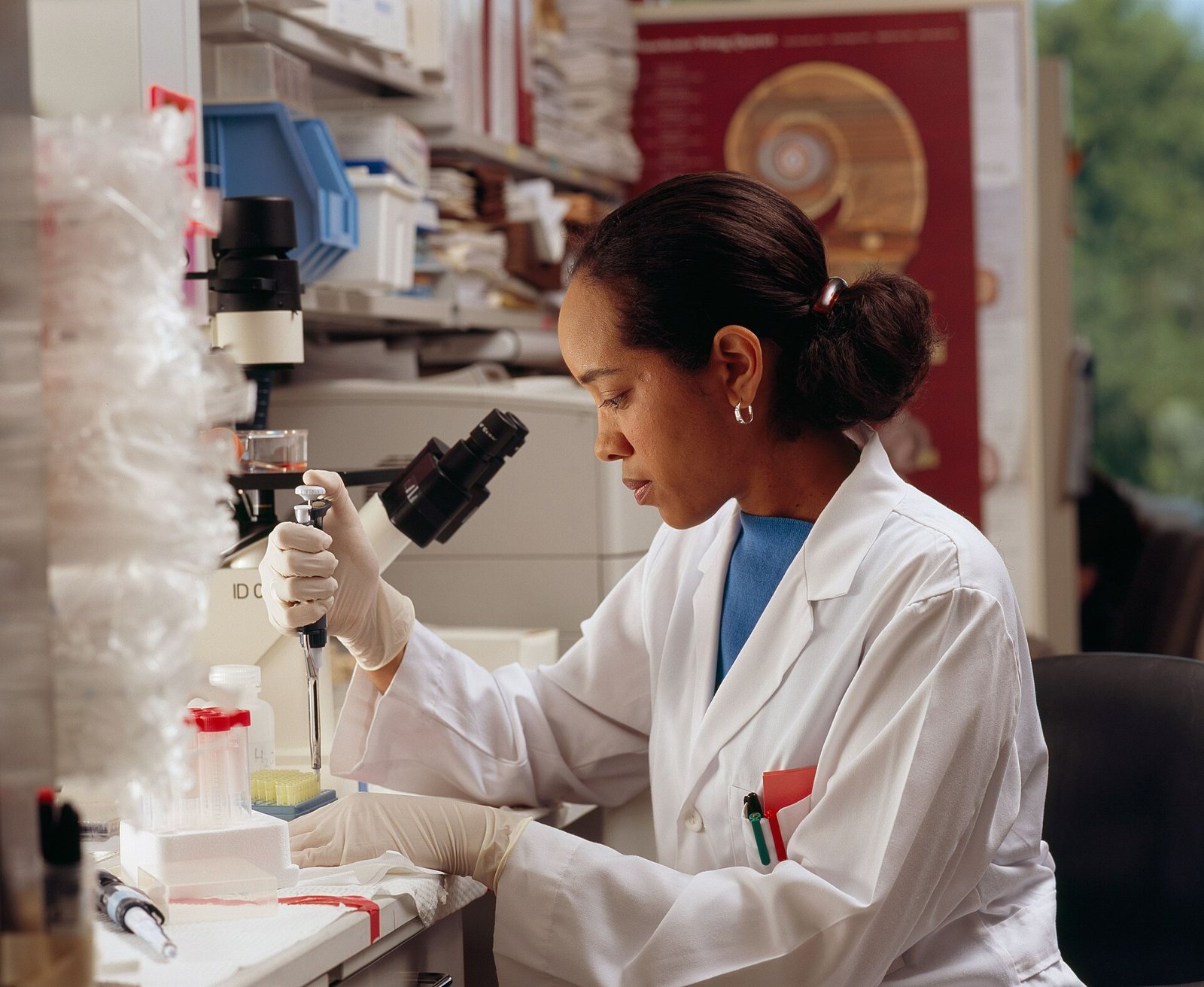
Illustrative image. Rhoda Baer, National Cancer Institute, public domain, via Wikimedia Commons.
What the fund will buy
Formation acquires or in-licenses Phase 1 and Phase 2 programs from pharmaceutical companies and biotechs. It prioritizes assets with a clear path to clinical proof of concept. It targets diseases with substantial unmet need but little active development across the industry, and it aims to reach major clinical milestones within two to four years of acquiring a program.
After meaningful clinical progress, Formation expects to partner the programs with pharmaceutical companies for commercialization or co-commercialization. According to CEO Benjamine Liu's launch post, the original owners of a program may receive upfront payments. They may also keep a share of future milestones and royalties.
How the structure works
The limited partners include research foundations, institutional endowments, hospitals and philanthropic organizations. Formation serves as general partner through a wholly owned subsidiary and has committed its own capital alongside them. The fund finances only programs in Formation's own portfolio.
Each program sits in a standalone company that Liu calls a "NewCo." Each NewCo draws on Formation's shared teams for development strategy, trial execution, regulatory affairs, manufacturing and quality. The company says this keeps each asset's economics separate and puts more money into trials instead of redundant overhead. A single investment committee commits money from both Formation's balance sheet and the fund for each asset.
AI for development, not discovery
Most AI drug companies apply machine learning to discovery. They use it to find targets and design new molecules before any human testing. Formation is working on the next stage: running clinical trials on compounds that already exist.
Liu's post explains the bet. He writes that "AI is transforming drug discovery," but faster discovery risks making clinical trials "an even greater bottleneck." He says the number of discovered drug candidates has doubled over the past decade while annual approvals have stayed roughly flat. In his view, platform biotechs, AI discovery companies and pharma companies cannot develop everything they find.
Formation says its AI systems, translational models and proprietary datasets help it do four things:
- Pick candidates
- Match them to indications
- Design better trials
- Run development more efficiently
In 2024, TechCrunch reported that the company was using AI to draft patient-recruitment materials and adverse-event reports. It was also fine-tuning models to predict toxicity, tolerability and efficacy. These are company descriptions. The announcement gives no independent data showing faster or more successful trials.
The two approaches could also complement each other. Liu presents the fund partly as a home for promising programs from discovery-focused companies that lack the money to develop them.
Background
Formation was founded in 2016 as TrialSpark by Liu and Linhao Zhang. In June 2024 it closed a $372 million Series D led by Andreessen Horowitz, with participation from Sanofi and others. TechCrunch, citing PitchBook, reported that the round brought its total funding past $600 million. The new fund is a separate vehicle from that equity.
Why it matters
Liu calls individual drug assets "an important and emerging investment category." He argues that more than $300 billion in drug sales facing patent expiration over the next decade will push pharma toward acquisitions, creating exits for assets like these. He also says the fund creates "paths to liquidity without selling the parent company."
Whether the model works will depend on trial results over the next several years. Watch for which programs Formation acquires first and whether its timelines beat industry norms. For more coverage of AI in healthcare, see our Artificial Intelligence hub.
How we reported this
We checked the fund's terms against Formation Bio's press release and its CEO's launch post, both dated Oct. 28, 2026. Company history comes from TechCrunch's 2024 report. We removed claims from the earlier draft that we could not trace to a primary source, including figures on trial speed and success rates.
Sources
- Formation Bio, "Formation Bio Announces $600 Million Debut Fund to Expand Drug Development Capacity," Oct. 28, 2026: https://www.formation.bio/press/formation-bio-announces-usd600-million-debut-fund-to-expand-drug-development-capacity
- Benjamine Liu, "Introducing the $600M Formation Bio Drug Development Accelerator Fund," Formation Bio, Oct. 28, 2026: https://www.formation.bio/blog/introducing-the-usd600m-formation-bio-drug-development-accelerator-fund
- TechCrunch, "Formation Bio raises $372M to boost drug development with AI," June 26, 2024: https://techcrunch.com/2024/06/26/formation-bio-raises-372m-to-boost-drug-development-with-ai/
DailyMech used AI tools to help research and draft this article; it was fact-checked by our editors.