Agile Robots Unveils New Research Humanoid With Nvidia AI, Targeting 2027 Availability
The Agile ONE SN combines dexterous robotic hands, onboard AI computing and simulation tools in a platform designed to make humanoid robotics research more accessible.
Published
Last updated / Fact-checked on
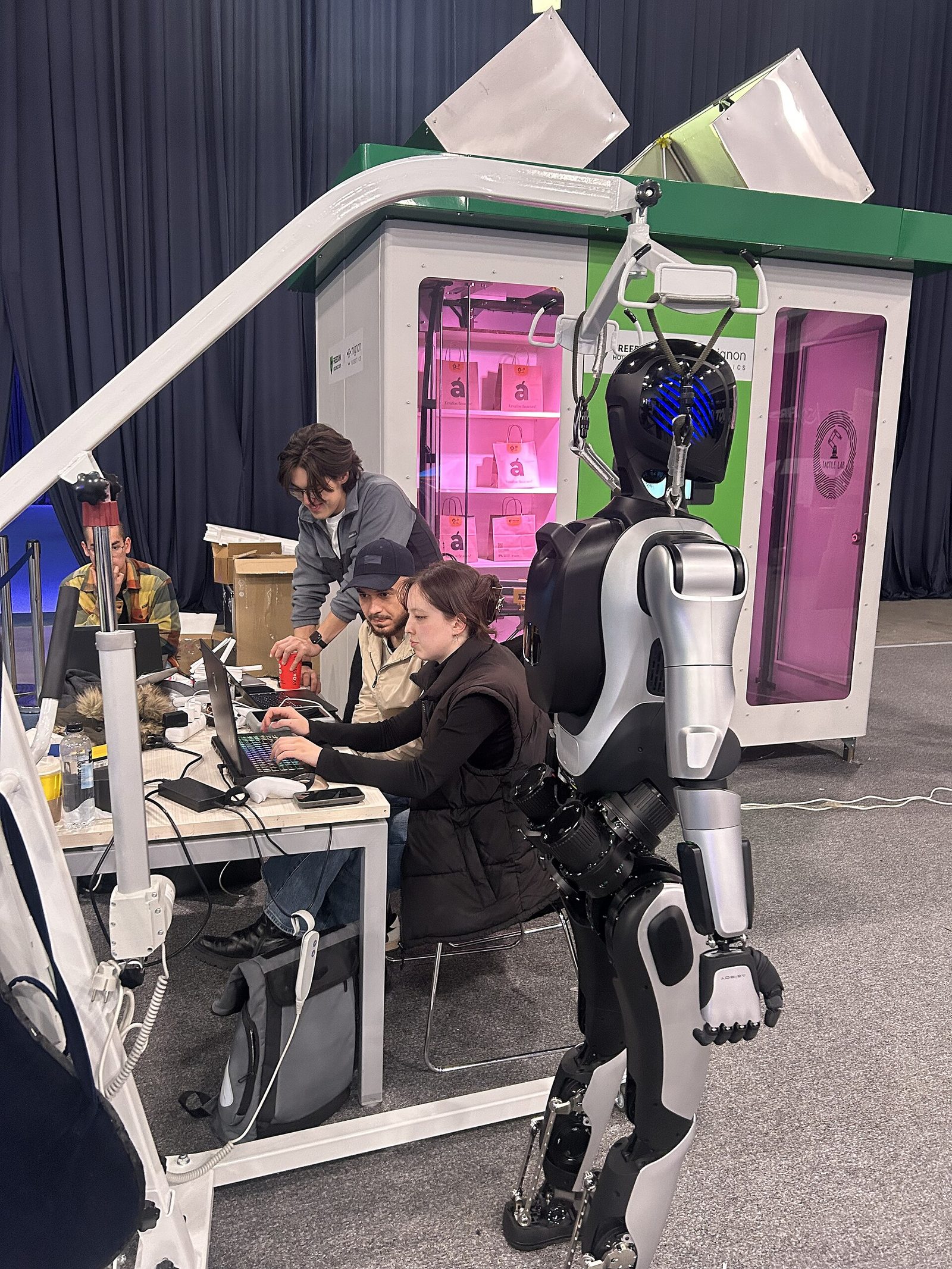
Agile Robots is preparing to bring a new humanoid robot to research laboratories in early 2027, offering a compact platform that combines physical hardware with Nvidia's artificial intelligence and simulation technology.
The robot, called Agile ONE SN, was first announced Oct. 21 at Nvidia's GTC Berlin conference. Follow-up coverage published this week takes a closer look at its specifications, development tools and remaining commercial uncertainties.
Standing 1.4 meters tall, the robot is designed primarily for researchers developing and testing robotic manipulation and autonomous behavior, rather than for immediate deployment in factories or homes.
The announcement reflects a broader effort to standardize humanoid robotics development. Instead of assembling separate hardware, control systems and AI software, research teams could begin experimenting with a platform whose major components are already configured to work together.
A Research Robot Built Around Nvidia Technology
Agile ONE SN has 71 degrees of freedom, including 31 in its body and 20 in each of its two five-fingered hands. This arrangement gives researchers many independently controlled movements for investigating grasping, object handling and coordinated motion.
Each arm supports a stated payload of up to 3 kilograms.
The robot uses Nvidia's Jetson Thor computing platform for onboard processing, along with cameras and lidar sensors for observing its surroundings.
Its software environment includes Nvidia Isaac GR00T technology, designed to support robot learning and control. Developers can collect demonstrations, train models, evaluate behaviors in simulation and then test those behaviors on physical hardware.
That workflow is particularly important in robotics research, because a movement that succeeds in a virtual environment does not necessarily work reliably in the physical world.
By supplying simulation assets alongside the hardware, Agile Robots aims to reduce some of the integration work required before researchers can begin experiments.
Why the Platform Matters
One of the challenges in humanoid robotics is reproducing results across different machines and laboratories.
Research teams frequently work with different hardware configurations, sensors and control software. These differences can complicate comparisons between experiments.
A standardized platform could help researchers evaluate new AI models under more consistent conditions.
Agile Robots also intends for skills developed on ONE SN to transfer to its larger Agile ONE humanoid, which targets industrial applications.
That could create a path from laboratory experiments to factory automation. However, transferring a trained behavior between robots with different physical characteristics remains a technical challenge.
The company has cited interest from Stanford University and ETH Zurich, although it has not disclosed completed research deployments at either institution.
Important Questions Remain
Despite its detailed specifications, Agile ONE SN has not yet demonstrated sustained commercial performance.
The companies have not published a purchase price, confirmed customer deliveries or released comprehensive measurements of autonomous task reliability.
There is also a discrepancy between the partners' published specifications: Agile Robots lists the machine's weight as 43 kilograms, while Nvidia reports 40 kilograms. The difference has not been publicly reconciled.
Safety development is another consideration. Agile Robots is exploring integration with Nvidia's Halos safety platform, but the announcements do not establish that this integration is complete.
These uncertainties matter because sophisticated hardware does not automatically translate into dependable autonomous operation.
What Comes Next
Agile Robots plans to make ONE SN available in early 2027.
Its significance will ultimately depend on whether researchers can reproduce useful robotic behaviors, measure performance consistently and transfer successful experiments beyond the laboratory.
For now, the announcement represents a concrete development platform rather than proof that general-purpose humanoid robots are ready for widespread deployment.
The distinction is important: Progress in robotics depends not only on what machines can demonstrate, but on whether those capabilities can be repeated reliably in real operating conditions.
Sources
- Biped.News, "Agile Robots Unveils ONE SN Research Humanoid for Early 2027": https://biped.news/article/agile-one-sn-research-humanoid-2027
- Agile Robots, official announcement, Oct. 21, 2026: https://www.agile-robots.com/en/news/detail/agile-robots-launches-agile-one-sn/
- Nvidia Newsroom, "NVIDIA Advances Isaac Platform for General-Purpose Robotics With New Reference Humanoid, Frameworks, Simulation Pipelines and Data": https://nvidianews.nvidia.com/news/nvidia-advances-isaac-platform-for-general-purpose-robotics-with-new-reference-humanoid-frameworks-simulation-pipelines-and-data
- TechRepublic, "Agile ONE SN Humanoid Robot Bundles Nvidia's Robotics Stack": https://www.techrepublic.com/article/news-nvidia-agile-one-sn-humanoid-robot/