OpenAI's Grid Protectors Program Promises to Throttle AI Campuses When the Grid Is Strained
The program starts in Georgia, where OpenAI's agreement with Georgia Power includes up to 1,000 megawatts of flexible demand at a campus that is still in development.
Published
Last updated / Fact-checked on
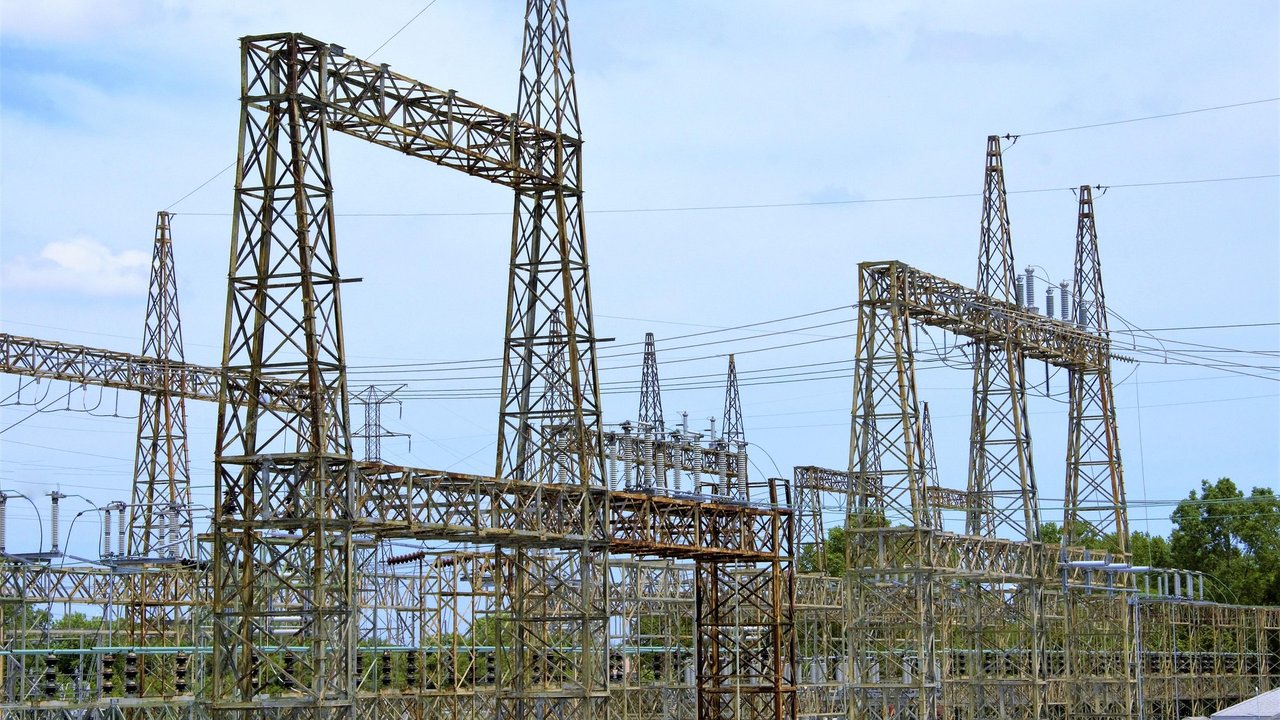
OpenAI on November 2 launched the Grid Protectors Program, a pledge that its future AI computing campuses will cut electricity use when local grids are under strain. The first test is a planned campus in Effingham County, Georgia, where OpenAI says its Georgia Power agreement includes up to 1,000 megawatts of flexible demand response.
Photo: Scottslm / Pixabay
The Georgia commitments at a glance
| Item | What OpenAI says |
|---|---|
| Location | Planned campus in Effingham County, Georgia (still in development) |
| Utility | Georgia Power |
| Flexible demand response | Up to 1,000 megawatts |
| Scale comparison | Average demand of roughly 700,000 households |
| Cost commitment | Full infrastructure and electric-service costs to serve the campus |
| Utility savings projection | About $950 million a year from 2029, portfolio-wide |
| Typical household benefit | At least $15 a month at 1,000 kWh, per Georgia Power |
What OpenAI is promising
For Effingham County, OpenAI says it has committed to pay "the full infrastructure and electric-service costs required to serve the project." Once the campus is running, it says it can reduce its draw "during times of need, helping preserve electricity for other customers."
The 1,000 megawatts of flexible demand equals the average electricity demand of roughly 700,000 households, which OpenAI says is more households than Washington, D.C., and Boston combined. The company frames that as power that could keep air conditioning running in homes during extreme heat.
OpenAI says the campus will serve as a pilot for the national program, "building on an agreement that already provides a model for future campuses." The campus "is still in development."
How the economics are supposed to work
OpenAI's argument rests on fixed costs. Power lines, substations and other grid equipment cost the same whether demand is high or low. A campus that uses lots of power when the grid has room and cuts back at peak times can help pay for that equipment while limiting expensive upgrades built only for peaks.
"Families and small businesses should not be asked to subsidize a compute campus's electricity needs," OpenAI writes. It adds that Georgia Power says the flexibility can reduce how much new generation the utility must build.
The savings figures need careful reading. Georgia Power's projection of about $950 million in yearly customer savings starting in 2029 covers its whole portfolio of large-load agreements and expected growth, including a project called Project Camellia. The same goes for its estimate of at least $15 a month for a typical home using 1,000 kilowatt-hours. Neither figure is attributed to the OpenAI campus alone.
Beyond Georgia
OpenAI calls Georgia "our starting point." It cites projections that U.S. data center capacity will exceed 100 gigawatts by 2030. Future agreements will spell out how much demand a campus can cut, how quickly and for how long, and they will vary by location. Depending on local needs, OpenAI may also supply power from on-site generation or storage and use batteries to smooth swings in demand. It says long-term contracts and financial assurances can protect other customers if a project is delayed, reduced or canceled.
The company is also candid about the limits. "Flexibility cannot replace investment in new energy supply and transmission," it writes, presenting the program as a complement to new generation, not a substitute.
What to watch
- The actual Georgia Power contract terms. How fast and how often OpenAI must curtail, and any penalties.
- Regulatory review of large-load deals and the savings projections.
- Commitments at other sites. OpenAI says it will share more "as they are finalized."
- Whether curtailment is ever called once Effingham is operating, especially during summer peaks.
The program arrives as OpenAI's capital needs draw scrutiny. See our report on its reportedly reduced $20 billion funding round and on Nvidia's talks over financing an Nscale data center.
More coverage is on our Artificial Intelligence hub.
How we reported this
This article is based on OpenAI's November 2 announcement, which we read in full. We checked every figure against that page, including the 1,000 megawatts, the roughly 700,000 households and the Effingham County cost commitment. We did not review the Georgia Power agreement or Georgia Power's own filings, so we attribute the savings projections to the utility as OpenAI reports them.
Published and fact-checked November 2, 2026.
Sources
- OpenAI, "Introducing the Grid Protectors Program," Nov. 2, 2026: https://openai.com/index/grid-protectors-program/
DailyMech used AI tools to help research and draft this article; it was fact-checked by our editors.