Pruna AI Turns MiniMax’s H3 Video Model Into an Open 8-Megapixel Image Model
P-H3-Image renders in 8 steps and fits a 21 GB VRAM budget at 4-bit, but its license excludes the U.S., EU, UK and South Korea.
Published
Last updated / Fact-checked on
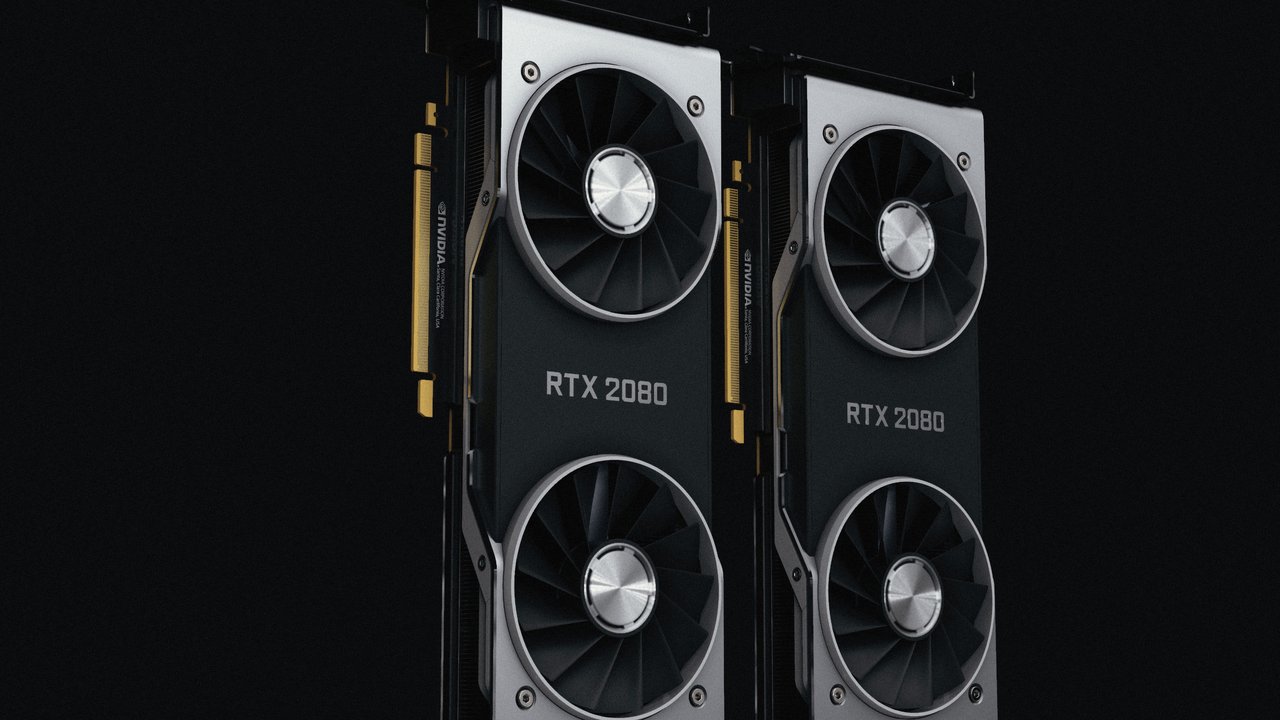
Pruna AI has released P-H3-Image, an open-weights image generation and editing model distilled from MiniMax’s H3 video model. It renders 8-megapixel images in 8 steps, and its smallest version needs about 21 GB of VRAM.
Photo: nanadua11 / Pixabay
At a glance
| Base model | MiniMax-H3 (open-weights video model) |
| Output | 8 MP still images in 8 steps, no classifier-free guidance |
| Editing | Up to 8 input images |
| Smallest download | 20 GB (4-bit), vs. 143 GB for H3 |
| Peak VRAM at 8 MP | 21 GB (4-bit), 56 GB (bf16) |
| ComfyUI | Native support, no custom nodes |
| License | MiniMax H3 Community License; excludes EU, UK, South Korea and U.S. without a separate MiniMax license |
What Pruna released
On November 3, Pruna AI published P-H3-Image in a blog post titled “P-H3-Image: Turning a SOTA Video Model into an Efficient Open Image Model” and released the weights on Hugging Face. It starts from MiniMax-H3, a video model MiniMax released with open weights, and produces only still images.
What changed from H3
Pruna says it reworked nearly every stage of the original model:
- Prompt upsampler. A new upsampler, based on Qwen3.5-9B and on by default, rewrites a short request into the kind of detailed prompt the model renders best.
- Text encoder. Pruna distilled H3’s 32B text encoder down to 4B, shrinking it from 67 GB to 9 GB.
- Diffusion schedule. H3’s schedule was tuned for video. Pruna adapted it for fine image detail and used DMD distillation to cut sampling from 50 steps to 8. The model runs without classifier-free guidance.
- Transformer backbone and decoder. Pruna modified the backbone and retrained the decoder to turn a single frame into one sharp image.
According to the model card, 8 megapixels is the recommended resolution for text-to-image generation. Outputs at 2 and 4 megapixels work but show more artifacts. Edits can combine up to 8 input images, with the first as the image to edit.
Size, speed and hardware
Pruna’s blog puts the smallest set of weights, quantized to 4-bit, at a 20 GB download, compared with 143 GB for MiniMax-H3. The bf16 version is 55 GB. At 8 megapixels, peak VRAM is 21 GB for the 4-bit set and 56 GB for bf16.
Pruna calls the result 7x smaller and 5x faster than H3. On a single Nvidia B200, the company measured 2.6 seconds versus 12.4 seconds for a 4-megapixel image, and 5.8 seconds versus 30.6 seconds at 8 megapixels.
The full bf16 diffusers pipeline is much heavier. The model card says it needs about 101 GB of GPU memory with the prompt upsampler, enough for one H200 or B200. With offloading, it peaks at about 76 GB on an 80 GB GPU. For smaller cards, Pruna points users to ComfyUI. ComfyUI supports the model natively with no custom nodes, and bf16, 8-bit and 4-bit weights are available in the PrunaAI/P-H3-Image-Comfy repository.
Strengths and limits
Pruna says P-H3-Image is strongest at documentary and editorial photography, portraits, film stills, anime frames and graphic design with short quoted text.
The company also lists the model’s weak spots:
- It is sensitive to prompt wording.
- Hands and small background figures can come out distorted.
- Small or dense text is unreliable.
- Artifacts increase below 8 megapixels.
- It generates still images only, not video or audio.
The license fine print
P-H3-Image inherits the MiniMax H3 Community License. According to Pruna, the license excludes the European Union, the United Kingdom, the Republic of Korea and the United States unless users obtain a separate license from MiniMax. Products built on the model must also display “Powered by MiniMax H3.” The Qwen-based parts of the text encoder and the prompt upsampler are under the Apache 2.0 license, and the ComfyUI nodes are MIT-licensed.
What to watch
Whether MiniMax offers separate licenses for the excluded regions, and how the quantized 4-bit weights hold up on fine detail compared with bf16 in independent tests.
More coverage is on our Artificial Intelligence hub.
How we reported this
We checked Pruna’s launch post and the Hugging Face model card against each other. Where they differed on parameter count, maximum input images and resolution range, we used the model card’s figures or left the detail out. Quality claims are Pruna’s own.
Published and fact-checked November 4, 2026.
Sources
- Pruna AI: P-H3-Image: Turning a SOTA Video Model into an Efficient Open Image Model
- Hugging Face: PrunaAI/P-H3-Image model card
DailyMech used AI tools to help research and draft this article; it was fact-checked by our editors.