Casar and Waters Unveil Nonbinding House Resolution Opposing AI Company Bailouts
The 'sense of the House' measure says insolvent AI firms should go through ordinary bankruptcy, and that any federal help in a downturn should go to workers instead.
Published
Last updated / Fact-checked on
Reps. Greg Casar (D-Texas) and Maxine Waters (D-Calif.) have written a nonbinding House resolution opposing taxpayer bailouts for AI companies and for financial institutions hurt by an AI-market collapse. The American Prospect first reported the measure on Oct. 28, 2026, and the Daily Caller reported that it was introduced that day. It would state the House's position but would not change any law.
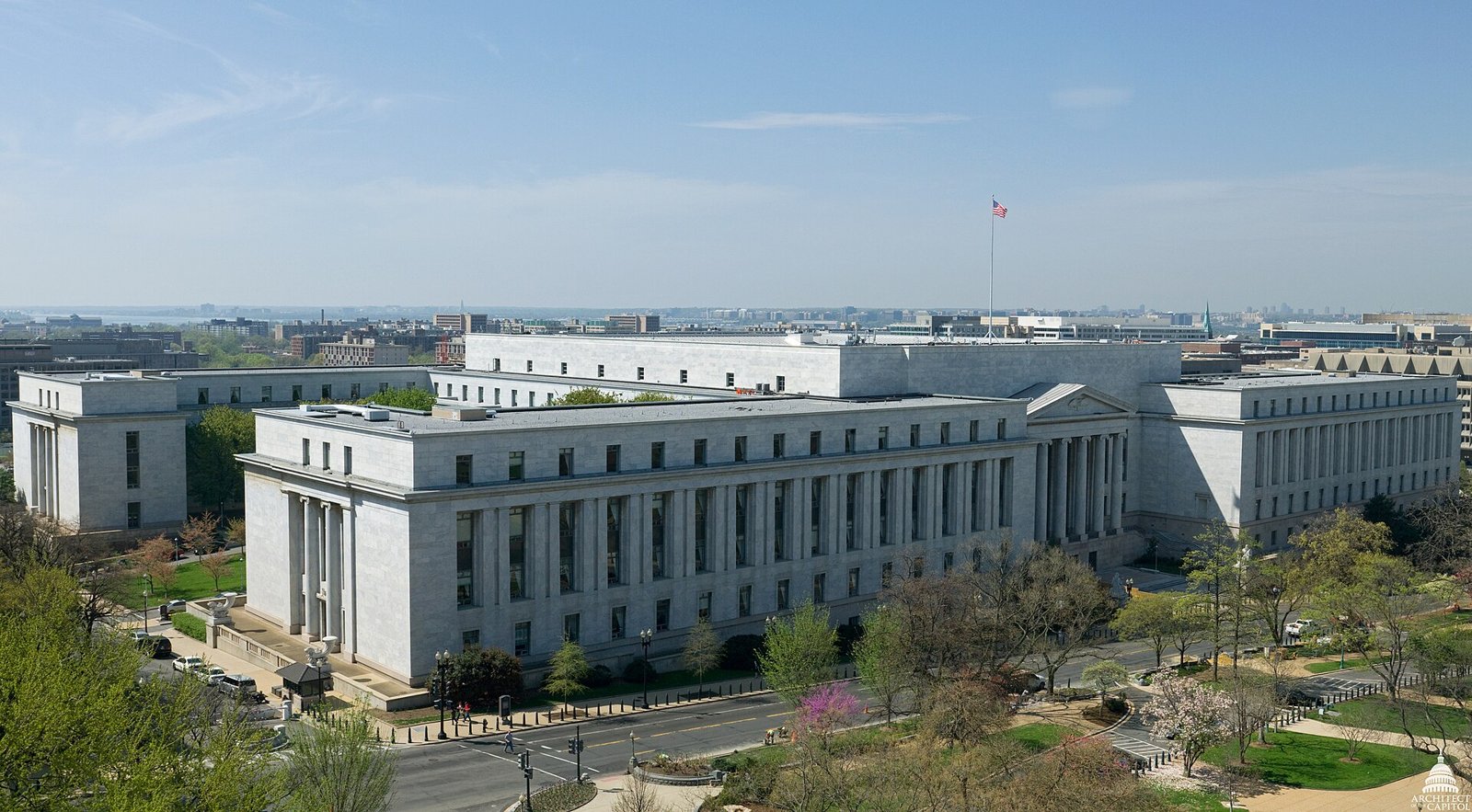
Rayburn House Office Building. Architect of the Capitol, public domain, via Wikimedia Commons.
What the resolution says
The seven-page "sense of the House" resolution says Congress should "refuse to provide any additional funds or exceptional regulatory support" to companies or financial institutions facing insolvency "due to exposures to acute stress within the artificial intelligence market," according to the Prospect. It also opposes emergency help through the Treasury Department or the Federal Reserve. Its main points:
- Bankruptcy, not rescue: Failing AI firms should "wind down or reorganize" through ordinary bankruptcy processes, in ways that protect workers, consumers and pension holders.
- Executive accountability: Executives liable for excessive risk-taking or unlawful conduct "should be held fully accountable under civil and criminal law," and ill-gotten gains should be clawed back.
- Help for workers: In a downturn, the government should use fiscal stimulus, job creation and backstops for retirement funds.
- Prevention: It calls for automatic stabilizers and a "reform agenda to prevent future speculative bubbles."
Because it is a simple resolution, it needs no Senate vote or presidential signature, and it is not legally binding.
The sponsors' case
Casar chairs the Congressional Progressive Caucus. Waters is the ranking Democrat on the House Financial Services Committee. Both frame the measure around the 2008 financial crisis.
"We shouldn't be trying to make them whole," Casar told the Prospect, referring to tech executives. Waters said in an email that "Big Tech and Wall Street are taking enormous risks with billions in borrowed money to fuel the AI boom," and that taxpayers "should never again be forced to foot the bill for billionaires' reckless bets."
The resolution says AI-related stocks drove as much as 75% of S&P 500 returns since October 2022. It argues that much of the industry's debt sits in opaque private-credit markets or off balance sheets. Casar wants a vote early in the next Congress if Democrats win control, or sooner.
The Anthropic backdrop
The measure follows Anthropic's IPO prospectus, released Monday. The Prospect reported that the filing shows first-half 2026 revenue of $16.3 billion, up 1,300%, and a loss of $80.7 billion. Anthropic attributed much of the loss to an accounting change. The Prospect estimated the company's long-term obligations for compute and infrastructure at $518 billion to $807 billion, much of it owed to large tech partners.
The other side of the ledger
Big commitments do not mean a collapse is coming. The Prospect noted that tech stocks rose on Tuesday, the day after the prospectus came out, partly because Anthropic's binding contracts were seen as good news for its partners. Anthropic's revenue growth is also steep.
Debate over bailouts also tends to center on a hard trade-off. Letting a large, interconnected firm fail can protect taxpayers, but it can also spread losses to lenders, suppliers and workers. The resolution would commit the House to choosing the first approach in advance.
In the coverage we reviewed, we found no on-the-record response from Republican leaders, the White House or the AI companies named. The measure has Democratic sponsors, and its prospects depend on the coming midterm elections.
What to watch
Watch whether the resolution gains cosponsors from either party, and whether it gets a floor vote after the election. Also watch for any response from AI companies and their cloud partners. For more on AI policy, see our Artificial Intelligence hub.
How we reported this
We based this article on The American Prospect's report, which quotes the resolution's text and its sponsors. We cross-checked it with Daily Caller and Common Dreams coverage from the same day. Those outlets disagreed on whether the resolution had been formally introduced, and we note both accounts. The Prospect, Common Dreams and the Daily Caller have differing editorial perspectives, so we relied on them for direct quotes and documented facts only.
Sources
- The American Prospect, "House Progressives Throw Down a Marker: No AI Bailouts," David Dayen, Oct. 28, 2026: https://prospect.org/2026/10/28/house-progressives-ai-bailout-anthropic-google/
- The Daily Caller, "House Dems Want AI Firms To Know Congress Won't Bail Them Out If They Go Bankrupt," Oct. 28, 2026: https://dailycaller.com/2026/10/28/house-democrats-ai-resolution-bail-outs/
- Common Dreams, "'We Cannot Let History Repeat Itself': Progressive US Lawmakers Oppose AI Bailouts," Oct. 28, 2026: https://www.commondreams.org/news/ai-bailout
DailyMech used AI tools to help research and draft this article; it was fact-checked by our editors.