Intel Stock Has Its Worst Day Since the 1970s After a Weak Outlook
Shares fell about 29% after Intel's fourth-quarter guidance missed estimates, citing PC softness and a fab shutdown in Israel.
Published
Last updated / Fact-checked on
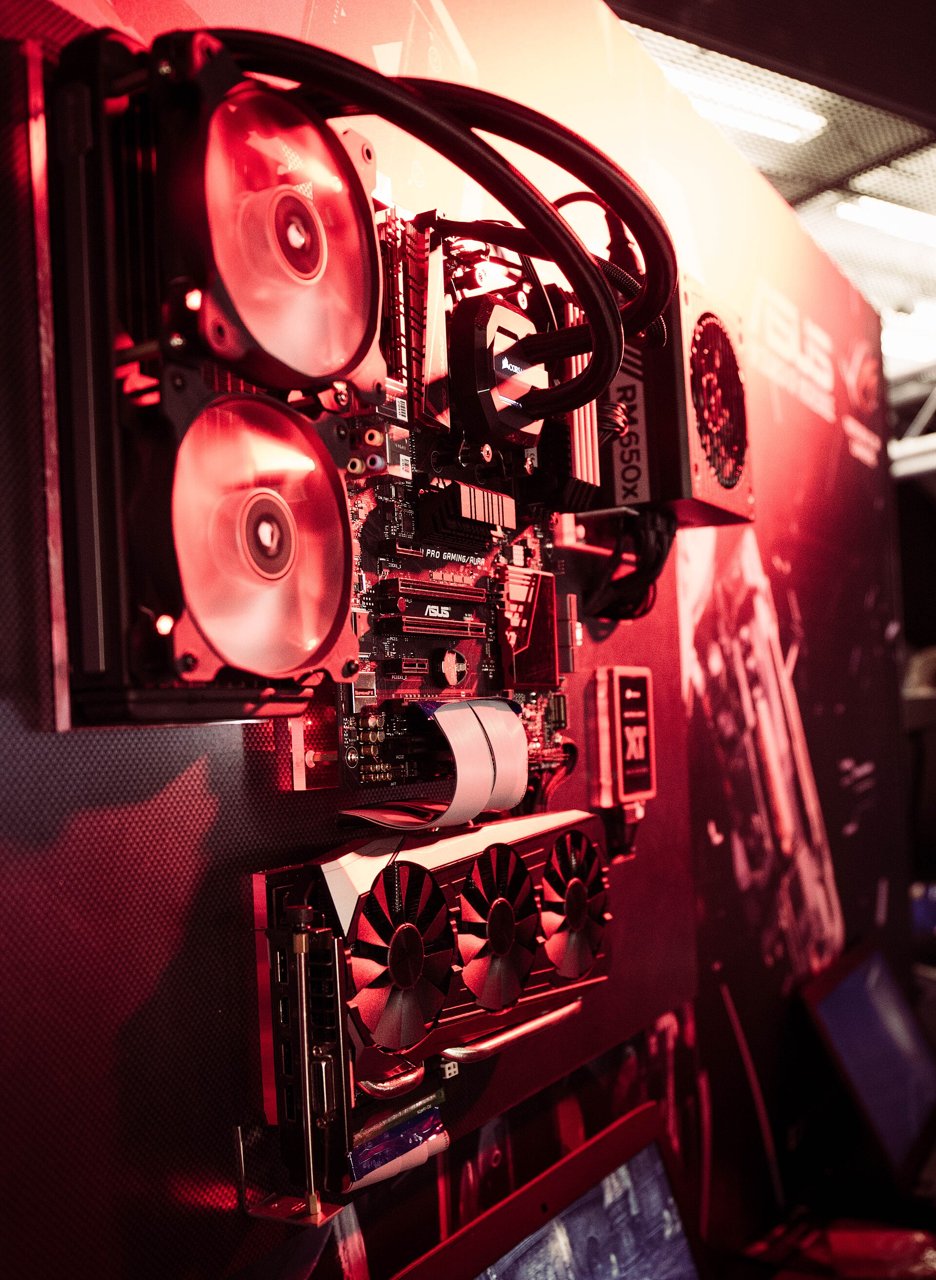
Intel shares fell about 29% on Friday, October 30, the stock's worst day since the 1970s, CNBC reported. The drop came after the chipmaker forecast fourth-quarter results well below Wall Street estimates. It also wiped about $12 billion off the value of the US government's stake in the company.
Image: Illustrative photo of the inside of a desktop PC. Maxime Rossignol / Unsplash via Wikimedia Commons — CC0
The numbers
Market data shows Intel closed at $65.76, down 28.58% from the prior close. The selling followed Intel's third-quarter report on October 29. The quarter itself was strong:
- Revenue was $16.5 billion, up 21% from a year earlier.
- Data center and AI revenue rose 78% to $7.3 billion.
- Foundry revenue rose 58% to $6.7 billion.
- The PC chip group fell 5% to $8.1 billion.
The guidance is what broke the stock.
| Q4 metric | Intel guidance | Analyst estimate (LSEG) |
|---|---|---|
| Revenue | $15.0–16.0 billion | $17.1 billion |
| Adjusted EPS | $0.25 | $0.43 |
| Non-GAAP gross margin | 38.0% | — |
A fatal accident in Israel
Part of the shortfall comes from Israel. CNBC reported that an explosion at an Intel fab there earlier this month killed two workers and seriously injured a third. CEO Lip-Bu Tan called it an "unfortunate and tragic accident" that caused an "extended shutdown," affecting shipments of 10nm chips. CFO David Zinsner put the cost at about $600 million in lost revenue over two quarters.
Memory costs and the PC slump
The rest is the PC market. CNBC says it is being hammered by soaring memory and component costs. Counterpoint data cited by CNBC shows global PC shipments fell 4% year over year in the second quarter.
Intel's own release lists "current industry-wide substrate and memory shortages" among its risks. "We see the PC slowdown continuing at least through the first half of next year," Zinsner said. He also said the company had its "strongest data center revenue growth in 15 years."
That contrast is the story. AI demand is lifting Intel's server business while memory and component costs squeeze the PC chips that still make up its largest segment.
The government's stake
The US government took a 10% stake in Intel more than a year ago. CNBC says the investment remains profitable, but Friday's drop cut its value by about $12 billion. Nvidia's stake lost about $6 billion.
The stock had risen about 150% this year heading into earnings, CNBC said, which left little room for a disappointing outlook.
What analysts said
D.A. Davidson downgraded Intel to neutral from buy. "We understand the PC market is being impacted at the industry level," the firm wrote. "However it is hard to justify the current multiple when weakness is so significant."
Matt Orton of Raymond James was calmer: "I don't think this is a moment of reckoning."
The selloff hit a wider group of tech stocks. CNBC reported the Nasdaq fell 2.9%, Qualcomm 11%, Broadcom more than 5% and Nvidia 4%. Amazon slipped 1.4% after its own earnings.
The foundry question
Intel's turnaround still depends on its foundry. CNBC reports that its 18A process is in high-volume production in Arizona, but Intel has not yet named an external foundry customer. "We're going to have a couple of customers ready to announce the next two quarters," Tan said.
Intel's release also says it completed a $23 billion equity offering.
What to watch next:
- Whether Intel names external 18A customers within the two quarters Tan described.
- How quickly the Israel fab returns to full output.
- Memory prices, which affect PC demand and Intel's client business.
- Whether more analysts follow D.A. Davidson's downgrade.
More coverage is on our Artificial Intelligence hub.
How we reported this
We verified the drop, the "worst day since the 1970s" comparison, the government-stake loss and the Israel fab details against CNBC's October 30 report. The closing price comes from market data. Results, guidance and quotes from Zinsner come from Intel's October 29 release. We removed claims from an earlier draft that relied on low-quality sites, including a year-to-date gain that conflicts with CNBC's figure. This is not investment advice.
Published and fact-checked October 30, 2026.
Sources
- CNBC, "Intel stock has worst day since 1970s, wiping about $12 billion off government's stake," Katie Tarasov and Arjun Kharpal, Oct. 30, 2026: https://www.cnbc.com/2026/10/30/amazon-intel-earnings-big-tech-ai-spending-concerns.html
- Intel, "Intel Reports Third-Quarter 2026 Financial Results," Oct. 29, 2026: https://www.intc.com/news-events/press-releases/detail/1786/intel-reports-third-quarter-2026-financial-results
- Exa market data, INTC daily close, Oct. 30, 2026: https://exa.ai/library/markets/stock/INTC?date=2026-10-30&view=daily&measure=change
DailyMech used AI tools to help research and draft this article; it was fact-checked by our editors.