OpenAI Builds Pando, a Rust Git Backend for Agent-Scale Development
OpenAI says the Codex-built system now runs its whole monorepo, cutting median push latency by nearly 5x and serving nearly a petabyte of Git data a day.
Published
Last updated / Fact-checked on
OpenAI has built Pando, a new Rust backend for Git repositories that now powers all development in its monorepo, according to a November 2 engineering post. OpenAI says Pando cut median push latency by nearly 5x and delivers nearly a petabyte of Git data a day, without changing how engineers and agents use Git.
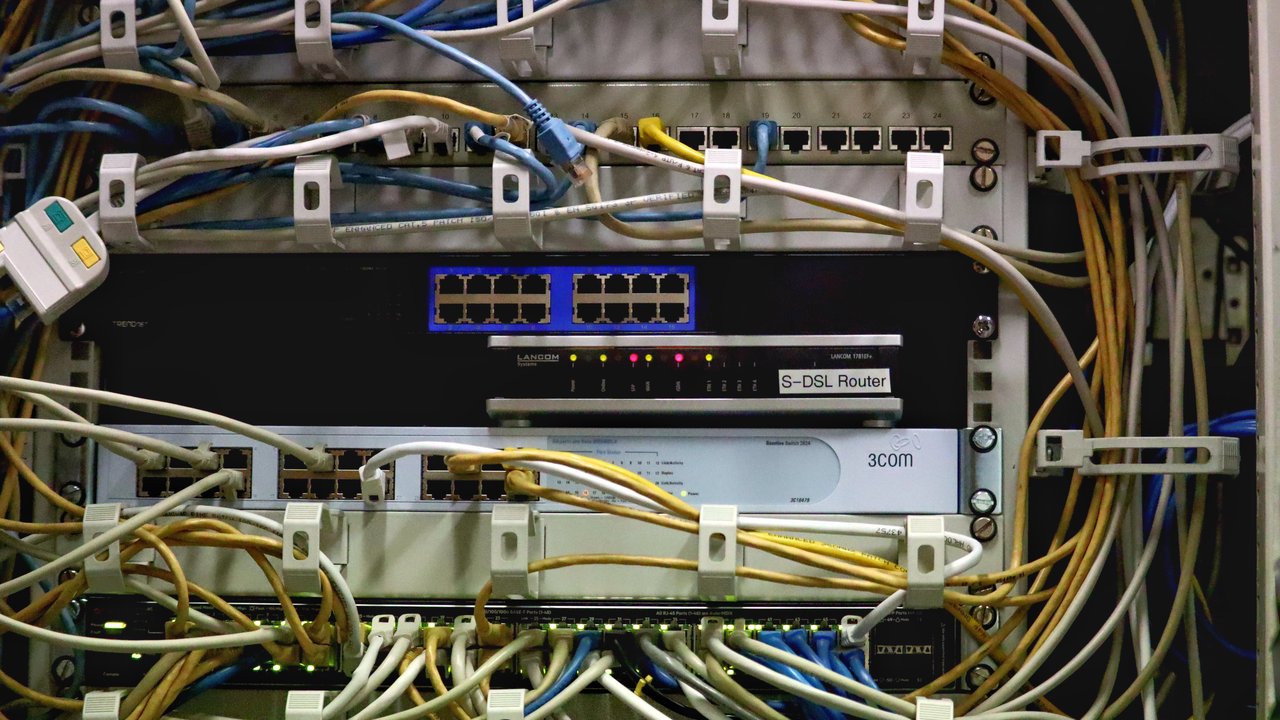
Photo: Thomas G. / Pixabay
Pando at a glance
| What | Git-compatible backend for OpenAI's monorepo |
| Language | Rust, no legacy dependencies |
| Built | With Codex, kick-off to production in 10 weeks |
| In production | Since April 2026 |
| Push latency | Median down nearly 5x (nearly 80%) |
| Throughput | Nearly 1 PB/day; 57 TB+ in one hour |
| Cache hits | Over 99% (Express) |
| Availability | Internal; OpenAI exploring ways to share |
| Source | OpenAI engineering post |
The post, authored by OpenAI technical staff members Aaron Friel, Taylor Blau and Ted Nyman, describes how the company redesigned its source-control infrastructure without interrupting engineering operations.
Why OpenAI needed it
OpenAI attributes its source-control challenges to increased parallel development enabled by Codex, its AI coding system.
According to the company's engineering post, Codex allows developers to work on multiple changes simultaneously, generating more branches, pushes, merges, fetches and repository clones.
Starting around the end of last year, OpenAI's existing infrastructure struggled with those workloads. Engineers experienced slow operations, failed merges and reliability that sometimes fell below 90%, the company reported.
How Pando works
According to OpenAI, Pando uses a relaxed consistency approach called causal consistency.
Pando coordinates each branch independently. That lets unrelated pushes to proceed simultaneously, although clients reading several branches may observe their states at different points in time.
When developers push changes, OpenAI says Pando stores the incoming Git packfiles as immutable objects in blob storage. A separate metadata store tracks branch references, their versions and dependencies.
For downloads, Pando reuses existing packfiles instead of constructing a new package for every client.
The system uses Git's packfile-uri capability to direct clients toward downloadable packs, which are distributed through a caching service named Express.
OpenAI reports Express cache hit rates exceeding 99%.
The company also reported that median push packfiles were smaller than 20 KiB, with the 99th percentile under 3 MiB.
To evaluate its architectural decisions, OpenAI compared Pando against modeled three-phase commit and write-ahead-log approaches.
However, OpenAI explicitly describes those simulations as "synthetic teaching models, not production benchmarks."
Results and a Codex-assisted build
OpenAI reports that Pando reduced median push latency by nearly 80% while improving merge reliability.
The company says Pando has delivered more than 57 terabytes of Git packfiles during a single hour, with over 99% of those bytes served from local disk caches.
OpenAI also reports that clone and fetch operations can saturate 10 Gbps network connections on standard cloud virtual machines.
The company says Pando moved from project kickoff to production in 10 weeks, with its core designed by a single engineer, implemented by teams of agents and deployed by a handful of engineers. Written in Rust without legacy dependencies, the system began serving production traffic in April 2026.
OpenAI also used agents powered by GPT-6 Astra to write Lean and TLA+ specifications, formalizing what the company calls a "theory of Pando" to identify bugs and verify system properties.
Deployment initially used a read- and write-through proxy alongside the previous infrastructure, allowing OpenAI to transition workloads without downtime.
OpenAI says the project also produced improvements to Git, including packfile-uri handling, tracing, parallel pack downloads in its Git build and support for "explicit haves." Several changes have already reached upstream Git.
OpenAI says it is exploring ways to share Pando's underlying technology with users. However, the November 2 announcement does not introduce a public Pando product or announce an open-source release.
What to watch
- Sharing the technology. Whether OpenAI offers Pando or its components to users, as it says it is exploring.
- Upstream Git. Which of OpenAI's patches land in mainline Git.
- Other workloads. OpenAI is exploring Pando for many agents collaborating on shared repositories.
- Independent benchmarks. Whether outside teams reproduce the reported gains.
More coverage is on our Artificial Intelligence hub.
How we reported this
Everything here comes from OpenAI's engineering post; all performance figures are OpenAI's own and were not independently measured. OpenAI's comparison with three-phase commit and write-ahead-log designs is a simulation it labels as teaching models, not benchmarks.
Published and fact-checked November 3, 2026.
Sources
- OpenAI, Aaron Friel, Taylor Blau and Ted Nyman, "Scaling Git at OpenAI," Nov. 2, 2026: https://openai.com/index/scaling-git-at-openai/
DailyMech used AI tools to help research and draft this article; it was fact-checked by our editors.