Sam Altman at ADIPEC: AI Is 'Mostly Smarter' Than Top Scientists, and Energy Is the Limit
OpenAI's chief named energy as his biggest challenge, insisted humans must stay in control, and repeated a Navier-Stokes claim the Clay Institute has not recognized.
Published
Last updated / Fact-checked on
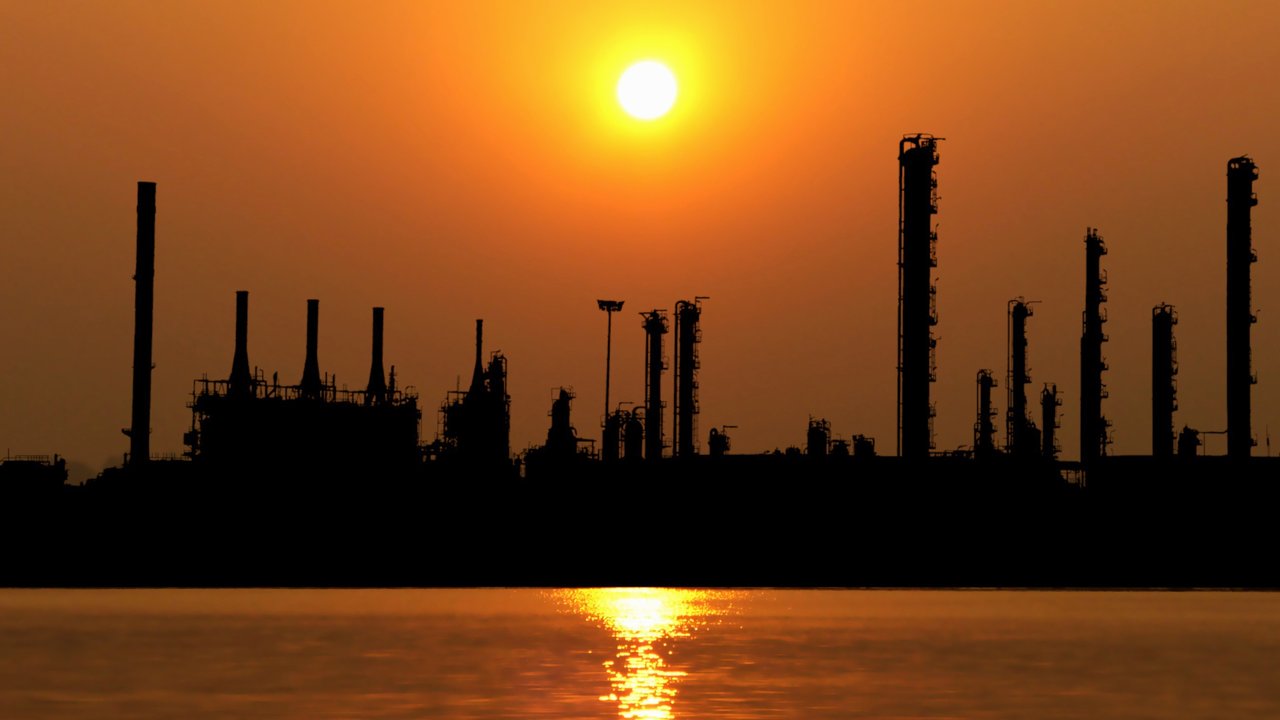
AI has gone from trailing the world's best scientists to "mostly smarter than them," OpenAI CEO Sam Altman told the opening of the ADIPEC energy conference in Abu Dhabi on November 2, according to The Thursday Times. Asked to name his biggest challenge, he gave one word: "Energy."
Photo: rauschenberger / Pixabay
Altman also said there must be "no room for debate" that people stay in control of AI. He repeated OpenAI's claim to have resolved the Navier-Stokes Millennium Prize problem, which the Clay Mathematics Institute has not recognized.
Key points
| Topic | What was said or reported |
|---|---|
| Capability | AI "mostly smarter" than top scientists |
| Control | "No room for debate" that humans stay in control |
| Biggest challenge | "Energy" |
| Demand | Heaviest internal user: about 100,000 tokens a month six years ago, about 500 billion now |
| Deal | ADNOC, OpenAI and G42 partnership |
| Math claim | Navier-Stokes result; not recognized by the Clay Institute |
Sources: The Thursday Times; OpenAI.
Control over AI
"AI was mostly not as smart as our smartest scientists, and now it's mostly smarter than them," Altman said, according to The Thursday Times. He added that there "should not be a handoff to AI."
"There are a lot of other things we can debate, but on this one, we think there must be no room for debate," he said.
Energy as the limit
Altman told a hall of oil executives and energy ministers that OpenAI can cut the cost of AI in almost every way, "except, you know, atoms are still atoms." He called power "the very dominant factor" in how much AI the world can use.
The energy needed per query has fallen sharply, he said, but demand keeps rising. Six years ago, OpenAI's heaviest internal user consumed about 100,000 tokens a month. The top user now consumes about 500 billion.
The ADNOC deal
Altman spoke after ADNOC, OpenAI and Abu Dhabi technology group G42 signed a partnership. ADNOC said it would become the first energy company in the world to deploy OpenAI's frontier technology, The Thursday Times reported.
ADNOC said the system will run on OpenAI's GPT models on infrastructure inside the UAE. It will be used for field planning and for linking operational, capital and commercial decisions, with ADNOC's experts keeping "oversight of consequential decisions."
The Navier-Stokes claim
Altman said the Navier-Stokes work used 10,000 agents running an upcoming GPT model for about four days, The Thursday Times reported. The outlet did not say when that model would ship.
OpenAI's September 8 post gives more detail. It says an internal model "significantly more capable than GPT-6 Astra," still in training, produced a proof that the equations can develop a singularity in finite time, along with a Lean formalization.
The post says a group of about 10,000 concurrent agents reached the result about 88 hours after launch. Lean verification took 17 more hours. OpenAI wrote that it does "not intend to claim the Millennium Prize."
The claim has since been caught up in a dispute among mathematicians over credit, according to The Thursday Times. The Clay Mathematics Institute, which awards the prize, has not recognized any solution.
Why it matters
For anyone tracking AI infrastructure, Altman's answer on energy confirms that power supply, not just chips, now sets the pace of AI growth. Deals with energy producers such as ADNOC are part of how OpenAI is meeting that demand.
The Navier-Stokes claim shows the other limit. AI can produce work quickly, but recognition still depends on human review.
What to watch
- The Clay Institute. Whether it reviews or comments on OpenAI's claimed result.
- ADNOC's rollout. How the system performs in field planning, and what oversight looks like in practice.
- The upcoming model. Any official release of the model OpenAI used, which it has not named or dated.
More coverage is on our Artificial Intelligence hub.
How we reported this
We checked Altman's remarks against The Thursday Times' report from ADIPEC and the Navier-Stokes details against OpenAI's own September 8 post. We did not watch the session directly, so quotes are attributed to The Thursday Times. We found no statement from the Clay Mathematics Institute recognizing the result.
Published and fact-checked November 2, 2026.
Sources
- The Thursday Times, "AI now 'mostly smarter' than top scientists, Sam Altman tells ADIPEC as ADNOC signs OpenAI deal," Nov. 2, 2026: https://thursdaytimes.com/2026/11/02/science/technology/sam-altman-adipec-ai-smarter-scientists-adnoc-openai/
- OpenAI, "On the Navier–Stokes Millennium Prize Problem," Sept. 8, 2026: https://openai.com/index/navier-stokes-solution/
DailyMech used AI tools to help research and draft this article; it was fact-checked by our editors.