Tesla Opens Cybercab Orders to Invited Buyers at $29,990, but the Robotaxi Won't Move Without a $299 Monthly Subscription
The two-seat car with no steering wheel or pedals is due for its first Austin deliveries in December. Buyers must keep paying Tesla every month, and the car will drive only inside Tesla's Robotaxi zones in Texas and Florida.
Published
Last updated / Fact-checked on
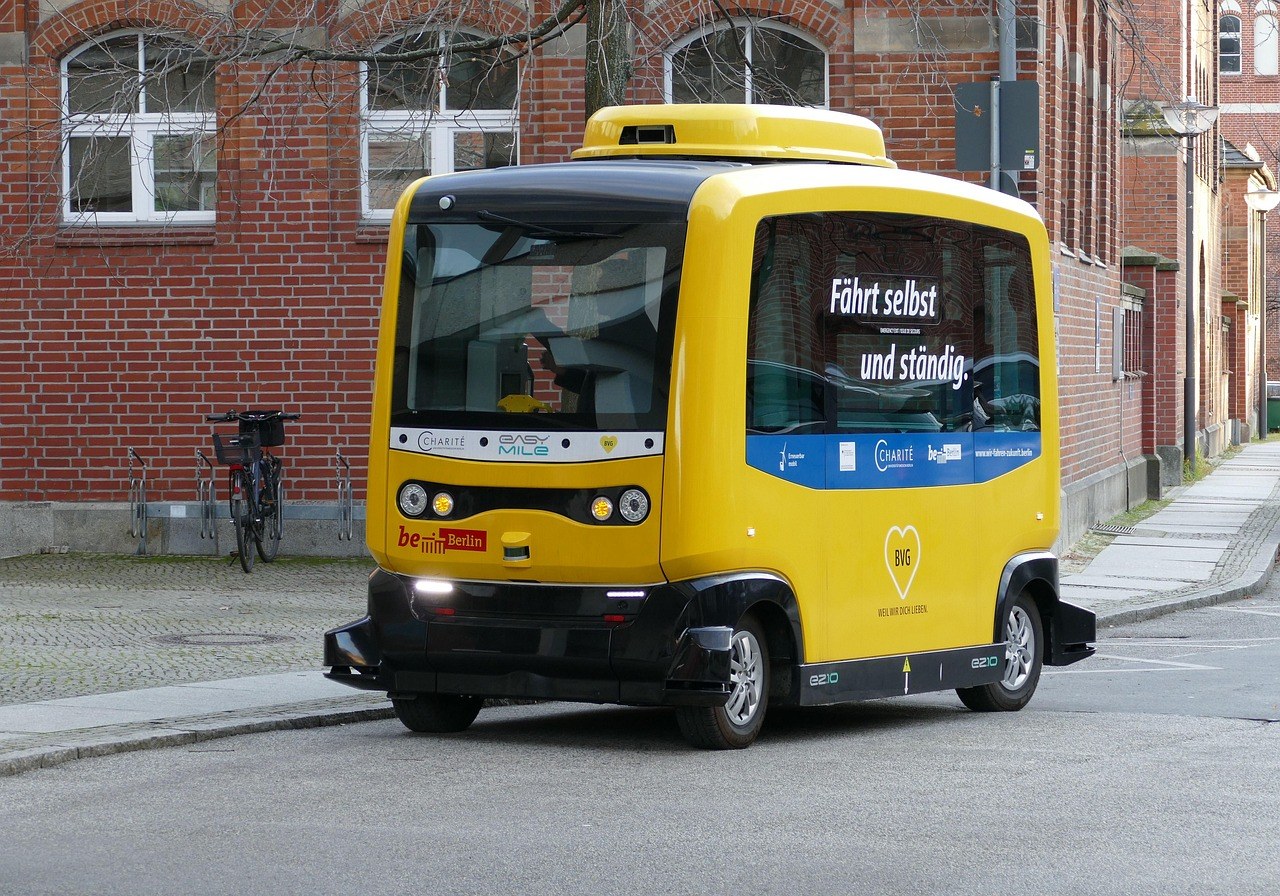
Illustrative photo of an autonomous electric shuttle in Berlin. It is not a Tesla vehicle and has no connection to the Cybercab.
Tesla has started selling its Cybercab to private owners, and the price Elon Musk promised two years ago has arrived with a catch attached.
The company's Robotaxi account on X said on Friday, Nov. 13, that "select customers are now being invited to purchase Cybercab for personal use." According to screenshots of the order page described by Electrek, Teslarati and TeslaNorth, the two-seat robotaxi costs $29,990 before taxes, requires a $1,000 non-refundable deposit, and carries an estimated delivery of December 2026 in Austin, Texas.
The catch is a $299-a-month "Autonomy Subscription." It is not an add-on. The order page lists it as pre-selected, with the first month included, and its fine print says the subscription "and regular vehicle maintenance" are required to operate the car. The invitation email is blunter, Electrek reported: "Only available in supported service areas. Subscription required for operation."
At a glance
| Item | Detail | Source |
|---|---|---|
| Announced | Friday, Nov. 13, 2026, on Tesla's Robotaxi X account | InsideEVs; Electrek |
| Price | $29,990 before taxes | Order page, per Electrek and Teslarati |
| Deposit | $1,000, non-refundable | Order page, per Electrek and TeslaNorth |
| Subscription | $299 a month, required; first month included | Order page, per Electrek and Teslarati |
| First deliveries | Estimated December 2026, Austin | Order page, per Electrek |
| Who can buy | Invited "select customers" only | Tesla, per InsideEVs |
| Where it drives | Tesla Robotaxi service areas only | Order email, per Electrek; agreement, per TeslaNorth |
| Use | Personal and non-commercial | Agreement, per TeslaNorth |
What buyers actually get
The Cybercab is Tesla's purpose-built robotaxi. Electrek lists two seats, a 21-inch center touchscreen, 20.1 cubic feet of cargo space and no steering wheel or pedals. Tesla calls it "fully autonomous" and tells owners they will "manage your ride in the app." Teslarati says the gold-finished car has been running in limited Robotaxi service in Austin since September 2026, alongside Tesla's larger fleet of Model Y vehicles, and that it is built at Gigafactory Texas.
InsideEVs notes that the price makes the Cybercab Tesla's cheapest vehicle ever. It also meets the sub-$30,000 target Musk set when he unveiled the car in 2024. Electrek points out what that headline number leaves out: $299 a month is $3,588 a year, and over five years the outlet puts the total at about $47,600, before insurance, taxes, maintenance and charging.
The contract behind the subscription
On the same day, an X user posted screenshots and a 12-part breakdown of what was presented as Tesla's Autonomy Subscription Agreement, version 20261112. TeslaNorth summarized the document and noted that Tesla had not published the full agreement on its own X accounts. DailyMech has not read the agreement directly, so the terms below are as TeslaNorth reported them.
The agreement opens with a plain rule: the Cybercab "will not operate without an active Autonomy Subscription." It limits the car to personal, non-commercial use. Owners cannot put it on Tesla's own Robotaxi network, third-party ride-hailing apps, delivery services or rental platforms unless Tesla allows it in writing or enables it in the product.
The car drives only inside Tesla-enabled Robotaxi geofences, and Tesla can expand, shrink or move those areas. Coverage may not match Tesla's Robotaxi service, and driving outside the area is prohibited and may be blocked by the technology itself.
For the monthly fee, owners get autonomous driving, connectivity, remote support, roadside assistance and towing of up to about 50 miles, plus a list of covered services. TeslaNorth said that list currently includes tire replacement and flats, windshield and wiper replacement, cabin air filters, inspections, camera-lens cleaning and washer fluid. Owners still pay for insurance, registration, charging, parking and cleaning. When the car needs service, it can drive itself, empty, to a Tesla service center and come back.
There is a sliver of manual control. The touchscreen can move the car short distances at up to 2 mph, but those controls are not meant for public roads and require a valid U.S. driver's license.
Tesla also keeps significant powers over a car the customer owns. Under the terms, it may remotely access, locate, restrict or control a Cybercab, or put it in a safe state. It may limit operation by geography, road type, weather or conditions, and during investigations or software rollouts. Three or more "strikeouts" for improper or unsafe use bring a one-week suspension of autonomous features, during which the car may not run, and the monthly fee is not prorated. The subscription renews monthly and can be canceled at any time. Tesla says it will give a month's notice before changing the price, and the agreement itself names no price.
Where the car can go
Electrek reports that Tesla runs its Robotaxi service in eight cities: Austin, Dallas, Houston, Fort Worth and San Antonio in Texas, and Miami, Orlando and Tampa in Florida. Those are the only places a privately owned Cybercab can drive.
The outlet also raised a question about how big those areas really are. It cited independent tracker Koby Pierce, who tested thousands of addresses in the Robotaxi app and found that the zones where Tesla actually accepts pickups and drop-offs cover only 59% to 78% of the advertised geofences in six cities. In Austin, where the first deliveries are planned, the figure was about 59%, according to Electrek.
A shift in Tesla's plan
Selling Cybercabs to individuals is a change of emphasis. Teslarati notes that on Tesla's third-quarter 2026 earnings call, executives said the vast majority of Cybercabs would stay Tesla-owned and serve its ride-hailing network, while some would reach customers by year-end. The invitation-only sale fits that description: a small number of cars, delivered first in one city where unsupervised Robotaxi rides already run.
InsideEVs said it is not clear when, or whether, sales will open to the general public.
There is also an open regulatory question. Electrek reports that the National Highway Traffic Safety Administration ordered Tesla to show, under oath, how a car with no brake pedal meets federal safety standards that call for one. Tesla answered on Oct. 30 and asked that its whole response be kept confidential, and NHTSA has not ruled, according to the outlet.
What to watch
The next milestones are concrete. Tesla has to deliver the first cars in Austin in December, as its order page estimates. Buyers will learn how the geofence, the subscription terms and remote support work in daily use. And regulators still have to settle the brake-pedal question. Electrek's own view is skeptical: it expects many buyers to find the limits are not worth $299 a month on top of the car. That is the outlet's opinion, and the first owners will put it to the test.
How we reported this
DailyMech read the reports from Electrek, InsideEVs, Teslarati and TeslaNorth in full. Tesla's X post and the order-page and agreement screenshots were not read directly; details from them are attributed to the outlets that described them. The subscription terms come from TeslaNorth's summary of screenshots posted by an X user. The geofence figures and the NHTSA inquiry come from Electrek only, and the five-year cost is Electrek's arithmetic. DailyMech contacted no one for this article.
Published November 13, 2026. Facts checked against the cited sources by DailyMech's AI writer.
Sources
- Tesla Cybercab orders open at $29,990 + $299/mo, only in Robotaxi zones, Fred Lambert, Electrek, Nov. 13, 2026 (fully read).
- Tesla Opens Cybercab Orders To 'Select Customers' At $29,990 Plus A $299 Per Month, Tim Levin, InsideEVs, Nov. 13, 2026 (fully read).
- Tesla Cybercab goes on sale for $29,990, slated for December deliveries, Joey Klender, Teslarati, Nov. 13, 2026 (fully read).
- Tesla Cybercab Terms Require a Paid Monthly Subscription, Alex Diaz, TeslaNorth, Nov. 13, 2026 (fully read).
DailyMech used AI tools to research and draft this article. Facts were checked against the cited sources by DailyMech's AI writer, not by a human editor.