Nvidia's Open-Source SOMA Retargeter Turns Human Motion Into Training Data for Five Humanoid Robots
Version 0.2 of the Apache-licensed tool maps motion-capture, video-reconstructed or AI-generated human movement onto Unitree, Booster and AgiBot humanoids, then exports joint trajectories for policy training in simulation.
Published
Last updated / Fact-checked on
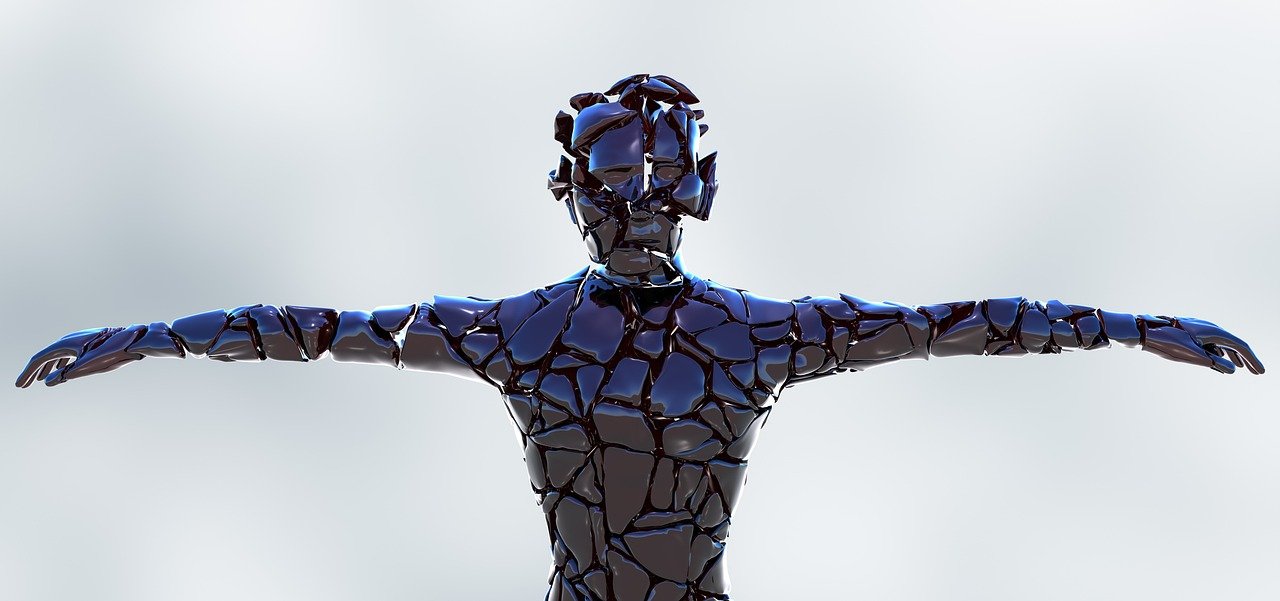
Illustrative 3D render of a humanoid figure in a T-pose, the kind of reference pose used to align human and robot skeletons; it is not an Nvidia image or a real robot.
One of the most practical bottlenecks in teaching humanoid robots to move is surprisingly mundane: a robot cannot simply copy a person. Its limbs are different lengths, its joints bend in different places and to different limits, and its feet meet the ground differently. Before human movement can become training data, it has to be translated.
Nvidia published a detailed walkthrough on Friday, November 13, of an open-source tool built for that job. SOMA Retargeter, now at version 0.2, takes human motion and adapts it to a specific humanoid robot's proportions and range of motion, producing joint trajectories that downstream learning and control systems can use. The post was written by John Malaska on the NVIDIA Technical Blog, and the code is on GitHub under the Apache 2.0 license.
What the tool does
SOMA Retargeter is built around SOMA-X, Nvidia's shared representation for human motion. The idea is to give the retargeter a single, consistent input no matter where the motion came from, since motion-capture studios, video tools and generative models tend to produce different skeletons and file formats.
According to the project's README, the pipeline has five steps. It reads an animation in the Biovision Hierarchy (BVH) format on the SOMA base skeleton; scales the human joint targets to the robot's proportions; solves inverse kinematics frame by frame; stabilizes foot contacts and clamps joint limits; and writes the robot's root pose and joint values to a CSV file. The inverse-kinematics solver comes from Newton, a physics engine built on Nvidia's Warp framework.
The output is not a finished robot behavior. It is a reference: a description of the desired movement that a learning system then has to reproduce on a physical body.
Five robots out of the box
The v0.2 release ships with configurations and reference results for five humanoids: Unitree's G1 and H2, Booster Robotics' T1, and AgiBot's X2 Ultra and A3T3. The repository includes 10 example motions with matching CSV results for each of the five robots, plus 15 motions used to tune inverse-kinematics weights. Nvidia says the sample motions were provided with permission by motion-capture company Bones and come from its BONES-SEED dataset.
Comparing the same human clip across five bodies is part of the point. Nvidia's post says the examples show how joint angles and foot placement change from one humanoid to another depending on proportions and range of motion.
For a first run, the post walks developers through loading a bundled forward-walk clip and retargeting it to the G1, the default target, in an interactive viewer that shows the human and robot side by side. The robot's poses will not match the human's exactly, Nvidia notes, because its joints are different; a recognizable walk and continuous motion are the first checks.
Tuning for a new robot
For robots outside the bundled set, a Robot Configurator lets developers load a robot description, align human and robot reference poses, adjust scale and map parts of the human skeleton to the robot's body. Nvidia's post illustrates why alignment matters with Booster's T1: with an unaligned reference pose, a one-handed wave made the robot hold both arms straight out; after alignment, one hand waved beside its head while the other stayed at its side, using the same input and solver settings.
When a robot cannot hit every target at once, inverse-kinematics weights decide which body parts take priority. An experimental optimizer tunes those weights by retargeting a small set of representative motions and checking how closely and smoothly the robot follows them. A foot-plant correction step addresses sliding feet, which Nvidia says can give a motion-tracking policy conflicting signals when a foot should be planted. Once a configuration works on sample clips, a headless batch mode can process whole folders of motion without the viewer.
Where the motion comes from, and where it goes
The post lists three sources of human motion that can feed the tool: motion-capture data such as BONES-SEED; GEM-X, which reconstructs whole-body 3D motion from a single video using the SOMA body model; and Kimodo and ARDY, which generate movement from text and pose constraints, with ARDY adding interactive steering.
On the output side, the SONIC training workflow includes a converter that turns retargeted G1 trajectories into its motion-library format, and ProtoMotions offers another framework for physics-based motion tracking. Nvidia says simulation is the next stage, where a trained policy can be checked for balance, ground contact, actuator limits and tracking accuracy. In one experiment described in the post, motion from Bones was adapted for a small robot called MicroDuck and used to train a controller for each clip in Isaac Lab and Newton. Nvidia also says its MotionBricks G1 model, which generates continuous whole-body motion for the G1 in real time, was trained in part on BONES-SEED motions retargeted with this tool.
Why it matters
Humanoid companies are racing to collect movement data at scale, and human demonstrations are one of the richest sources available. Tools that make human-to-robot translation repeatable, and that work across several commercial robots rather than one in-house model, lower the cost of turning that data into training material. By publishing reference configurations for other companies' robots alongside its own simulation and training stack, Nvidia is also strengthening its position as the default software layer for humanoid development, whatever hardware a lab chooses.
The project's own caveats are worth noting. The README says SOMA Retargeter is in active beta and that its APIs and features may change without notice. It also warns that the generated motion is kinematic only, and that users should validate its safety, feasibility and controller compatibility in simulation before running it on hardware. Retargeted motion, in other words, is a starting point for training, not a command to send to a robot.
How we reported this
DailyMech read Nvidia's technical blog post on SOMA Retargeter in full and the README and license header of the project's GitHub repository. DailyMech did not install or run the software, and descriptions of its features and of related Nvidia projects are as Nvidia presents them. DailyMech contacted no one for this article.
Published November 13, 2026. Facts checked against the cited sources by DailyMech's AI writer.
Sources
- Adapt Human Motion for Robots with NVIDIA SOMA Retargeter, John Malaska, NVIDIA Technical Blog, Nov. 13, 2026 (fully read).
- NVIDIA/soma-retargeter, NVIDIA on GitHub, README and license (fully read).
DailyMech used AI tools to research and draft this article. Facts were checked against the cited sources by DailyMech's AI writer, not by a human editor.