SE3 Raises $30M Led by Accel to Give Drone Fleets a Shared 3D Picture When GPS Is Jammed
The Munich spin-out from TUM sells a vendor-neutral software layer that fuses sensor data from drones and ground vehicles into one 3D model. It is already deployed in Ukraine and plans to move into civilian robotics from 2027.
Published
Last updated / Fact-checked on
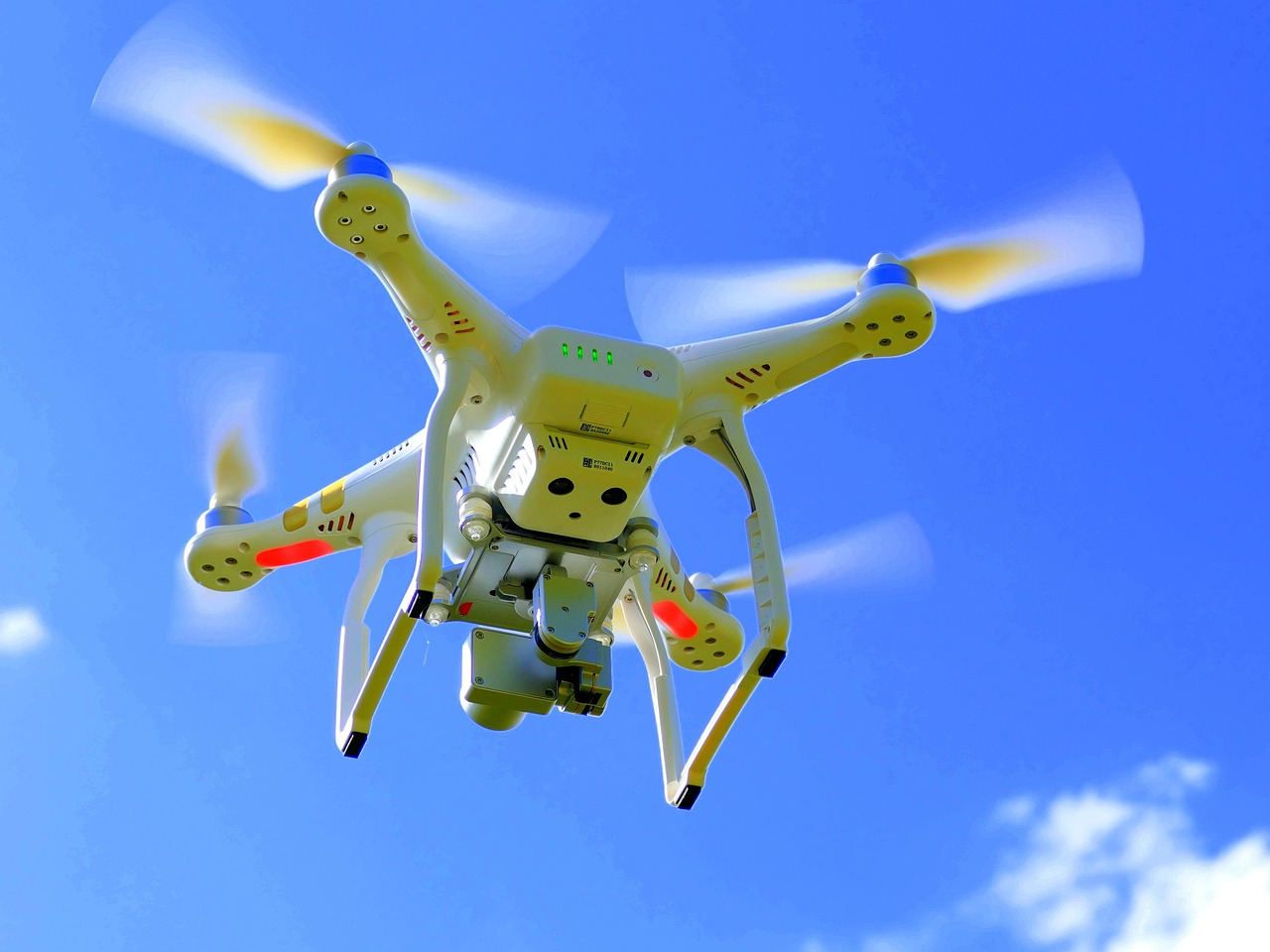
Illustrative photo of a consumer camera drone in flight; it is not an SE3 system or any drone named in this article.
SE3, a Munich startup building what it calls spatial intelligence software for autonomous machines, has raised a $30 million Series A led by Accel, with Keen, Lakestar and Seedcamp participating. The round, announced on November 12, comes about five months after the company came out of stealth with a €5.5 million seed, according to The Next Web. SE3 did not disclose its valuation or total funding, Tech Funding News reported.
The company is betting on a problem that modern warfare has made urgent: robots that can keep working when satellite navigation is jammed, and fleets built by different manufacturers that can actually cooperate.
At a glance
| Item | Detail | Source |
|---|---|---|
| Round | $30M Series A | TNW, Tech Funding News |
| Lead investor | Accel | TNW, Tech Funding News |
| Other investors | Keen, Lakestar, Seedcamp | TNW, Tech Funding News |
| Prior funding | €5.5M seed, about five months earlier | TNW |
| Customers and partners | Ukraine, Germany's Bundeswehr, HENSOLDT, Auterion, ERC System | SE3 via TNW and Tech Funding News |
| Next markets | Robotics, emergency response and other civilian uses from 2027 | SE3 via TNW |
What SE3 builds
Most drone companies build the aircraft and the software that flies it. SE3 sells only the software, and it is designed to sit between raw sensor data and action. Its platform connects drones and unmanned ground vehicles from different manufacturers and fuses what each one sees into a shared three-dimensional picture of the environment.
From that model, the software coordinates the group, optimizing each machine's behavior, route and position based on the terrain as conditions change. Operators command the fleet by voice, according to both outlets. Everything runs on edge devices aboard the machines, so the system does not depend on a constant cloud connection.
That design choice is central to the pitch. In contested areas, electronic warfare can jam satellite navigation and communications. A system that builds its own understanding of the surroundings from cameras and other sensors, and that does its computing on board, can keep operating when GPS and network links are unreliable. Tech Funding News said SE3 aims to let military operators manage larger fleets with fewer people.
Already in the field
SE3 says it is not a lab project. According to the company, it has shipped thousands of systems over the past two years and works on multiple contracts with Ukraine and with Germany's armed forces, the Bundeswehr. Its partners include defense electronics company HENSOLDT and scale-ups Auterion and ERC System. Those deployment figures are the company's own, as relayed by the two outlets.
The Auterion link shows how SE3 reaches hardware it does not make. Its software runs on Auterion's Skynode computers. Auterion founder and CEO Lorenz Meier told Tech Funding News that this means "our customers get that capability on the platforms they already operate, across manufacturers."
"Working in defence means our technology has to deliver under pressure in the field," SE3 co-founder and CEO Lukas Köstler said in the announcement.
A research pedigree
SE3 spun out of Professor Daniel Cremers' computer vision lab at the Technical University of Munich, where co-founders Köstler and Simon Klenk were doing PhDs in computer vision and robotics. Cremers, the company's chief science officer, holds TUM's chair for computer vision and AI and has received the Gottfried Wilhelm Leibniz Prize, one of Germany's most prestigious research awards.
Accel partner Matt Robinson said the team is "uniquely qualified to take on the challenge of building spatial AI for autonomous systems, something defence primes have found so difficult to do."
The case for a neutral layer
Köstler's argument, as Tech Funding News described it, is about lock-in. If each drone maker controls its own software, customers struggle to make systems from different vendors work together and can find themselves locked in within two or three years.
European procurement is moving in SE3's direction. The company designed its technology around the Modular Open Systems Approach, which encourages armed forces to integrate equipment from multiple makers, and Germany's MOSABw program is part of that push. The Next Web noted that the Netherlands made a similar bet when it backed Intelic's single command system for mixed drone fleets.
The open question, as Tech Funding News put it, is whether armed forces will buy neutral software from a startup or take it from the hardware makers they already use.
A crowded, well-funded field
SE3 is raising into a defense technology boom. The company points to the European Union's aim to mobilize €800 billion in defense spending by 2030 and to plans for a drone wall along the bloc's eastern flank. The Next Web cited Helsing's €12 billion valuation and Stark's rise to €3.5 billion in two years as signs of how much capital is flowing.
Closer competitors are smaller. Tech Funding News listed Norway's Six Robotics, which raised €12 million for software that lets one operator control a drone swarm, and London's Occam Industries, which raised a €3 million pre-seed for onboard autonomy built for GPS-denied battlefields. At the hardware end, Germany's Quantum Systems raised $1.2 billion in a Series D in July 2026 at about an $8 billion valuation, the outlet said. It also cited a Grand View Research estimate that the global autonomous intelligence, surveillance and reconnaissance systems market was worth $5.9 billion in 2025 and could reach $14.5 billion by 2033, a broader category than SE3's product.
Where the money goes, and what comes after defense
SE3 says the new funding will pay for engineering, commercial and operations hires, a UK office and a deeper presence in Germany and Ukraine as it fulfills existing contracts and adds customers.
Defense remains the focus for now. From 2027, the company plans to take the same spatial layer into robotics, emergency response and other settings where machines must cope with unpredictable environments, according to The Next Web. That is the part of the story most relevant beyond the military: the same problem of perceiving and coordinating in messy 3D space without reliable GPS faces warehouse robots, search-and-rescue drones and inspection vehicles.
What to watch
Key tests ahead include whether SE3 wins larger European procurement contracts under open-systems rules, how its software performs as electronic warfare evolves, and whether its civilian push in 2027 finds buyers outside defense.
How we reported this
DailyMech read The Next Web's and Tech Funding News' reports on the round in full. Deployment claims, contract relationships and plans are SE3's own as relayed by those outlets; DailyMech did not see contracts or a company filing and did not read SE3's press release directly. Competitor and market figures are as reported by Tech Funding News. DailyMech contacted no one for this article.
Published November 13, 2026. Facts checked against the cited sources by DailyMech's AI writer.
Sources
- Munich's SE3 raises $30M to give Europe's drones spatial intelligence, The Next Web, Nov. 12, 2026 (fully read).
- Accel leads $30M Series A in SE3, the Munich startup teaching drones to work without GPS, Abhinaya Prabhu, Tech Funding News, Nov. 12, 2026 (fully read).
DailyMech used AI tools to research and draft this article. Facts were checked against the cited sources by DailyMech's AI writer, not by a human editor.