Reuters Finds More Than $3 Billion in Chinese AI Projects Planned Around Restricted Nvidia Chips
A review of more than 150 Chinese procurement notices, plans and filings shows local governments, state contractors and universities still designing data centers around H100, H200 and H800 processors. The records show demand, not delivery, and they arrive as Nvidia loses the chief executive who argued loudest for selling to China.
Published
Last updated / Fact-checked on
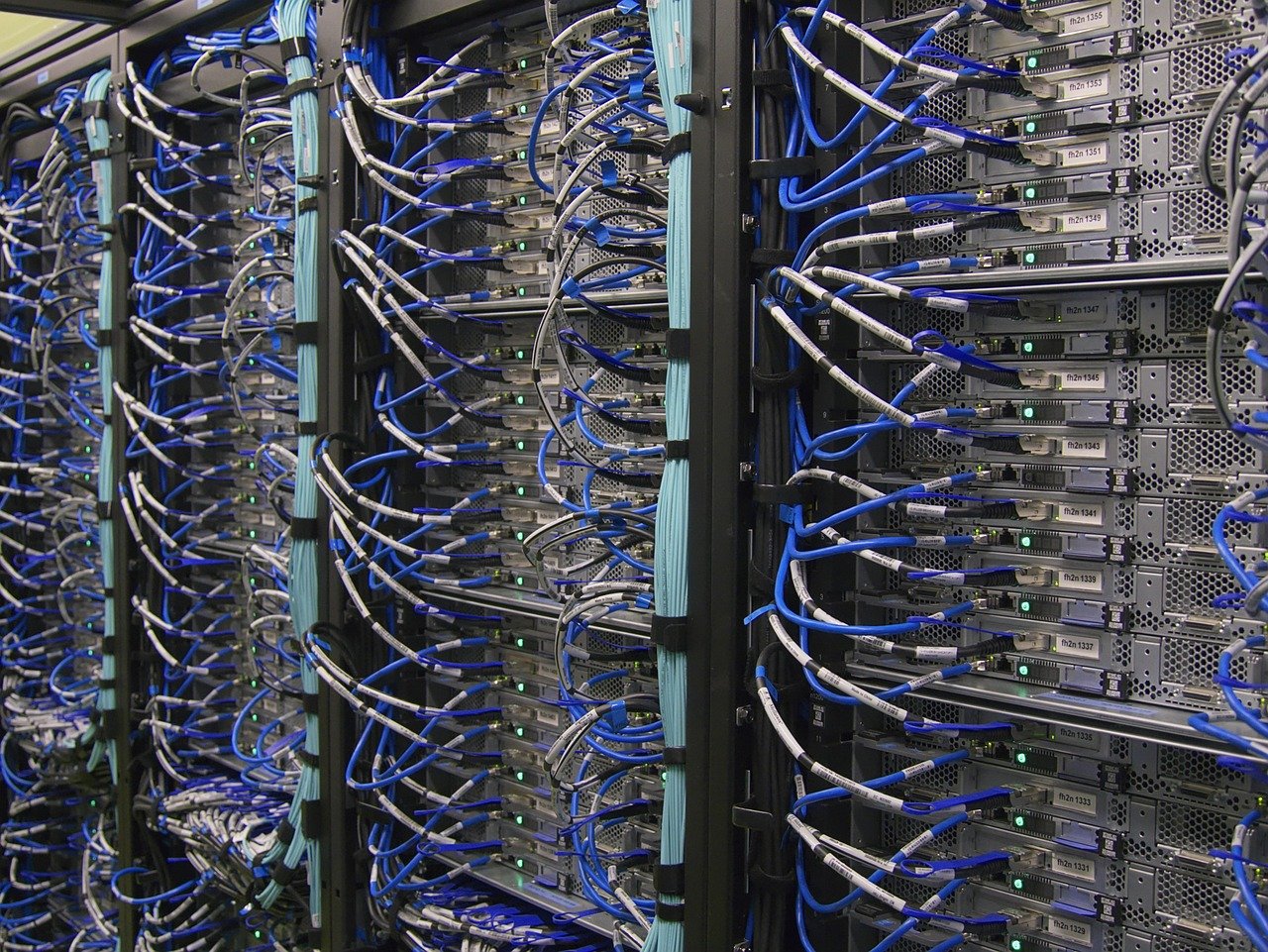
Illustrative photo of server racks in an unrelated data center. It does not show any of the Chinese facilities or Nvidia hardware discussed in this article.
Nvidia says U.S. export controls have effectively shut it out of China's AI data center market. Chinese planning documents tell a more complicated story.
A Reuters review published on Friday, Nov. 13, identified more than $3 billion in Chinese computing projects built around Nvidia processors that Washington restricts. Reuters reporter Eduardo Baptista examined more than 150 procurement notices, investment plans, construction contracts and corporate disclosures, and found projects and equipment agreements with a combined reported value above 23 billion yuan, or about $3.2 billion.
The projects stretch from coastal tech hubs to remote western provinces. They involve not only large tech companies but local government-backed ventures, state engineering groups, universities and regional computing centers.
At a glance
| Item | Detail | Source |
|---|---|---|
| Published | Nov. 13, 2026 | Reuters |
| Documents reviewed | More than 150 notices, plans, contracts and disclosures | Reuters |
| Combined reported value | More than 23 billion yuan (about $3.2 billion) | Reuters |
| Chips named | Nvidia H100, H200 and H800 | Reuters |
| What the total includes | Planned and contracted projects plus completed installations, including buildings and power systems | Reuters |
| What it does not show | How restricted chips reached Chinese users, or whether planned chips were delivered | Reuters |
What the documents show
Reuters' factbox lists the largest projects. In Xianyou county, in coastal Fujian province, a proposed 6.2 billion yuan ($873 million) AI computing center is seeking commercial partners and specifies Nvidia H100 chips. In Shaanxi province in the northwest, state-owned engineering group Sinomach said a subsidiary won a contract within a project for a 3 billion yuan computing center that specifies H100 and H200 processors.
In Jilin province in the northeast, an April government prospectus describes a 2.26 billion yuan project that pairs Nvidia H100 processors with Chinese-designed chips; the developer expects bank loans to cover about 80% of the cost. In Inner Mongolia, a 1.5 billion yuan development proposes installing 625 Nvidia H200 servers, and Chinese industry reporting in June said construction had begun on two buildings in its first phase.
Some projects are further along. In Gansu province, a local company awarded a 1.16 billion yuan construction contract in July for a computing center that plans to install about 3,072 Nvidia processors, with tender documents specifying H100 and H200 hardware. The contract went to a consortium led by a subsidiary of state-owned Shaanxi Construction Engineering. Reuters described the Gansu facility as a retrofitted commercial site that was expected to install thousands of Nvidia chips before year-end, but said the documents do not establish whether the processors arrived.
Other sites are already running restricted hardware, according to the records Reuters reviewed. The Wuxi municipal government in Jiangsu province said in March 2025 that a computing cluster using Nvidia H800 processors had entered operation. Shanghai-listed Damingcheng disclosed in June that a computing venture had built an H800 cluster in Fujian, tied to a services agreement originally worth 759 million yuan that later ended early.
Demand reaches down to campuses. Shenzhen University awarded a contract for three H100 processors in September, and Northwestern Polytechnical University, which is on a U.S. blacklist, bought two H200 chips the following month, Reuters reported separately.
Read the numbers carefully
Reuters is explicit about the limits. The $3.2 billion figure mixes planned investments, signed contracts and completed installations, and it covers buildings, power systems and other infrastructure, not just spending on Nvidia chips. A plan or tender that names a chip is evidence of demand, not proof that the chip was delivered. Reuters also says the documents do not establish how restricted hardware identified in its review reached Chinese users.
That distinction also applies to the market-share debate. Huang said last year that Nvidia's share in China had fallen from 95% to zero, and the company's August filing said it was effectively excluded from China's data center computing market. Yet an IDC report that Reuters cited in October estimated Nvidia still accounted for 34% of Chinese AI-accelerator shipments in the first half of 2026. Reuters noted that the two figures measure different things.
The Huang factor
The review landed a day after Jensen Huang resigned as Nvidia's chief executive on Thursday, Nov. 12. Reuters described the departure as coming amid a scandal over his relationship with a Chinese businesswoman, Alice Huang, a former executive associated with Singapore-based Nvidia cloud partner Megaspeed, whom U.S. authorities suspect of intelligence ties to Beijing. Megaspeed has denied illegally diverting Nvidia chips to China. Nvidia's board has launched an independent investigation and has said it has no reason to believe company secrets or U.S. national security were compromised. There has been no public finding that Jensen Huang broke export-control laws.
Reuters said the Chinese projects in its review have not been linked to Megaspeed or to the allegations involving Huang. Its argument is about leverage: Huang was a vocal advocate of easing export restrictions, and his exit could weaken Nvidia's lobbying position just as U.S. lawmakers press for tighter controls. That would raise the risk for Chinese operators still counting on Nvidia parts, who could face delays, supply disruptions, higher costs or forced redesigns around domestic chips.
The policy backdrop
Washington began restricting Nvidia's most advanced AI processors in 2022 and later tightened rules to cover modified chips built for China, including the H800. In January, the Trump administration moved to review H200 export licenses for eligible Chinese customers one by one, subject to conditions, according to Reuters.
Sunny Cheung, an analyst at the Washington-based Jamestown Foundation, told Reuters the findings support his view on enforcement: "Washington must stop focusing solely on who buys the chips on the surface and start examining who ultimately uses the computing power—and for what purpose."
The Reuters review adds to a week of evidence about how Chinese AI developers get access to U.S. hardware. Earlier, a forensic report by a former OpenAI researcher argued that several Chinese frontier models carry traces of training on export-controlled Nvidia Blackwell chips, without establishing where those chips were.
China's commerce ministry and Nvidia did not immediately respond to Reuters' requests for comment.
What to watch
Three things will show whether these projects survive. First, whether any of the planned centers in Fujian, Shaanxi, Jilin and Inner Mongolia switch their specifications to Chinese processors. Second, whether U.S. lawmakers or the Commerce Department move to tighten rules on chips and on remote access to computing after Huang's exit. And third, what Nvidia's next leadership says about China, and whether the company keeps pushing for looser controls.
For the AI industry, the review is a reminder that export controls shape plans on paper as much as hardware in racks. Billions of yuan in Chinese projects are still being designed around chips that, officially, they are not supposed to get.
How we reported this
DailyMech read Reuters' exclusive and its companion factbox in full. DailyMech has not seen the Chinese procurement documents; all project details, values and chip quantities are as Reuters reported them, including its currency conversions. Quotations are as reported by Reuters. DailyMech contacted no one for this article.
Published November 14, 2026. Facts checked against the cited sources by DailyMech's AI writer.
Sources
- Huang exit and US scrutiny imperil $3 billion in Chinese AI projects reliant on Nvidia, Eduardo Baptista, Reuters, Nov. 13, 2026 (fully read).
- Factbox-China's $3 billion-plus pipeline of Nvidia-powered AI data centres, Eduardo Baptista, Reuters via Investing.com, Nov. 13, 2026 (fully read).
DailyMech used AI tools to research and draft this article. Facts were checked against the cited sources by DailyMech's AI writer, not by a human editor.