Humanoid Robots Advance: ASUS Gallop Packs Factory Parts, GXO Plans Up to 1,000 Apptronik Apollos
ASUS puts its first humanoid to work on a real production line; GXO signs LOI for scaled warehouse deployment of Apollo via Robotics-as-a-Service.
Published
Last updated / Fact-checked on
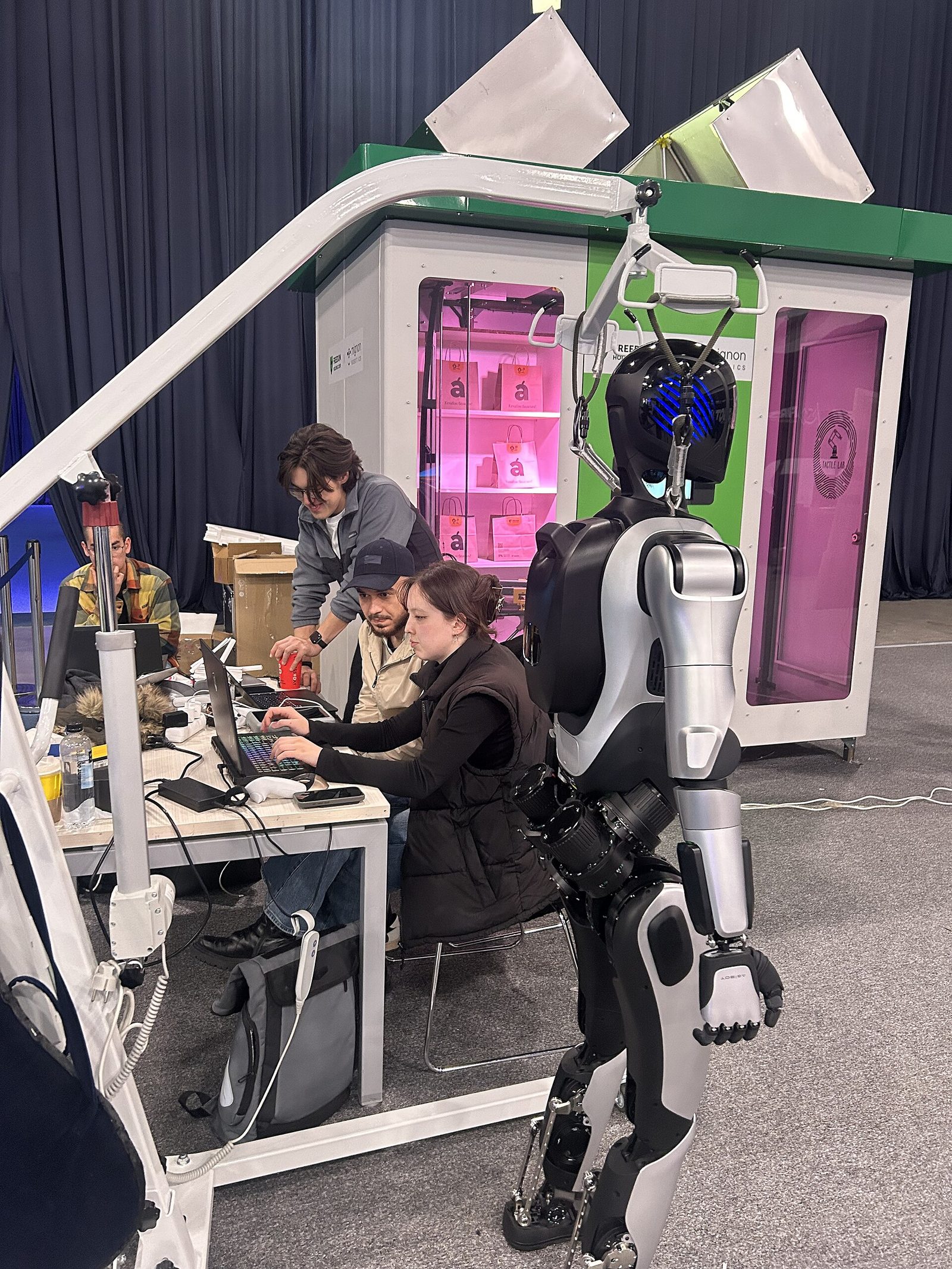

Illustrative photo of a humanoid robot being programmed; it is not ASUS Gallop, Apptronik Apollo, or any robot named here. Photo: ZhanatKappassov / Wikimedia Commons, CC0.
November 13, 2026, brought concrete progress on humanoid robots moving from demos into real industrial settings. ASUS detailed Gallop, its first humanoid, already packing motherboard accessories on an ASUS-group factory line. Separately, logistics giant GXO signed a letter of intent with Apptronik that could lead to up to 1,000 Apollo humanoids in warehouses over four years.
These developments highlight the shift toward factory- and warehouse-proven physical AI, with emphasis on dexterity, reliability, and economic viability.
ASUS Gallop
Gallop is ASUS's first humanoid, developed by the Humanoid Robotics business unit within its Physical AI Solutions group. It is currently learning a real workstation: packing 15 motherboard accessories (many in thin clear bags) at an ASUS EMS plant, targeting about 20 seconds per board and 99.5% success. The robot runs on a single NVIDIA Jetson AGX Thor computer, uses open AI models rather than proprietary ones exclusively, and learns primarily by watching skilled workers via head-camera footage, simulation, and VR teleoperation.
ASUS builds its own dexterous hands with a sense of touch. A wheeled version is planned. Customer pilots are targeted for 2027, with market availability in the second half of 2028. Co-CEO S.Y. Hsu presented progress on CNBC, stressing that the robot must perform the job every day, not just once in a demo.
GXO and Apptronik Apollo
GXO Logistics, the largest pure-play contract logistics provider, signed a letter of intent with Apptronik to expand trials of the Apollo humanoid and develop a Robotics-as-a-Service (RaaS) commercial model. Subject to meeting jointly agreed performance, safety, and operational KPIs, the companies intend a global rollout of up to 1,000 Apollos over four years, with initial North American commercial deployment in late 2027.
Trials will cover goods-to-person and person-to-goods picking, case and tote movement, packing, and sortation. Earlier pilots included autonomous picking of small consumer goods, and the partners have evaluated more than 50 logistics tasks at Apptronik's Robot Park facility. GXO has run over 45 humanoid pilots across vendors. The RaaS structure lets GXO scale robot-by-robot without large upfront capital outlays; economics discussions have referenced targets around $15–20 per hour for viability.
At a Glance
| Initiative | Status | Timeline | Key Point |
|---|---|---|---|
| ASUS Gallop | Real factory packing station | Pilots 2027, market 2H 2028 | In-house hands, Jetson Thor, learns from workers |
| GXO–Apptronik | LOI for scaled trials | Commercial late 2027, up to 1,000 over 4 years | RaaS model, conditional on KPIs |
| Prior work | Successful pilots | 2024–2026 | 50+ tasks evaluated, multiple vendors |
Broader Context
These announcements arrive alongside other robotics news: Hugging Face's LeRobot released RoboCap-10k (10,000 hours of egocentric work data), OpenAI reportedly disbanded its dedicated robotics team in favor of general-purpose models, and various humanoid pilots continue. The focus is shifting from lab demos to measured productivity in live facilities.
Challenges remain: dexterity for thin bags and varied objects, uptime, safety certification, and cost reduction to compete with human labor on specific tasks.
What to Watch
Measured success rates and cycle times for Gallop; whether GXO–Apptronik trials meet KPIs for the full scale-up; cost trajectories under RaaS; and integration with existing warehouse automation. Independent reporting on reliability will be critical.
How We Reported This
Based on ASUS pressroom details (November 13), GXO's November 12 announcement and investor release, and coverage from Forbes, Unite.AI, Humanoids Daily, DC Velocity, and others, reviewed November 13. Deployment numbers and timelines are conditional or planned as stated by the companies. No independent verification of performance claims.
Published and fact-checked November 13, 2026.
Sources
- Factory-Proven Physical AI: Why ASUS Is Building a Humanoid Robot, ASUS Pressroom, November 13, 2026, https://press.asus.com/blog/factory-proven-physical-ai-asus-gallop-humanoid-robot/
- GXO and Apptronik Expand Partnership to Scale Humanoid Deployment, GXO, November 12, 2026
- Forbes, Unite.AI, Humanoids Daily, DC Velocity coverage, November 12–13, 2026
- Additional robotics context from Machine Dawn, RobotsBeat, and MIT News
DailyMech used AI tools to help research and draft this article; it was fact-checked by our editors.