Andy Rubin's Genki Robotics Shows Its First Humanoid to Japan's Prime Minister, Pitching an 'Android for Robots'
The Tokyo startup's biped made its public debut at Sanae Takaichi's physical AI meeting just three days after it first walked, as Japan pushes for a 30% share of the global market by 2040.
Published
Last updated / Fact-checked on
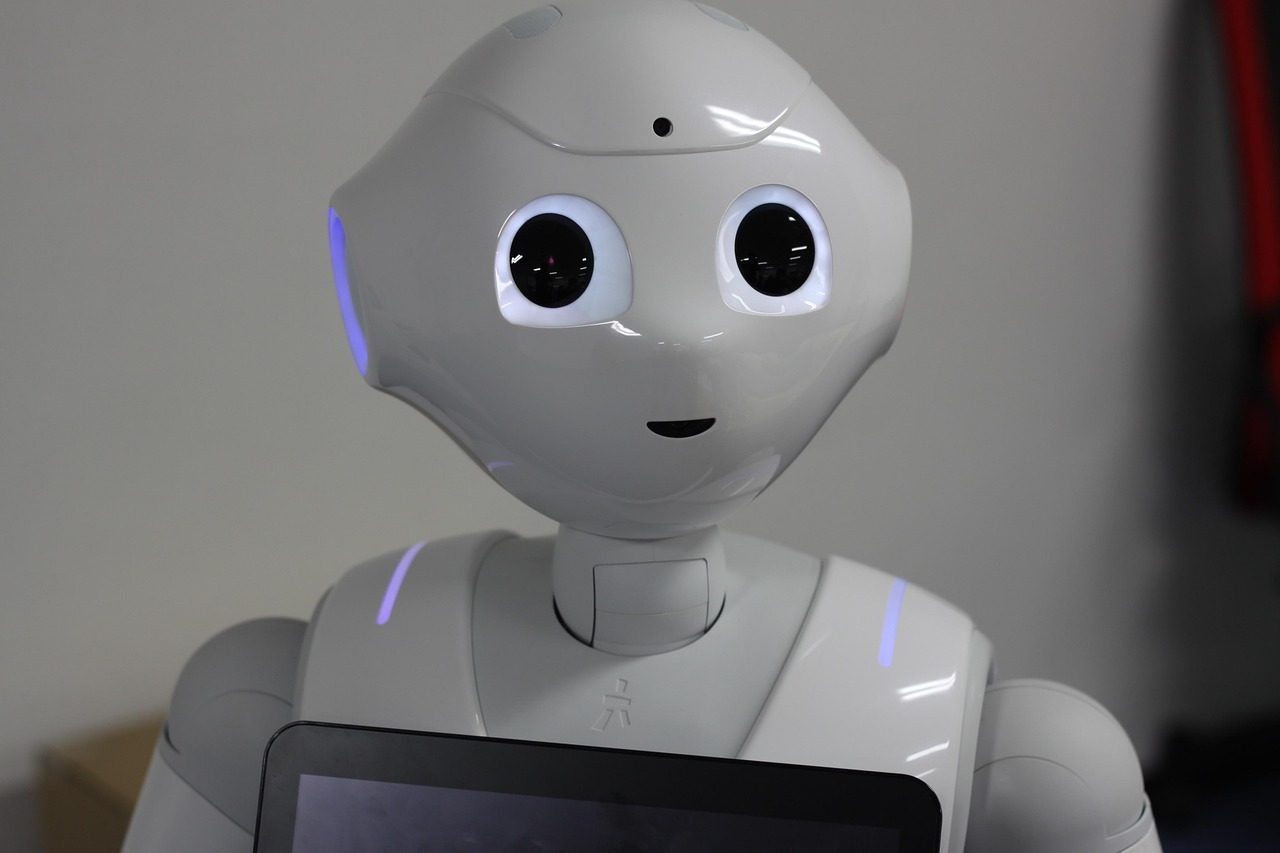
Illustrative image of SoftBank's Pepper service robot; not a depiction of Genki Robotics or its humanoid. Image: Pixabay, Pixabay Content License.
Genki Robotics, the Tokyo humanoid startup founded by Android creator Andy Rubin, showed its robot in public for the first time on Thursday, November 12. The venue was not a trade show or a product launch event. It was the Prime Minister's Office, the Kantei, where Prime Minister Sanae Takaichi met executives from six robot and component makers as part of her government's push on physical AI.
The company's account of how the robot got there says a lot about where it is in development. According to Humanoids Daily, which reported on the meeting and on Takaichi's posts about it, Genki said the unit was "fresh off the line": its last parts arrived on Friday, the team assembled it over the weekend, and it took its first steps on Monday.
What Was Shown
The robot is a full-size biped with a grey and white shell, a dark faceplate for a head, green accents on its forearms, and black five-fingered hands with green fingertips. At the Kantei it did not walk. It stood on a fixed support stand while a screen beside it played footage of the robot walking in an empty room, in an office and on grass, and doing tabletop work.
On a table next to the robot, Genki laid out four of its in-house joint actuators in four sizes. The company told the prime minister it designs its hardware itself, "from the parts that move the joints to the cameras," and that it intends to draw on Japanese component makers, manufacturing and supply chains to compete globally.
Genki listed the abilities it is aiming for as walking on flat ground and stairs, patrolling, and carrying objects, which it described as "the movements people make normally while keeping their balance." It has been through several rounds of prototypes and is now building its first product model toward the end of the year, according to Takaichi's summary as reported by Humanoids Daily. The company is also talking to Japanese telecom operators about connecting the robot to domestic mobile networks.
The Android Playbook
The strategic pitch was familiar to anyone who followed the smartphone era. Rubin built Android into an open operating system that phone makers and app developers could build on, and Genki says it wants to do the same for humanoids.
"With Android, we built an open ecosystem, brought in all kinds of developers, and it came to be used around the world," the company said, according to Humanoids Daily. "We want to take a similar strategy with humanoids and build a platform many different people can take part in."
In July, Rubin told Nikkei Asia that Genki would launch its first product this year and open its operating system to outside developers, who could create and sell new robot behaviors through a marketplace modeled on an app store. If that happens, Genki would be competing less on any single robot and more on becoming the software layer that other developers and hardware partners build on.
That is a different bet from most U.S. humanoid makers, which tend to pair proprietary hardware with proprietary AI models and sell into specific warehouse or factory workflows. It is also a bet that has not yet been tested: the company has published no specifications, benchmarks, pricing or customer names.
Who Is Behind It
Genki was represented at the meeting by Rubin, its CEO, and CTO Koichi Nishiwaki. Nishiwaki has worked on humanoid walking since the early 2000s. He earned a PhD at the University of Tokyo in 2002, spent nearly a decade at Japan's National Institute of Advanced Industrial Science and Technology, and joined SCHAFT, the University of Tokyo spinout, in 2013, shortly before Google acquired it under Rubin. He stayed at Google until 2019 and later worked at Preferred Networks and Toyota's Woven unit.
Rubin led Google's robotics push in 2013 and 2014, when the company bought eight robotics firms including SCHAFT and Boston Dynamics. He left Google in 2014, founded the investment firm Playground Global, and launched the phone maker Essential, which shut down in 2020.
Genki operated in stealth for most of its first year. Reports of the company first surfaced in November 2025. It raised a seed round of about $50 million with investors including Andreessen Horowitz, DCM, AMD, Incubate Fund and X&, and Axios reported in April 2026 that it had raised a Series A at a valuation of about $1 billion, according to Humanoids Daily. Rubin has said he could not have recruited his roughly 30-person founding team in Silicon Valley, and he has framed the robots as "a workforce multiplier" for Japan's shrinking pool of entry-level workers.
Japan's Physical AI Push
The setting mattered as much as the robot. Physical AI is one of 17 strategic fields in the Takaichi government's growth plan. Tokyo is targeting a 30% global market share and a 20 trillion yen (about $130 billion) market by 2040. At the meeting, Takaichi said she wanted the public and private sectors to roll out physical AI "on a large scale and strategically," and asked economic and fiscal policy minister Minoru Kiuchi to reflect support measures in the growth strategy due at the end of the year.
For Japan, which once led the world in industrial robots and early humanoids such as Honda's ASIMO, the meeting was a signal that the government wants domestic players in a race currently dominated by U.S. and Chinese companies. A high-profile founder building on Japanese actuators and supply chains fits that story neatly.
Why It Matters
The humanoid sector is moving fast. This week alone, Agility Robotics began its first full week as a Nasdaq-listed company, GXO signed a letter of intent for up to 1,000 Apptronik Apollo robots, and ASUS unveiled its Gallop factory humanoid. Genki enters late, but with a founder whose biggest success came from turning a platform into an industry standard.
Limits to Keep in Mind
Genki has not shown the robot walking live in public, released specifications, or named customers or pricing. The walking footage was company-supplied. A unit assembled over a weekend is a prototype, not a product, and the timeline for its first commercial model rests on the company's own statements.
What to Watch
Watch for a live walking demonstration, published specs, the first developer tools for its operating system, and any Japanese carrier or manufacturing partnership. Also watch whether Tokyo's year-end growth strategy includes funding that benefits Genki and its peers.
How We Reported This
Based on Humanoids Daily's report of the November 12 Kantei meeting, which draws on Prime Minister Takaichi's posts on X, plus company background from RobotToday, Robotico and XMAQUINA, reviewed November 13, 2026. DailyMech did not see the robot in person.
Published and fact-checked November 13, 2026.
Sources
- Humanoids Daily, "Andy Rubin's Genki Robotics Shows Its Humanoid to Japan's Prime Minister," November 13, 2026, https://www.humanoidsdaily.com/news/genki-robotics-humanoid-debut-takaichi-kantei
- RobotToday, "Genki Robotics Shows Humanoid Prototype to Japan's Prime Minister Sanae Takaichi," November 13, 2026, https://robottoday.com/industry-briefing
- RobotToday, "Genki Robotics" company profile, November 2026, https://robottoday.com/suppliers-discovery/genki-robotics
References
- Robotico, "Genki Robotics | Market Data & Profile," November 2026, https://robotico.market/company/genki-robotics
- XMAQUINA, "Genki Robotics: The Man Behind Android Is Building One," November 2, 2026, https://www.xmaquina.io/blog/genki-robotics-the-man-behind-android-is-building-one
- Global Startup EXPO 2026, "Andy Rubin, Genki Robotics CEO," session page, https://global-startup-expo.com/en/session/session061/
DailyMech used AI tools to help research and draft this article; it was fact-checked by our editors.