May Mobility Picks Volkswagen's ID. Buzz for a Plan to Put 10,000 Robotaxis on the Road by 2031
The Michigan self-driving company, which is heading for Nasdaq through a SPAC merger, says the electric van will carry its autonomous driving kit, with U.S. road tests in early 2027 and first production vehicles in 2028. It is promising to cut vehicle costs by more than half.
Published
Last updated / Fact-checked on
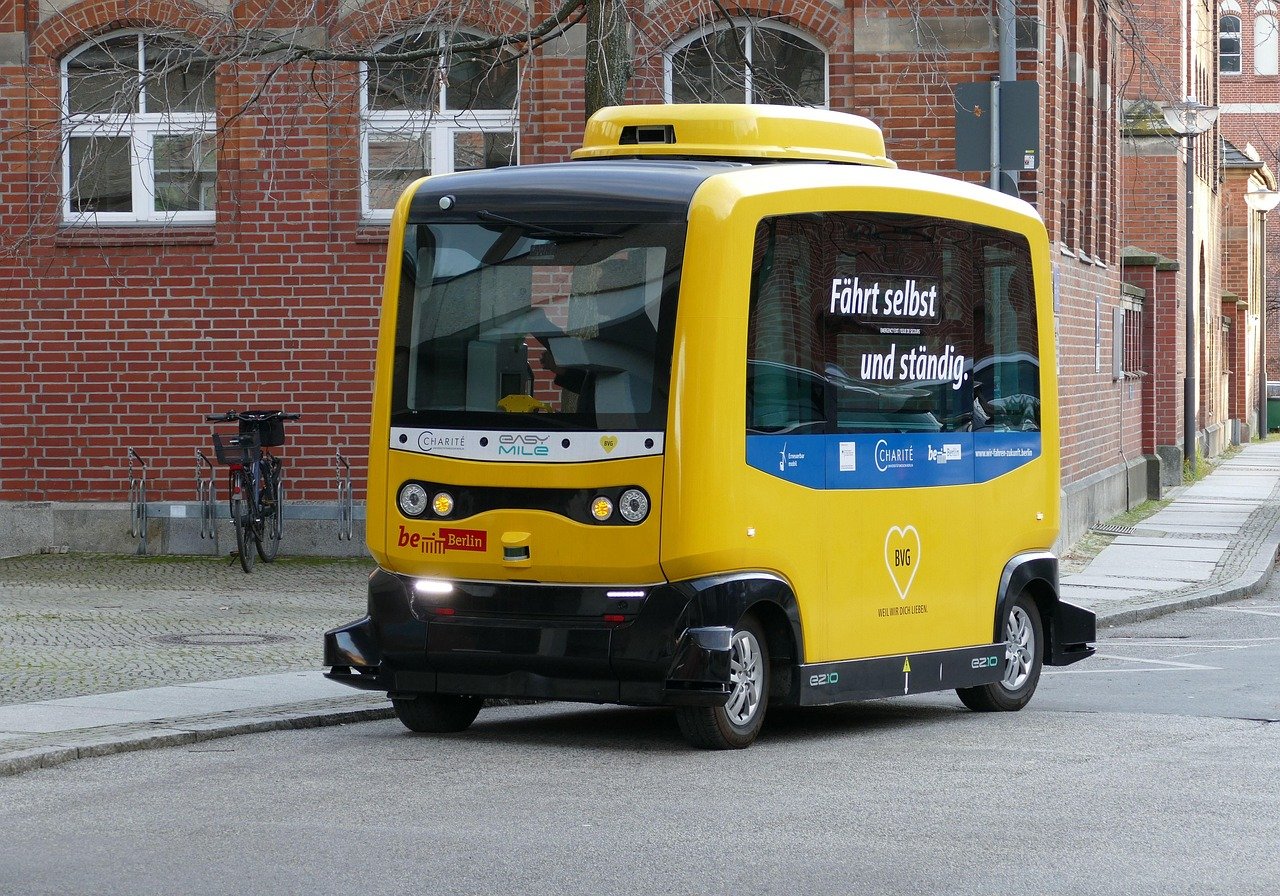
Illustrative photo of an autonomous electric shuttle operated in Berlin. It is not a May Mobility vehicle and not a Volkswagen ID. Buzz.
May Mobility, an Ann Arbor, Michigan, developer of self-driving technology for ride-hail services, has chosen Volkswagen's electric ID. Buzz van as the vehicle for its next robotaxi fleet. The company says it is targeting deployment of more than 10,000 autonomous ID. Buzz vehicles through 2031, a big jump for a business that today runs commercial service in three U.S. locations.
The plan was announced on Thursday, Nov. 12, the same day May Mobility held an Investor Day as part of its march toward a Nasdaq listing. Trade outlets including electrive, Gasgoo and RobotToday reported the details on Friday.
"Scaling autonomous ride-hail depends heavily on the vehicle platform, and the Volkswagen ID. Buzz gives us one well suited for it," said Edwin Olson, May Mobility's founder and chief executive, in the company's announcement.
At a glance
| Item | Detail | Source |
|---|---|---|
| Vehicle | Volkswagen ID. Buzz, adapted to May Mobility's autonomous driving kit (ADK) | May Mobility |
| Target | More than 10,000 autonomous ID. Buzz vehicles through 2031 | May Mobility |
| U.S. road tests | Early 2027 | May Mobility |
| First production vehicles | Targeted for 2028 | May Mobility |
| Partners | ECARX (integration); Charlton Intelligence.ai (deployment, supply chain) | May Mobility; Gasgoo |
| Cost goal | All-in savings of more than 50% versus its current vehicle | May Mobility |
| Track record | More than 600,000 commercial rides, 1.1 million miles, U.S. and Japan | May Mobility |
How the deal is built
May Mobility does not plan to build cars or run its own fleets. It calls itself an asset-light, partnership-first company: it supplies the driving system, and fleet operators and ride-hail platforms deploy the vehicles.
Under the plan, May Mobility will receive ID. Buzz vehicles adapted to its ADK design requirements, creating what it calls a production platform for scaling autonomous fleets. ECARX, a Nasdaq-listed automotive computing company it already works with, will integrate May Mobility's autonomous driving system into an "AV-ready" version of the van. Charlton Intelligence.ai has joined to help deploy the vehicles.
Gasgoo reported that ECARX and May Mobility signed a strategic framework agreement in May 2026 covering a customized AI central computing platform and sensor suite for next-generation robotaxis, and that choosing the ID. Buzz moves that work into Level 4 vehicle engineering. ECARX will also coordinate the supply chain with Charlton, Gasgoo said.
Notably, the announcement comes from May Mobility, not from Volkswagen. The release includes no statement from the carmaker, and a DailyMech search turned up no matching Volkswagen announcement. Electrive reported that Volkswagen will technically adapt the van before May Mobility's system is fitted. May Mobility is also not the only company eyeing the van for driverless service: InsideEVs noted that Volkswagen's own MOIA unit recently began testing an autonomous version of the ID. Buzz in Los Angeles.
May Mobility said development is underway and that it will release vehicle specifications, testing and deployment details later. It gave no date for that update.
Why the van, and why the cost target matters
May Mobility pitched the ID. Buzz partly on looks and comfort. It said the electric van, which draws on the design of the original VW Bus, offers multiple entry doors and generous interior space, and a design that will set it apart from other robotaxis.
The more important number is cost. The company says its supply-chain work with ECARX and Charlton supports a target of more than 50% all-in savings compared with its current-generation vehicle. In robotaxis, the price of each vehicle and its sensor and computing hardware is a major factor in whether a fleet can ever turn a profit. RobotToday's editors cautioned that the figure remains a target rather than a reported result.
How the driving system works
May Mobility describes its software as physical AI that runs entirely on the vehicle. It uses a predictive world model: the system simulates up to 10 seconds into the future, evaluates multiple driving strategies in real time and executes the one it judges best. Electrive noted that running on onboard computers rather than in the cloud lets the vehicle react with almost no delay and stay independent of a mobile network connection.
The company says it has completed more than 600,000 commercial autonomous rides over 1.1 million miles in the United States and Japan, including three driver-out deployments, meaning routes with no safety driver aboard.
Where it operates now
Today, May Mobility runs commercially with Lyft in Atlanta and offers autonomous ride service in Eden Prairie and Grand Rapids, Minnesota. It is targeting a commercial launch with Uber in Arlington, Texas, in 2027. In Japan, a six-month on-demand pilot with NTT Mobility started in Nagoya in September. The company also lists Toyota and Grab among its partners.
Against that footprint, 10,000 vehicles by 2031 is a large leap, and it depends on partners buying and operating the vans.
The Nasdaq angle
The timing is not accidental. May Mobility announced on Sept. 16 a proposed business combination with ACP Holdings Acquisition Corp., a publicly traded special purpose acquisition company, backed by a fully committed $120 million private investment, according to the company's Investor Day notice. The Nov. 12 Investor Day, featuring Olson and finance chief Tom Fennimore among others, was part of that listing process. A large, named vehicle program gives the company a concrete growth story to show public-market investors.
Why it matters
The robotaxi race is increasingly about manufacturing and unit costs, not just software. By pairing with a mass-produced electric van and outsourcing integration to a computing supplier, May Mobility is betting it can scale without the capital burden of building its own vehicles. If the 50% cost cut holds, it could make smaller operators viable customers for driverless fleets.
What to watch
Watch for the promised vehicle and testing details, and whether Volkswagen publicly confirms its role. Watch the start of U.S. road tests in early 2027 and the Uber launch in Arlington. And watch whether the SPAC deal closes and how public investors value a company whose biggest numbers are still targets.
How we reported this
DailyMech read May Mobility's press release and Investor Day notice, and reports from electrive, Gasgoo, RobotToday and InsideEVs, in full. The ECARX framework-agreement history comes from Gasgoo only, and the description of Volkswagen adapting the van from electrive only. DailyMech did not review the Investor Day presentation and found no Volkswagen statement. The 10,000-vehicle and cost figures are company targets. DailyMech contacted no one for this article.
Published November 14, 2026. Facts checked against the cited sources by DailyMech's AI writer.
Sources
- May Mobility Plans to Bring Autonomous Volkswagen ID. Buzz Vehicles to Global Robotaxi Platforms, May Mobility, Nov. 12, 2026 (fully read).
- May Mobility to host Investor Day on Thursday, November 12, 2026, May Mobility, Nov. 9, 2026 (fully read).
- May Mobility to convert 10,000 VW ID. Buzz vehicles into robotaxis, electrive, Nov. 13, 2026 (fully read).
- ECARX, May Mobility select Volkswagen ID. Buzz for 10,000-vehicle Robotaxi plan, Gasgoo, Nov. 13, 2026 (fully read).
- The VW ID. Buzz Is Getting A New Job As A Robotaxi, InsideEVs, Nov. 13, 2026 (fully read).
- May Mobility Plans More Than 10,000 Volkswagen ID. Buzz Robotaxis Through 2031, RobotToday, Nov. 13, 2026 (fully read).
DailyMech used AI tools to research and draft this article. Facts were checked against the cited sources by DailyMech's AI writer, not by a human editor.