ULA's Vulcan Fails on Its Return to Flight, Destroying 40 Amazon Leo Satellites in the Company's First Outright Loss
The rocket lifted off from Cape Canaveral on Sunday and suffered an anomaly about 10 minutes into flight, during the upper-stage burn. It was meant to be the first of 38 Vulcan launches Amazon bought for its Starlink rival, and it leaves both companies waiting on an investigation.
Published
Last updated / Fact-checked on
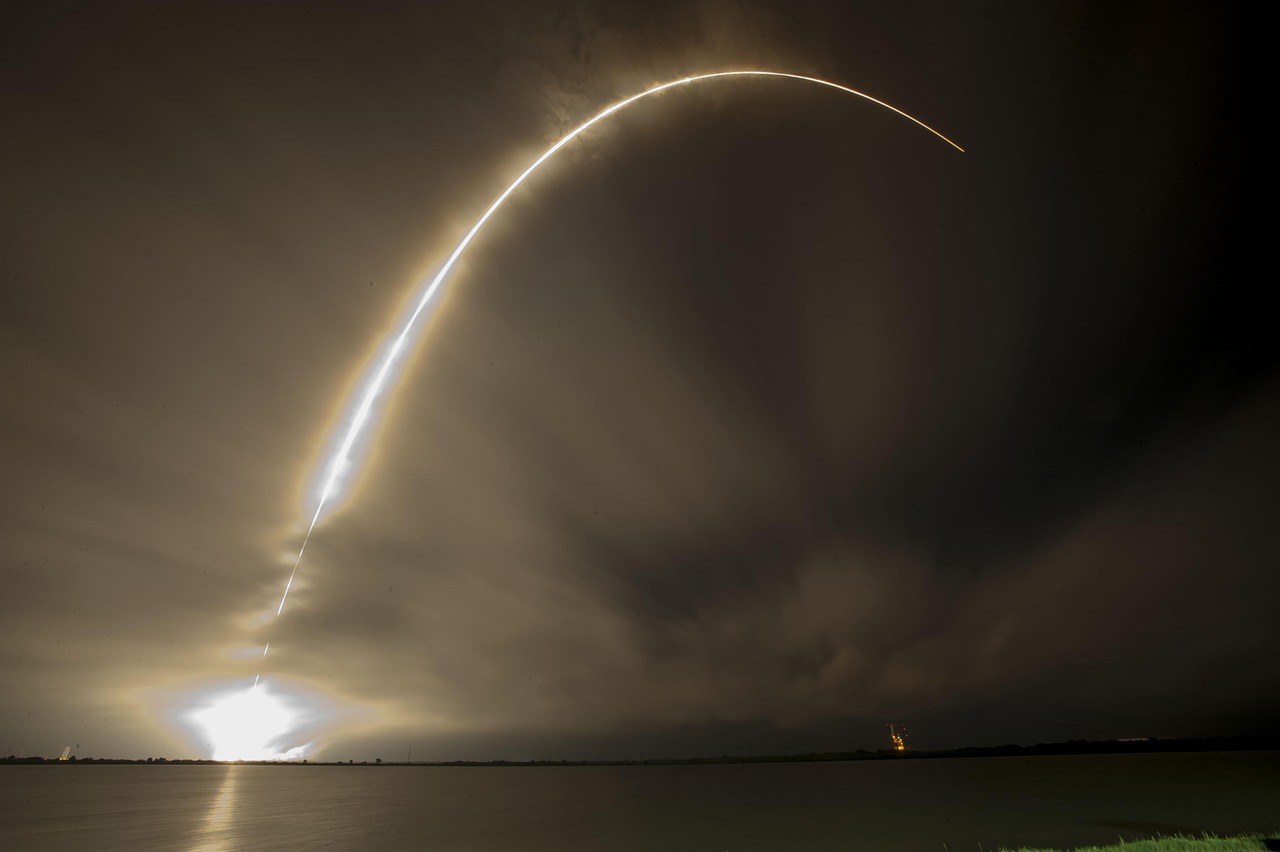
Illustrative long-exposure photo of an earlier night rocket launch. It does not show Sunday's Vulcan flight.
A United Launch Alliance Vulcan rocket carrying 40 of Amazon's Leo broadband satellites failed on its way to orbit on Sunday, destroying the payload. It was the first outright mission failure since ULA, a joint venture of Boeing and Lockheed Martin, was formed in 2006, according to Spaceflight Now and Reuters.
"Based on data received by our Launch Director, we confirm that the Vulcan vehicle launched from Space Launch Complex 41 suffered an anomaly 10 minutes into the flight and failed to deliver the Amazon mission to orbit," ULA said in a statement posted about 50 minutes after liftoff. The company said it would work with its customer and "other appropriate organizations" to find the cause and return to flight as quickly as possible.
It is a costly setback for two programs that were already behind. Vulcan was flying for the first time in nine months. Amazon's Leo network, built to compete with SpaceX's Starlink, has so far put only a small part of its planned constellation in orbit, The Verge noted.
At a glance
| Item | Detail | Source |
|---|---|---|
| Liftoff | 12:40 p.m. EST (9:40 a.m. PT), Nov. 15, Cape Canaveral pad 41 | Spaceflight Now |
| Failure | Anomaly about 10 minutes into flight, during the Centaur upper-stage burn | ULA via Spaceflight Now |
| Payload | 40 Amazon Leo satellites, all lost | ULA, Reuters |
| Flight number | Fifth Vulcan launch; first in nine months | Spaceflight Now |
| Amazon's Vulcan order | 38 launches; this was the first | Spaceflight Now, The Verge |
| Leo satellites that would have been launched to date | 436 of more than 3,300 needed | Spaceflight Now |
What happened on the way up
The 214-foot Vulcan left the pad at the very end of its launch window. Its first attempt on Friday was scrubbed after a gaseous nitrogen plant serving several launch providers went down, and Saturday's try was called off over network problems between the rocket and ground systems, Spaceflight Now reported. On Sunday, controllers held the countdown at 20 seconds because of an unexplained technical issue, fixed it, and launched.
Six Northrop Grumman solid rocket boosters and two methane-fueled BE-4 engines from Blue Origin produced about 3.8 million pounds of thrust at liftoff. The boosters, which had caused trouble on earlier flights, appeared to work normally and fell away less than two minutes after liftoff.
After that, Spaceflight Now said, things looked off. The first stage appeared to burn longer than ULA's pre-launch timeline called for and separated from the hydrogen-fueled Centaur upper stage later than expected. Telemetry-driven animation then showed the Centaur making unusual orientation changes early in a burn that was planned to last 12 minutes and 15 seconds. ULA's update placed the problem during that Centaur firing. The launch broadcast ended without saying whether the burn ran its full length.
None of those observations is a confirmed cause, and it is not yet known whether the problem behind Sunday's countdown hold played a role. ULA said it is "committed to full transparency with our customers, and they will have visibility into the investigation process."
A rocket that was just getting back on track
Vulcan replaces ULA's Atlas 5 fleet, and Sunday's flight was supposed to show it was ready for a busy schedule. Instead, it now faces what Spaceflight Now called a potentially significant grounding.
The rocket had been sidelined while ULA and Northrop Grumman fixed problems with booster nozzles that marred two earlier flights, one in 2024 and one this February. ULA was free to fly commercial missions in the meantime, but the U.S. Space Force put Vulcan's national security launches on hold pending more analysis. "We've identified three credible causes, and we have taken positive steps to mitigate all of those," ULA CEO Mark Peller told Aviation Week in a pre-flight interview quoted by Spaceflight Now.
There is also an engine question to settle. Blue Origin's New Glenn exploded on its pad last May because of an oxygen valve problem in one of its BE-4 engines, the same engine type that powers Vulcan's first stage. Peller said Blue Origin had developed a design improvement and retrofitted it to the engines on this rocket. There is no indication yet that the engines caused Sunday's failure.
NASA Administrator Jared Isaacman offered help on X. "The team at @NASA is available to assist in all matters related to the investigation and remediation effort. Artemis, Moon Base, and the nation need ULA," he wrote.
What it means for Amazon Leo
Amazon has spread its launches across several providers: 38 Vulcan flights, 24 on Blue Origin's New Glenn, 24 on Europe's Ariane 6 and 13 on SpaceX's Falcon 9, according to Spaceflight Now. ULA has already flown eight Leo missions on Atlas 5 rockets. Sunday's flight would have brought the number of Leo satellites launched to 436, out of more than 3,300 needed for the full network.
Now two of Amazon's biggest launch suppliers are grounded or waiting: Vulcan until its investigation ends, and New Glenn until it returns to flight after the May explosion.
Amazon stood by its partner. "There is risk with any launch, and that's especially true for inaugural missions like LV-01," the company posted on X, The Verge reported. "ULA has been a trusted partner for Amazon, and we believe they'll learn from this mission and deliver on their long-term plans for Vulcan."
Why it matters
Amazon is trying to catch Starlink, whose owner SpaceX flies its own rockets. Amazon's plan depends on rockets built by other companies, and Sunday showed the risk in that: one failure cost a full batch of 40 satellites and leaves the next Vulcan launches on hold until the cause is found.
For ULA, the loss lands on the rocket meant to carry its future business, from Amazon's constellation to Space Force missions. A long investigation would push back Leo launches and could add to the delay for national security missions that were already on hold for Vulcan.
What to watch
Watch for ULA's first findings on the Centaur burn and whether investigators look at the first stage's longer-than-planned firing. Watch whether Amazon shifts more launches to Falcon 9 or Ariane 6 while Vulcan is grounded, and when New Glenn returns. And watch whether the Space Force changes its timeline for certifying Vulcan for national security work.
How we reported this
DailyMech read Spaceflight Now's full report, The Verge's report including ULA's and Amazon's statements, and Reuters' brief. SpaceNews also covered the failure, but its full article did not load and it is not used. The cause of the failure is not known; details about the first-stage burn and Centaur orientation are Spaceflight Now's observations, not findings. DailyMech contacted no one for this article.
Published November 15, 2026. Facts checked against the cited sources by DailyMech's AI writer.
Sources
- ULA suffers first outright failure with loss of Vulcan rocket carrying 40 Amazon Leo satellites, Spaceflight Now, Nov. 15, 2026 (fully read).
- Vulcan rocket fails, destroying 40 Amazon Leo satellites, The Verge, Nov. 15, 2026 (fully read).
- US rocket fails after launch, payload of Amazon internet satellites destroyed, Reuters via Investing.com, Nov. 15, 2026 (fully read).
DailyMech used AI tools to research and draft this article. Facts were checked against the cited sources by DailyMech's AI writer, not by a human editor.