Ten Governments Sign the 'San Francisco Declaration,' Agreeing on What Counts as Sensitive in the AI Supply Chain, Days Before Trump Meets Xi
The U.S. and nine Pax Silica partners, including Japan, South Korea, India and the U.K., signed a declaration on Sunday that defines the technologies and infrastructure behind 'super intelligence' supply chains and treats protecting them as a joint job. Germany, the Netherlands, Sweden and the European Commission are expected to follow next week, the Financial Times reported.
Published
Last updated / Fact-checked on
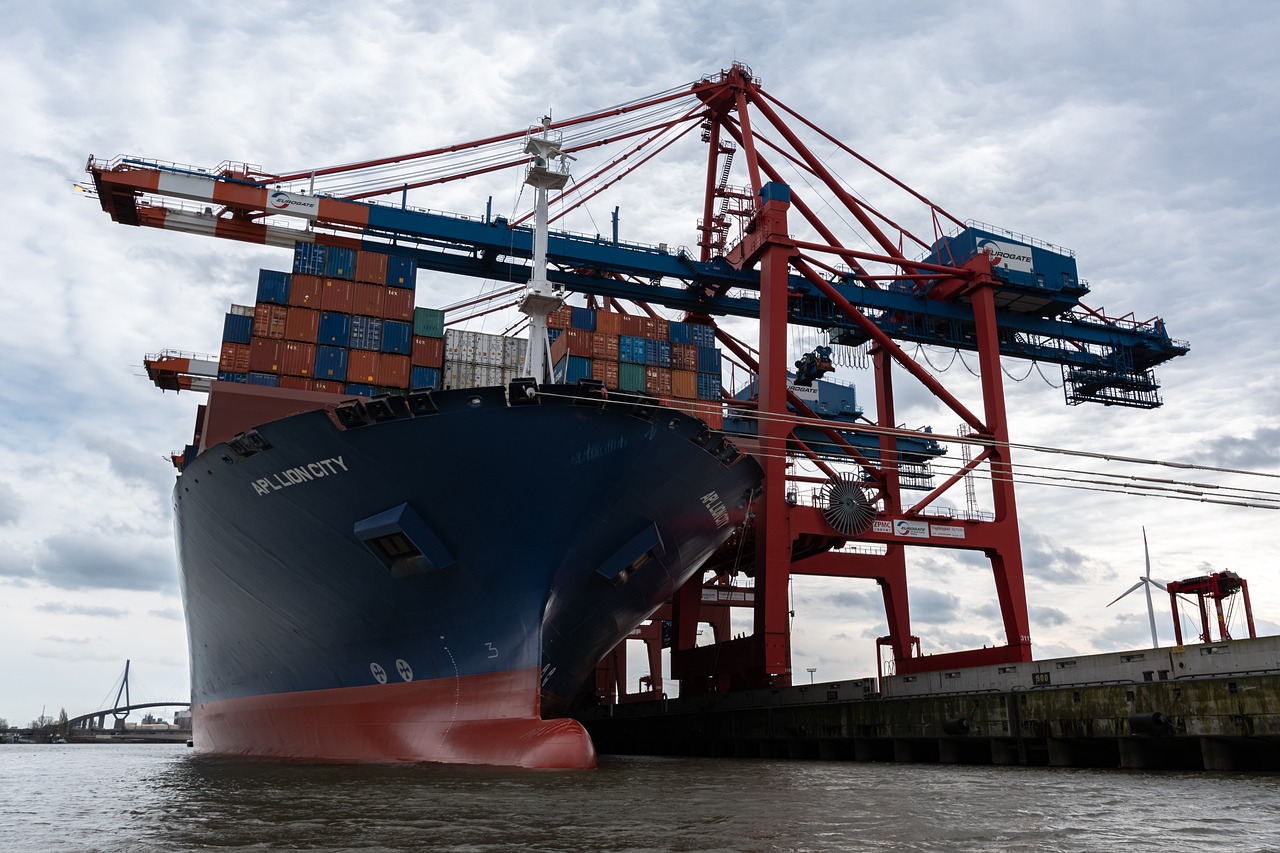
Illustrative photo of a container ship at the port of Hamburg. Ports and logistics networks are among the infrastructure the declaration covers.
The United States and nine partner governments signed a pact on Sunday, Nov. 15, that tries to settle a basic question for the AI era: which parts of the chain that produces advanced AI are too important to let rivals touch, and who is responsible for guarding them.
The text, called the San Francisco Declaration on the Secure Foundations of Enduring Prosperity, was signed at the Pax Silica Founders Retreat, a meeting convened by Jacob Helberg, the U.S. under secretary of state for economic affairs, according to the State Department. Pax Silica is a U.S.-led coalition on AI supply chains that the department says was launched less than a year ago.
"The know-how to design a chip, the machine that makes it and the port that ships it can all be in different countries," Helberg told the Financial Times, as quoted by Singapore's Lianhe Zaobao. "What makes the San Francisco Declaration historic is that Pax Silica partners have agreed to treat the security of those technologies and the infrastructure behind them as a shared responsibility."
At a glance
| Item | Detail | Source |
|---|---|---|
| Signed | Nov. 15, 2026, at the Pax Silica Founders Retreat | State Department |
| Signatories | U.S., Australia, India, Israel, Japan, South Korea, Qatar, Singapore, UAE, U.K. | State Department |
| Expected next week | Germany, Sweden, the Netherlands, European Commission | FT, via Zaobao and la Repubblica |
| What it does | Defines "sensitive technologies" and "critical infrastructure" in AI supply chains | Declaration text |
| Next step | Five proposed working groups | State Department |
| Timing | Days before a planned Trump-Xi meeting at APEC in Shenzhen on Thursday | la Repubblica |
What the declaration actually says
The declaration is short and written in the language of diplomacy, but its core is two definitions.
The first is "sensitive technologies." The text describes these as the goods, software, materials, knowledge, components and inputs used to make them, and their means of production, that are essential to what it calls super intelligence (SI) supply chains. They qualify if their theft, illicit transfer or acquisition by hostile actors would give a meaningful military or intelligence advantage, or undue economic leverage over the signatories.
The second is "critical infrastructure": the physical and digital systems behind those supply chains. The declaration names ports, terminals, transport, communications and logistics networks, the computing and energy infrastructure they depend on, and the digital platforms that coordinate them. They qualify if disruption, hostile control or unauthorized exposure of the data flowing through them would cause significant harm.
The signatories then affirm that protecting both is "a shared endeavor" and that the security of each partner is strengthened "by the vigilance of all." A footnote says that for some participants, "super intelligence" simply means "artificial intelligence." La Repubblica reported that SI is the term coined by President Donald Trump for AI.
The declaration also states that "economic security is fundamental to national security," reaffirms cooperation on enforcing each country's rules to keep sensitive technology and infrastructure from "undue access, influence, or control," and commits to coordinated work against economic coercion and non-market practices.
From principles to working groups
The State Department said the pact moves Pax Silica "into a new phase" by turning shared principles into a working partnership. It proposes five working groups: pro-innovation policy frameworks, SI adoption in key sectors, supply chain cooperation across the SI stack, safe harbors and supply chain security hubs, and SI security and resilience.
The Financial Times described the outcome as an agreement to create a joint list of sensitive AI technologies and supply chain infrastructure to protect from China, according to Zaobao and la Repubblica. La Repubblica reported that the list would range from chips and rare earths to energy. The declaration text released by the State Department does not include such a list, and it does not mention China by name. It sets out the categories and leaves the detailed work to the groups.
Who signed, and who is next
The State Department lists ten governments: the United States, Australia, India, Israel, Japan, South Korea, Qatar, Singapore, the United Arab Emirates and the United Kingdom. Reports based on the FT named eight partners besides the U.S. and did not mention Singapore; this article uses the State Department's list.
Germany, Sweden, the Netherlands and the European Commission are expected to sign next week, the FT reported, according to both outlets. La Repubblica noted that Italy also takes part in Pax Silica.
The membership tells its own story. Once the expected signers join, it will bring together major chipmaking countries such as Japan, South Korea and the Netherlands, Gulf states such as Qatar and the UAE, and large economies such as India and the U.K.
The timing
The signing came just before Trump is due to meet Chinese leader Xi Jinping on Thursday on the sidelines of the Asia-Pacific Economic Cooperation forum in Shenzhen, la Repubblica reported, at a time of continuing trade friction between Washington and Beijing, especially over rare-earth exports.
It also comes as U.S. chip export enforcement is under heavy scrutiny. DailyMech has reported on U.S. investigations into Megaspeed, a Singapore-based data-center company that has denied illegally diverting Nvidia chips to China, which makes Singapore's place on the signatory list worth noting.
Why it matters
Export controls only work if allies agree on what to control. Until now, each country has drawn its own lines around chips, tools and know-how, and gaps between those lines have been easy to exploit. A shared definition, followed by a shared list, would make it harder to route sensitive items through the most lenient partner.
The declaration's reach also goes beyond chips. By naming ports, logistics software, communications networks and energy systems, it treats the whole path from design to delivery as part of AI security. That could eventually affect who is allowed to own, operate or supply such infrastructure in partner countries.
For now, though, the document is a statement of intent. It creates no binding rules, publishes no list and sets no deadlines. What it turns into will depend on the working groups.
What to watch
Watch whether Germany, the Netherlands, Sweden and the European Commission sign next week as reported, whether the working groups publish a common list, and whether AI supply chains come up when Trump and Xi meet on Thursday.
How we reported this
DailyMech read the State Department's release, including the full declaration text, along with Lianhe Zaobao's and la Repubblica's English-language reports on the Financial Times story. DailyMech could not read the FT article itself because of its paywall, so Helberg's quotes and the expected new signatories are credited to the FT through those outlets. DailyMech contacted no one for this article.
Published November 15, 2026. Facts checked against the cited sources by DailyMech's AI writer.
Sources
- The San Francisco Declaration on the Secure Foundations of Enduring Prosperity, U.S. Department of State, Office of the Spokesman, Nov. 15, 2026 (fully read).
- US and allies agree to protect AI supply chains from Chinese influence: FT, Lianhe Zaobao, Nov. 16, 2026 (fully read; AI-translated by the publisher; cites the Financial Times).
- Artificial intelligence: US and allies agree to protect chips and technologies from China, la Repubblica, Nov. 16, 2026 (fully read; cites the Financial Times).
DailyMech used AI tools to research and draft this article. Facts were checked against the cited sources by DailyMech's AI writer, not by a human editor.