Samsung Is Set to Make the Chip Behind Starlink's Laser Links at Its Austin Fab, Korean Report Says
Seoul Economic Daily reports that Samsung will produce STMicroelectronics' STM32V8 microcontroller, which SpaceX uses in Starlink's inter-satellite laser system, at its Texas plant as part of a $1.9 billion expansion targeted for 2030. Samsung says it cannot confirm individual customer contracts.
Published
Last updated / Fact-checked on
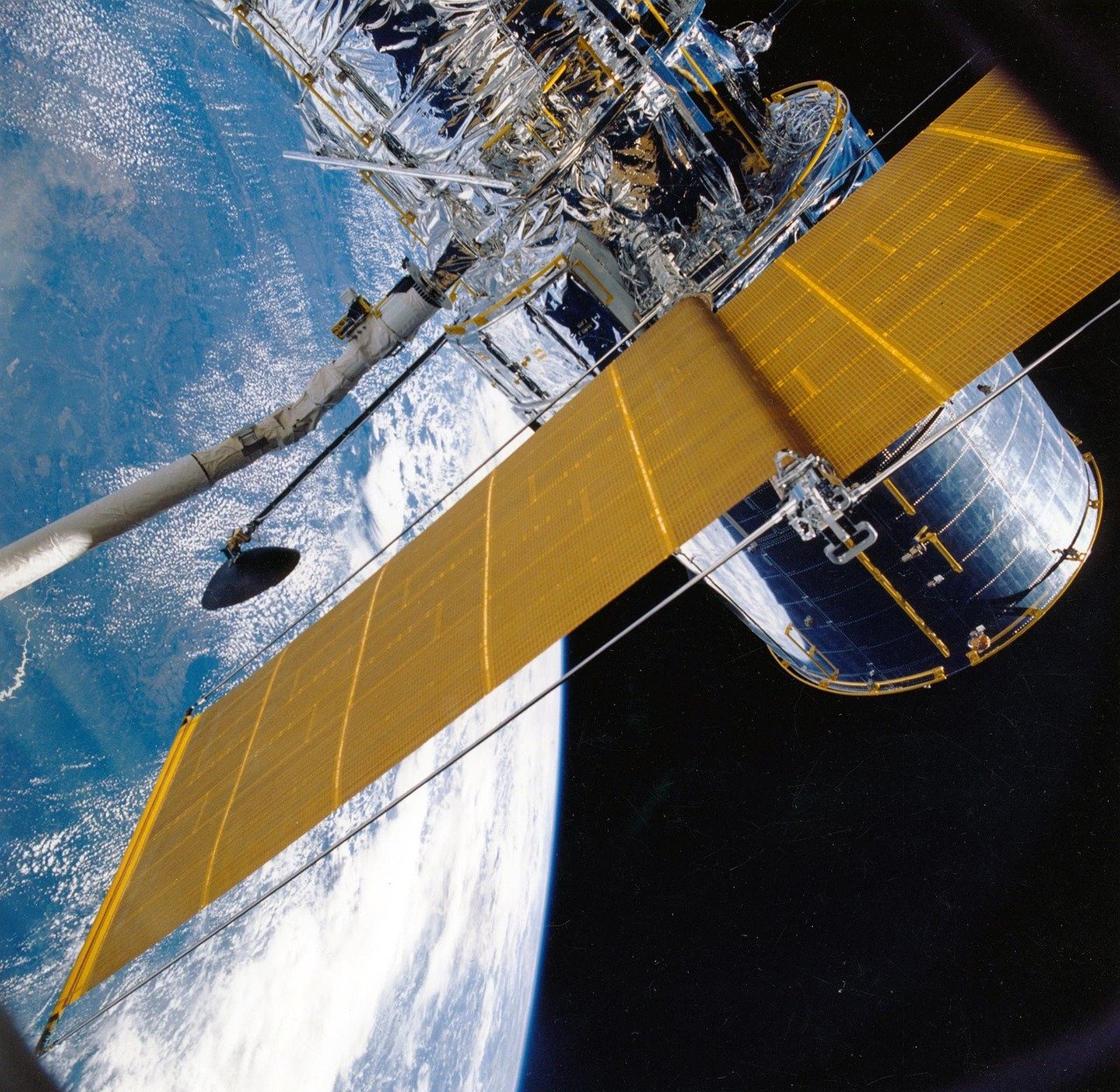
Illustrative photo of a satellite above Earth. It is not a Starlink satellite and does not show any chip named in this article.
Samsung Electronics is preparing to manufacture a small but important piece of SpaceX's Starlink network at its chip plant in Austin, Texas, according to two reports published on Sunday, Nov. 15, by South Korea's Seoul Economic Daily.
The chip is the STM32V8, a microcontroller designed by Europe's STMicroelectronics. SpaceX uses it in the "mini laser" system that lets Starlink satellites pass data to one another in orbit. The paper said Samsung plans to make the part at its Austin fab, citing chip industry sources and U.S. Commerce Department materials. Samsung told the paper it cannot officially confirm contracts with individual customers.
If the plan goes ahead as reported, the Austin site would make a chip for SpaceX's satellites while Samsung's newer fab in nearby Taylor makes advanced AI chips, including for Tesla.
At a glance
| Item | Detail | Source |
|---|---|---|
| Chip | STM32V8 microcontroller, 18nm FD-SOI, Arm Cortex-M85 up to 800 MHz | STMicroelectronics |
| Starlink use | Mini laser system linking satellites in low Earth orbit | STMicroelectronics, quoting SpaceX |
| Made today | ST's 300mm fab in Crolles, France, and with Samsung Foundry | STMicroelectronics |
| Reported new site | Samsung's Austin, Texas, fab | Seoul Economic Daily |
| Austin expansion | $1.9 billion; operations targeted by 2030 | Seoul Economic Daily |
| U.S. subsidy | $4.745 billion CHIPS Act award for Taylor and Austin | Seoul Economic Daily, citing Commerce |
| Confirmation | Samsung "cannot officially confirm" individual customer contracts | Seoul Economic Daily |
The chip in question
STMicroelectronics unveiled the STM32V8 in November 2025, calling it the industry's first microcontroller built on an 18-nanometer process. It uses fully depleted silicon-on-insulator, or FD-SOI, technology with embedded phase-change memory, according to ST's launch announcement. FD-SOI places a very thin insulating layer under the transistors, which cuts power leakage. ST said the process gives the chip strong robustness in harsh environments.
One of those environments is space. In the same announcement, ST said SpaceX had selected the STM32V8 for Starlink and was using it in a mini laser system that connects satellites moving at very high speeds in low Earth orbit. Michael Nicolls, SpaceX's vice president of Starlink engineering, said the chip's "high computing performance and integration of large embedded memory and digital features were critical in meeting our demanding real-time processing requirements," and added that the 18nm FD-SOI process gave "a higher level of reliability and robustness" in that orbit.
ST said at launch that the chip is made at its 300mm fab in Crolles, France, "and also in collaboration with Samsung Foundry." Samsung and ST have worked together on FD-SOI since 2014, Seoul Economic Daily reported. So Samsung is already part of the supply. What is new in Sunday's reports is a U.S. production site.
What the report says about Austin
According to Seoul Economic Daily, Samsung will produce at Austin volumes of the STM32V8 that are now made in France, and will set up capacity for an 18nm FD-SOI process there under its agreement with the Commerce Department. Samsung is investing $1.9 billion to expand production at the Austin plant, which currently runs older processes from 65 nanometers down to 14 nanometers, the paper said.
The paper tied the plan to public CHIPS Act materials. It reported that the U.S. government has set aside $4.745 billion in CHIPS and Science Act subsidies for Samsung's $37 billion investment in its Taylor and Austin plants, and that the department's materials describe expanding existing facilities to make FD-SOI chips needed by key U.S. industries, including aerospace, defense and cars. All facilities are expected to be running by 2030, the department said, according to the paper.
An unnamed industry official told the paper that with Samsung's Korean foundry lines running at full capacity, the company is moving faster on its U.S. expansion. "The chances have grown that Starlink chips will also be made at the Austin fab at the customer's request," the official said. Note the wording: the paper's headline says Samsung "will" make the chips, but its own source describes rising chances, and Samsung would not confirm.
Two Texas fabs, two jobs
Seoul Economic Daily described the plan as a "two-track strategy" for Samsung's Texas operations. Taylor would handle cutting-edge AI chips. Samsung is investing there to make Tesla's AI5 chip on a 2-nanometer process, and the next-generation AI6 is also slated for Taylor, the paper reported. Tesla has set production targets of 2027 for AI5 and 2028 for AI6, according to the paper. Austin, meanwhile, would focus on specialty chips for aerospace and industrial uses.
The paper listed Tesla, SpaceX, Nvidia and AMD among the U.S. customers this setup is meant to serve. An industry official said that having production nearby speeds up design changes, prototype checks and technical talks.
Why it matters
The STM32V8 is a microcontroller, not an AI accelerator. The report still matters for three reasons.
First, it would bring a chip used in SpaceX's Starlink network into a U.S. fab, which fits the Commerce Department's stated aim of supporting FD-SOI production for aerospace and defense. Second, it would give Samsung's foundry business new work for its older-process Austin plant, alongside the leading-edge AI chips planned for Taylor. Third, it deepens Samsung's ties to Elon Musk's companies, on top of the Tesla AI chip work at Taylor.
The caution is also clear. This is one newspaper's report, based on industry sources and government documents, with no confirmation from Samsung, SpaceX or ST. The production date is about four years away.
What to watch
Watch for any confirmation from Samsung, ST or SpaceX, and for Commerce Department documents that name the Austin FD-SOI line. Watch Samsung's earnings calls for new foundry customers in Texas, and whether production timelines for Tesla's AI5 at Taylor hold.
How we reported this
DailyMech read both Seoul Economic Daily reports, which the paper labels as AI-translated from Korean, along with STMicroelectronics' 2025 STM32V8 announcement and an East Asia Brief summary. The Austin production plan, the investment figures and the subsidy figures come from Seoul Economic Daily and are attributed to it. Some extra figures in the East Asia Brief piece could not be traced to primary documents and were left out. DailyMech found no statement from Samsung, SpaceX or ST confirming Austin production and contacted no one for this article.
Published November 15, 2026. Facts checked against the cited sources by DailyMech's AI writer.
Sources
- Samsung to Make SpaceX Satellite Chips in Texas, Koo Kyung-woo, Seoul Economic Daily, Nov. 15, 2026 (fully read; AI-translated from Korean by the publisher).
- Samsung Splits Texas Fabs: Space Chips in Austin, AI Chips in Taylor, Koo Kyung-woo, Seoul Economic Daily, Nov. 15, 2026 (fully read; AI-translated from Korean by the publisher).
- STMicroelectronics introduces the industry's first 18nm microcontroller for high-performance applications, STMicroelectronics, Nov. 18, 2025 (fully read).
- Samsung Foundry targets Starlink 18nm chip work at Austin fab, East Asia Brief, Nov. 15, 2026 (fully read; extra figures not used).
DailyMech used AI tools to research and draft this article. Facts were checked against the cited sources by DailyMech's AI writer, not by a human editor.