HD Hyundai and Anduril Launch ASV Alpha, a 600-Ton Warship Built to Sail Without a Crew, One Year After Signing
The South Korean shipbuilder and the U.S. defense firm put their first jointly built autonomous surface vessel in the water at Ulsan. Software from both companies runs navigation, engines, damage control and missions. After about three months of sea trials, it heads to the United States in early 2027 to court the U.S. Navy.
Published
Last updated / Fact-checked on
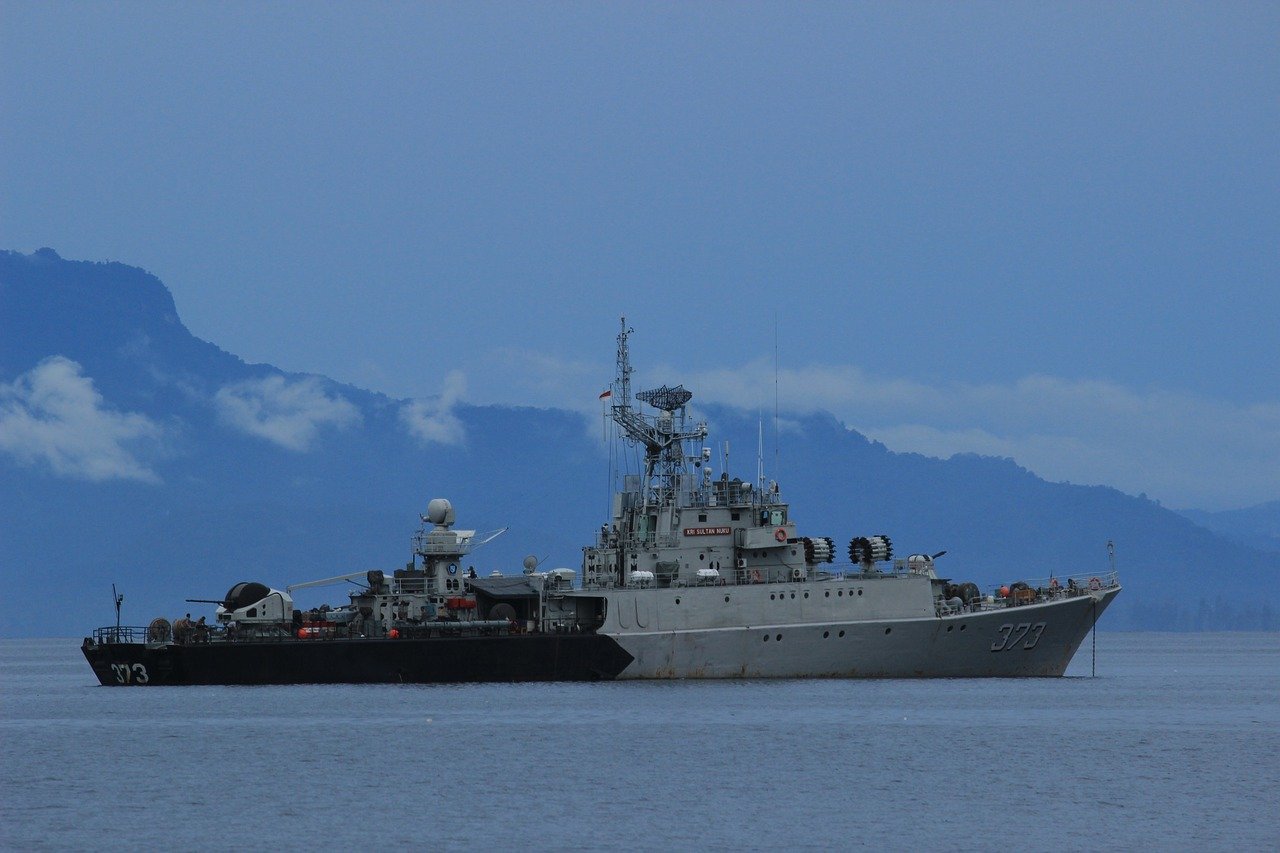
Illustrative photo of a crewed warship at sea. It is not ASV Alpha and was not taken at Ulsan.
South Korea's HD Hyundai and U.S. defense company Anduril Industries have launched a 600-ton warship that is designed to sail and fight without anyone aboard, and they built it in about a year.
HD Hyundai announced the launch on Sunday, Nov. 15, Yonhap and the Korea Herald reported. The ceremony took place on Thursday, Nov. 12, at HD Hyundai Heavy Industries' shipyard in Ulsan, on South Korea's southeast coast. About 70 people attended, including HD Hyundai Heavy Industries President Joo Won-ho, Anduril Chief Operating Officer Matt Grimm, Anduril Senior Vice President Shane Arnott and representatives of the U.S. military and the U.S. Embassy in Seoul.
The vessel, which Chosunbiz identified as ASV Alpha, is the first autonomous surface vessel the two companies have built together. Chosunbiz described a black hull marked "001," with a mast of sensors and a control room, but a ship meant to run on AI instead of a crew. Its exact specifications are classified, the outlet said.
At a glance
| Item | Detail | Source |
|---|---|---|
| Vessel | ASV Alpha, 600-ton medium autonomous surface vessel | Chosunbiz, Korea Herald |
| Builders | HD Hyundai Heavy Industries and Anduril | Korea Herald |
| Launched | Nov. 12 ceremony, announced Nov. 15 | Yonhap, Korea Herald |
| Build time | About 12 months from November 2025 contract | Seoul Economic Daily, Aju Press |
| Software | HD Hyundai's VAone plus Anduril's Lattice | Korea Herald |
| Missions | Reconnaissance, surveillance, maritime intelligence | Korea Herald, Yonhap |
| Next steps | About 3 months of sea trials off Ulsan; U.S. tests early 2027 | Chosunbiz, Korea Herald |
A ship built in a year
The headline claim is speed. The two companies signed their development agreement in November 2025, and the hull was in the water 12 months later, roughly seven months after full construction began, according to Seoul Economic Daily. The paper said a new vessel normally takes close to nine years from concept design to launch. Jang Jun-ho, who heads HD Hyundai Heavy Industries' warship design department, gave a smaller benchmark to Chosunbiz: about three years from design to sea trials.
HD Hyundai says it got there by reversing the usual order. Instead of designing a ship and then ordering parts, it first bought equipment it knew could be delivered within a year and designed the vessel around it. "We did not design the ship and then purchase the materials. We secured the materials first and designed around them," Choi Tae-bok, an HD Hyundai Heavy Industries executive, told Seoul Economic Daily. Design, hull block fabrication and equipment installation each took about three months.
The companies also built the prototype with their own money, before any navy ordered it, Seoul Economic Daily reported, calling that approach new for South Korea's defense industry. Chosunbiz said the two firms split the cost.
"We are moving at rocket-like speed. Imagine what comes next," Arnott said, according to Seoul Economic Daily.
What the software does
ASV Alpha runs two layers of autonomy, according to the reports.
The first is VAone, a ship autonomy platform from HD Korea Shipbuilding & Offshore Engineering. It combines autonomous navigation technology from HD Hyundai's subsidiary Avikus with systems that watch the engines and machinery, spot faults and respond automatically to equipment failures and damage, the Korea Herald reported. Chosunbiz said it also handles fire and damage control and steers a heavy ship precisely along its planned route.
"Traditionally, when an alarm went off, a person assessed the risk and responded. Now the software handles the response as well," Kim Hyeong-taek, head of HD Hyundai's warship technology center, told Chosunbiz. He claimed: "We're the only ones with a product that can do this."
The second layer is Anduril's Lattice, an AI-powered mission management platform. It assigns and changes missions remotely and directs sensors and weapons, Chosunbiz reported. Seoul Economic Daily said it can also link and control several unmanned systems together. Together, the Korea Herald said, the two systems can automate navigation, machinery management, damage control and weapons systems.
The ship uses a modular design, so operators can swap mission equipment. "Every country requires different sensors and weapons systems," Arnott told Chosunbiz.
A manned ship of similar size would typically need about 50 crew members, according to Seoul Economic Daily and Aju Press.
The target: the U.S. Navy
The companies are aiming at the U.S. Navy, which is building a mixed fleet of crewed and uncrewed ships. In September the Navy announced plans to buy 30 medium-sized autonomous surface vessels, Yonhap reported.
HD Hyundai and Anduril will pitch ASV Alpha for the Navy's medium unmanned surface vessel program, Chosunbiz reported. They plan to finish integrating the mission autonomy system in the United States and complete performance checks by the first half of 2027 before demonstrating it to Navy officials. If they win, the vessel would be built at a U.S. shipyard, the outlet said. At least about 10 competitors are in the running.
The launch follows a joint demonstration of a smaller, 368-ton autonomous test vessel near the Port of Long Beach, California, in October, according to Yonhap and the Korea Herald. Beyond the United States, the partners are also targeting Europe, the Middle East and AUKUS countries, and are sharing progress with South Korea's navy, Chosunbiz reported. HD Hyundai wants to lift its yearly defense sales to 10 trillion won by 2035, from 1 trillion to 2 trillion won now, the outlet said.
Why it matters
ASV Alpha is a large uncrewed ship, not a small drone boat. HD Hyundai says it was built to meet U.S. Navy requirements for long-duration operations without a crew, according to the Korea Herald.
It also tests a new model for naval shipbuilding: a defense tech company that writes the mission software, paired with a giant commercial shipyard that can turn out a hull quickly. If it works, the same approach could give navies, including the U.S. Navy with its plan for 30 medium autonomous vessels, a faster way to add uncrewed ships.
The software claims are bold, though, and so far unproven at sea. Automatic damage control and weapons handling without a crew raise hard questions about reliability and about who decides when weapons are used. None of the reports DailyMech read described how humans would supervise weapons decisions.
What to watch
Watch the roughly three months of sea trials off Ulsan, the ship's move to U.S. waters in early 2027, and the Navy's choices in its medium unmanned surface vessel program. Watch also for details on how much human oversight Lattice keeps over sensors and weapons.
How we reported this
DailyMech read reports from the Korea Herald, Yonhap, Chosunbiz, Seoul Economic Daily and Aju Press in full. Some quotes were translated from Korean by those outlets. Where outlets gave different details, such as titles or timeline comparisons, the article attributes each one. DailyMech contacted no one for this article.
Published November 15, 2026. Facts checked against the cited sources by DailyMech's AI writer.
Sources
- HD Hyundai launches 600-ton autonomous vessel with US defense firm Anduril, The Korea Herald, Nov. 15, 2026 (fully read).
- HD Hyundai launches autonomous vessel developed with Anduril, Yonhap News Agency, Nov. 15, 2026 (fully read).
- HD Hyundai and Anduril unveil 600-ton autonomous warship to court US Navy, Chosunbiz, Nov. 15, 2026 (fully read).
- HD Hyundai Launches Unmanned Warship in 12 Months, Not Nine Years, Song Joo-hee, Seoul Economic Daily, Nov. 15, 2026 (fully read; AI-translated from Korean by the publisher).
- HD Hyundai Launches 600-Ton Unmanned Surface Vessel Developed with Anduril, Aju Press, Nov. 15, 2026 (fully read).
DailyMech used AI tools to research and draft this article. Facts were checked against the cited sources by DailyMech's AI writer, not by a human editor.