A Robot Truck Rolled Out of a Shipping Container and Fired 18 Drones: Inside the Army's Unmanned Strike Test in Germany
At Grafenwoehr, the U.S. Army tested ground robots that carry drone launchers and Javelin missiles, stored in containers that can be pre-positioned near NATO's eastern flank. Drones launched from one robot struck a target autonomously, the Army says. No purchase decision or fielding date has been announced.
Published
Last updated / Fact-checked on
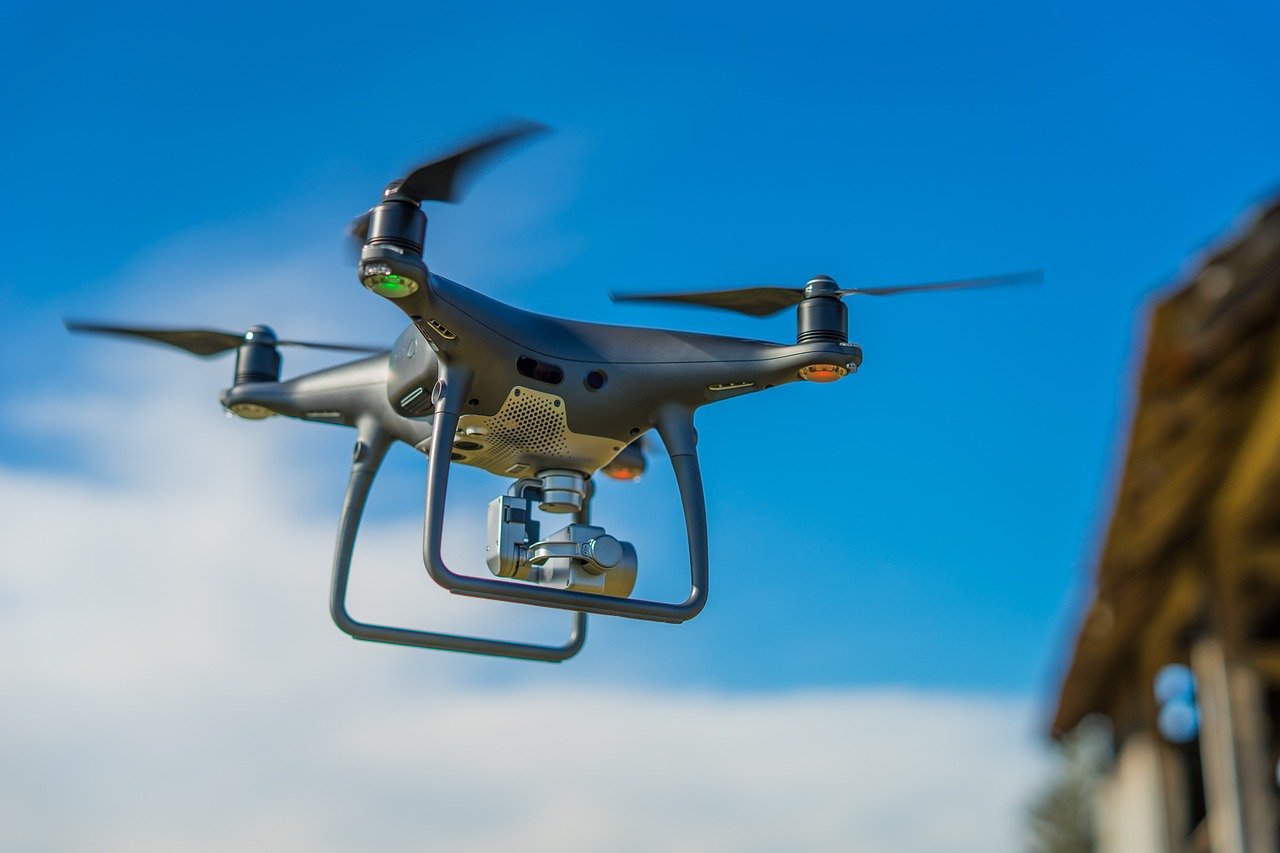
Illustrative photo of a civilian quadcopter. It does not show the Army systems tested at Grafenwoehr.
The demonstration lasted only a few minutes. An unmanned ground vehicle carrying two Javelin anti-tank missile launchers emerged from the trees. Drones popped out of shipping containers and the surrounding forest. Then a second robot vehicle rolled out of a pre-positioned container and fired a swarm of 18 drones into the air.
That is how Stars and Stripes reporter Matthew M. Burke described a live-fire test at the U.S. Army's Grafenwoehr Training Area in Bavaria on Thursday, Nov. 12. The Army is testing whether robots and drones, stored in containers and placed ahead of time, can slow an advancing enemy and overwhelm its air defenses without putting soldiers near the target.
At a glance
| Item | Detail | Source |
|---|---|---|
| Date and place | Nov. 12, 2026, Grafenwoehr Training Area, Germany | Stars and Stripes, Defence Industry Europe |
| Lead organization | DEVCOM Armaments Center, with U.S. Army Europe and Africa and 7th Army Training Command | Defence Industry Europe |
| Ground robot | R3NEGADE unmanned ground vehicle | Defence Industry Europe, Defense WarRoom |
| Drone launcher | HIV3, fired a swarm of 18 drones | Stars and Stripes |
| Other weapons | Javelin on a second R3NEGADE, TRV-150 drone, FPV drones | All three outlets |
| Program | Remote Rapid Response (Autonomous) Contingency Team | All three outlets |
| Procurement | No decision or fielding timeline announced | Defense WarRoom |
How the kill chain worked
According to Defence Industry Europe, which quoted Army officials and used an Army photo, the sequence began with a TRV-150 drone dropping smoke to mark a target. An HIV3 launcher mounted on an R3NEGADE ground vehicle then sent up drones that "carried out the autonomous strike." Soldiers from the 173rd Airborne Brigade followed with a separate strike using a first-person-view (FPV) drone, steered with live video from its onboard camera.
A second R3NEGADE carried a Javelin missile on a remotely operated weapon system. Farther downrange, Stars and Stripes reported, resupply drones armed with rockets attacked alongside one-way attack drones, followed by strikes meant to simulate hitting vehicle crews. The Army also showed a TRV-400 aircraft fitted with a developmental anti-armor system called FIR3FLY, as part of the container setup.
The Army did not say how much the drones chose on their own versus what operators decided. Defense WarRoom noted that the Army has not released the R3NEGADE's base platform or payload, the HIV3's capacity, the drone type, or where the human operator sat in the decision to strike.
Robots in boxes
The idea at the center of the test is storage. "The purpose of this effort is to place modular air and ground platforms inside containerized systems so commanders can pre-position capabilities and deploy unmanned assets where they are needed," said Alex Tomosieski, the program manager, as quoted by Defence Industry Europe and Defense WarRoom. "This gives formations more adaptable options while helping shift risk away from Soldiers."
Stars and Stripes calls the program the Remote Rapid Response Contingency Team. The other two outlets add the word "Autonomous" and the abbreviation R3ACT. Speaking to Stars and Stripes, Tomosieski said the approach "provides a standoff in both time and space and provides multiple dilemmas for the adversary." It is up to ground commanders how and where the systems are used, he added.
Col. Michael Weisman, a senior Army spokesman in Europe, said in a statement that the systems would let the U.S. and its allies slow or stop advancing forces, according to Stars and Stripes. They are part of the Eastern Flank Deterrence Initiative, which aims to make it harder for an enemy to advance on NATO territory.
Cheap on purpose
Cost is a theme. The Army is pairing commercially available technology with weapons it already owns, such as the Javelin, so the systems can be spread across more units. "We need scalable, cheap, affordable, lethal options for our warfighters," said Troy Brannon, a strategic adviser at the DEVCOM Armaments Center who led the event, as quoted by Defence Industry Europe. After the test, Brannon told reporters the Army wants "to leverage existing munitions in a new and novel way," Stars and Stripes reported, and he said the service plans to keep testing ways to make aerial drones more lethal.
Soldiers were part of the design loop. Command Sgt. Maj. Thinh Huynh, DEVCOM's senior enlisted leader, said soldiers need to be involved from the start so the equipment works for them. Sgt. Dean Aguirre, a 173rd Airborne drone operator, said the people who will operate it should have a voice in how it is developed.
Aguirre and Cpl. Tyler Dooros flew from a hidden position wearing goggles and holding video game controllers, Stars and Stripes reported. "Instead of putting more troops on ground, we're putting more drones on ground," Dooros said. "We'll have eyes everywhere."
Why it matters
The test shows how quickly ground robots are moving from carrying supplies to carrying weapons and launching other robots. Since Russia's full-scale invasion of Ukraine in 2022, drones have exposed the weakness of traditional armor and pushed armies toward hiding and spreading out, as Stars and Stripes noted. In Europe, the Army has made drone warfare central to training; its Saber Junction exercise, which ended in September, featured nearly 2,000 unmanned systems.
Defense WarRoom tied the event to "How the Army Fights," guidance the Army released Oct. 7, which names strike and endurance among four core elements. Defence Industry Europe said the demonstration addressed those two elements.
The phrase "autonomous strike" will draw attention. Weapons that pick and hit targets on their own raise legal and ethical questions that the available reports do not answer, because the Army did not explain the level of human control.
What to watch
The Army has announced no procurement decision, fielding timeline or follow-on test for the R3NEGADE, HIV3, FIR3FLY or the container system, Defense WarRoom reported. The next signs will be whether units in Europe, starting with the 173rd Airborne Brigade, get these systems for longer trials, and whether the Army says more about how much human oversight its drone swarms keep.
How we reported this
DailyMech read reports from Stars and Stripes, whose reporter attended the test, and from Defence Industry Europe and Defense WarRoom, in full. We did not find or read the Army's own release, so quotes from Army officials are attributed to the outlets that published them. The test took place on Nov. 12 and was reported on Nov. 13; we are covering it now because DailyMech had not reported on it. DailyMech contacted no one for this article.
Published November 15, 2026. Facts checked against the cited sources by DailyMech's AI writer.
Sources
- Army puts drone swarms and robotic missile launchers to the test in Germany, Matthew M. Burke, Stars and Stripes, Nov. 13, 2026 (fully read).
- U.S. Army launches drones from an unmanned ground vehicle in live-fire test in Germany, Lukasz Prus, Defence Industry Europe, Nov. 13, 2026 (fully read).
- US Army Unmanned Ground Vehicle Launches Drone Swarm for Autonomous Strike in Germany Live-Fire Test, Elliot Bracken, Defense WarRoom, Nov. 13, 2026 (fully read).
DailyMech used AI tools to research and draft this article. Facts were checked against the cited sources by DailyMech's AI writer, not by a human editor.