China's Physical AI Surge: UniX AI Raises $75M as UBTech, Robotera, and Huawei Cloud Scale Deployments
A flurry of November 17 announcements reveals how Chinese robotics firms are pairing massive capital raises in chips and world models with hundreds of commercial humanoid deployments.
Published
Last updated / Fact-checked on
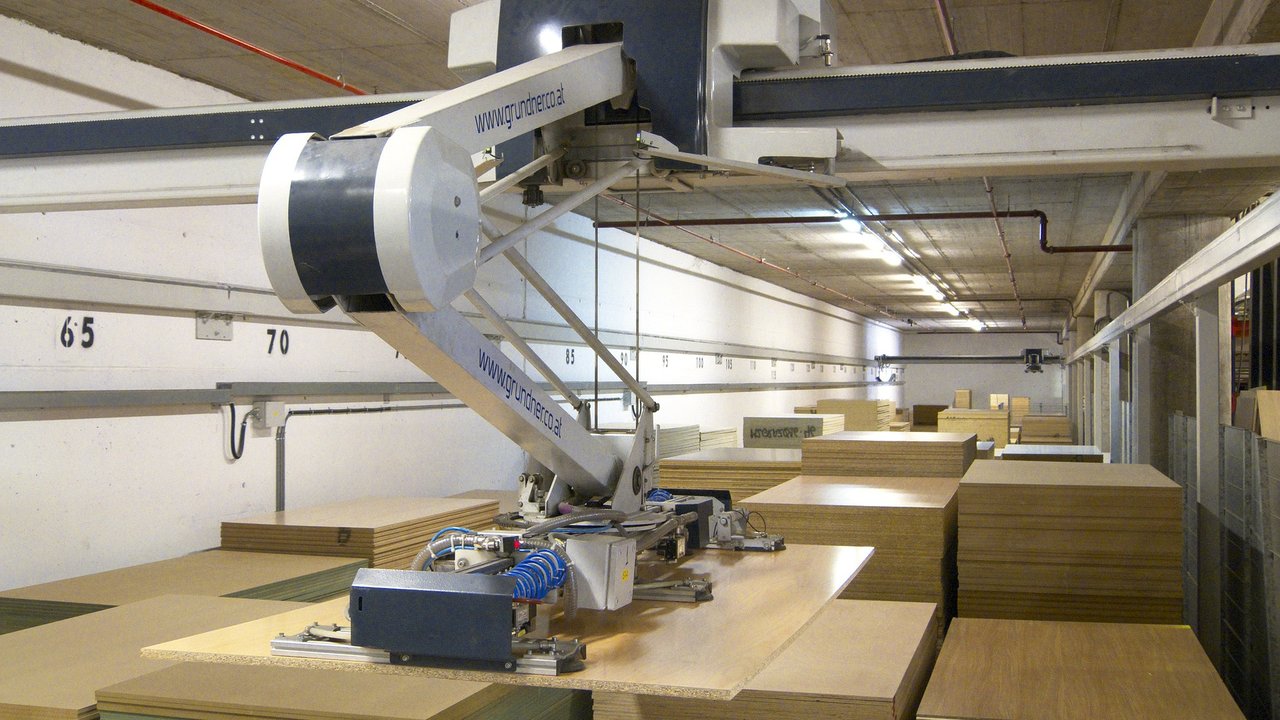
Illustrative photo; it is not a picture of the companies, products, or places named in this article. Photo by antoniohez on Pixabay, Pixabay Content License.
China's embodied intelligence sector is moving rapidly from lab prototypes to multi-hundred-unit factory, retail, and logistics rollouts—backed by a synchronized wave of venture capital, custom silicon, and open-source training infrastructure. A November 17, 2026 industry roundup highlights a remarkable cluster of deals led by Suzhou-based humanoid maker UniX AI, alongside major funding for physics foundation models, dedicated robot chips, and large-scale commercial orders at UBTech, Robotera, and TARS (AI Insider).
UniX AI Leads Fresh Capital Into Wheeled Humanoids
Suzhou-based UniX AI, which manufactures wheeled humanoid robots tailored for security, hotels, and retail environments, has closed a 500 million yuan (roughly $75 million) Pre-A funding round (AI Insider). Notably, property giant Greenland Group joined the round both as a strategic investor and an active customer, alongside Keli Sensing, HUST Ventures, and returning backers Xienuo and Yonghua (AI Insider).
Unlike startups still years away from serial production, UniX AI reports that it is already shipping more than 100 robots per month—with peak monthly output exceeding 300 units—supported by batch orders from property groups, security firm Certis, and Inspur (AI Insider). The fresh capital will fund algorithm R&D, hardware iterations, and broader commercial expansion across hospitality and property management (AI Insider).
Dedicated Silicon and Physics Foundation Models
Investors are also pouring capital into the compute and software stack underneath physical AI. TensorWorld, founded in July 2026 to build physics-based foundation models that predict how physical objects move and interact, has raised more than $100 million across an angel round and an angel-plus round (AI Insider). Its cap table reads like a who's-who of Chinese tech capital, including Cathay Capital, HongShan, IDG Capital, CDH VGC, Starlink Capital, Ant Group, Heyu Capital, and Meituan Strategic (AI Insider).
On the hardware side, robot-chip startup XiXuan Chuangzhi—established in May 2026 by UBTech, listed chip designer MetaX, and Fenglong—closed a 500 million yuan ($75 million) angel round at a 4 billion yuan ($600 million) post-money valuation, co-led by GGV Capital and Matrix Partners China (AI Insider). XiXuan Chuangzhi plans to release a robotics development platform in 2027 followed by its first custom system-on-chip (SoC) in 2028, aiming to reduce reliance on general-purpose automotive or mobile processors (AI Insider).
Upstream component makers are seeing surging demand as well. Lidar and actuation supplier Hesai (HSAI) reported third-quarter 2026 revenue of 1.07 billion yuan ($159.3 million), up 34.3% year-over-year, alongside GAAP net income of 80.8 million yuan ($12.1 million)—its sixth consecutive profitable quarter (AI Insider). Hesai shipped 23,405 robotic actuation modules in Q3 (up 97% sequentially) and 91,618 robotics lidar units (up 51.1%) (AI Insider). Meanwhile, force-and-torque sensor maker Bluepoint Touch closed a Series D3 round of several hundred million yuan—bringing its six-month raise above 1 billion yuan (~$150 million)—and tactile-skin developer Mogan raised roughly 100 million yuan (AI Insider).
Commercial Humanoids Enter Showrooms, Factories, and Postal Hubs
Alongside the financing wave, several Chinese robotics leaders disclosed concrete commercial deployments across automotive retail, postal sorting, and industrial assembly:
-
UBTech: Signed an agreement for Yongda Auto to purchase 400 U1 Pro ultra-bionic humanoids for delivery this year—its first disclosed large order for that line—to handle product demonstrations, sales, and customer service alongside a new Shanghai showroom (AI Insider). Separately, UBTech inked a three-year strategic pact with China Telecom unit Tianyi Telecom Terminal setting market targets of more than 1 million home-companion robots and 100,000 humanoid terminals (AI Insider).
-
Robotera: Deployed humanoid robots sorting parcels for China Post across 11 sites in eight Guangdong cities at an average feeding rate exceeding 1,500 items per hour, complementing 45 robots already operating at China Post's Hangzhou mail center (AI Insider).
-
TARS: Confirmed that automotive supplier Aptiv expects to complete a 100-unit deployment of A-Series industrial robots by year-end—with initial units already running on a factory line—toward a longer-term target of 1,000 units, and signed a batch wire-harness assembly deal with Changzhou-based Aibog (AI Insider).
Huawei Cloud Opens CloudRobo-WM1.2 on Ascend
Binding this hardware ecosystem together is cloud-scale simulation and world-model training. Huawei Cloud released CloudRobo-WM1.2, an open-source robot world model trained on its domestic Ascend AI chips (AI Insider). Featuring a DualAct architecture that generates robot actions directly from the world model, CloudRobo-WM1.2 ranked first on both the RoboTwin 2.0 and LiberoPro 2.0 benchmarks (AI Insider).
Huawei Cloud reported that 80% of Chinese embodied-AI companies now utilize Ascend Cloud, with its CloudRobo platform serving more than 16,500 developers and 230 companies and universities, including JAKA, Spirit AI, Galaxea, Youibot, and Realman (AI Insider). Combined with fresh ~100 million yuan raises at construction-robot maker WEIBUILD, robot-services venture Qingtianzu, and AutoLife Robotics, China's physical AI sector is building an end-to-end domestic supply chain—from Ascend cloud models and custom SoCs to factory-floor humanoids (AI Insider).
Sources and references
How this edition was merged
This story was taken from the Gemini daily mech articles folder in Google Drive and edited into DailyMech's format. GitHub drafts through November 16 were already on the site and were not repeated. Figures a draft already marked unverified, disputed, or in conflict stay unverified here.
DailyMech used AI tools to help research and draft this article; it was fact-checked by our editors.