Remedy Robotics Raises $62 Million to Take Its Remote-Controlled Stroke Robot Into a Pivotal Trial Across the University of California
The San Francisco startup's N1 System steers catheters through blood vessels to the brain and is built to run on site, from another hospital or, eventually, on its own. DCVC led the Series B, with UC Investments and Australian pension fund Hostplus joining. The robot is not yet approved for clinical use anywhere.
Published
Last updated / Fact-checked on
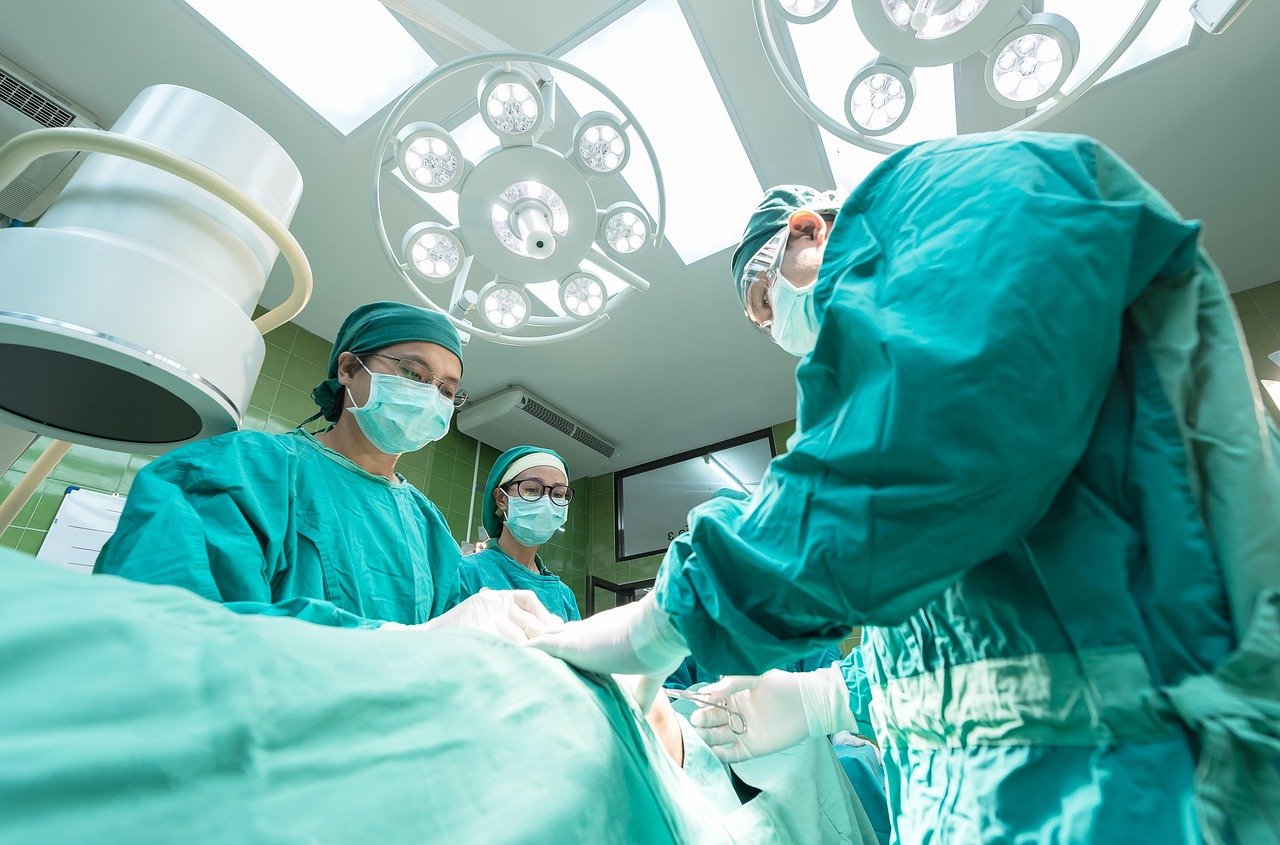
Illustrative photo of a surgical team in an operating room. It does not show Remedy Robotics' N1 System.
When a blood clot blocks an artery in the brain, the best treatment is to go in and pull it out. The problem is that only a small number of specialists at a small number of hospitals can do it. Remedy Robotics wants a robot to close that gap, and on Monday, Nov. 16, it said it had raised $62 million to try.
The San Francisco company announced a Series B led by DCVC. New investors include UC Investments, the University of California's investment office, Skip Capital and Hostplus, which Remedy describes as one of Australia's largest pension funds. Existing backers Build Collective by Tony Fadell, Blackbird, Divergent Capital and KdT Ventures put in more. The company did not disclose a valuation.
"Endovascular intervention is the gold standard treatment for stroke and many cardiovascular emergencies, yet access remains limited to a small number of hospitals," said Dr. David Bell, Remedy's CEO and co-founder, in the announcement. "For these time-critical conditions, that's devastating."
At a glance
| Item | Detail | Source |
|---|---|---|
| Round | $62 million Series B | Remedy Robotics |
| Lead | DCVC | Remedy Robotics |
| New investors | UC Investments, Skip Capital, Hostplus | Remedy Robotics |
| Product | N1 System, an AI-enabled robot for endovascular procedures | Remedy Robotics |
| Next step | Planned pivotal trial with the University of California; work toward FDA approval for neurovascular use | Remedy Robotics |
| Status | Under development; not for sale or clinical use in any jurisdiction | Remedy Robotics |
| Team | About 25 people | IEEE Spectrum |
What the N1 does
Endovascular procedures are done from inside the blood vessels. In a thrombectomy, the standard operation for strokes caused by clots, a surgeon threads a thin wire and a hollow tube called a catheter from a small opening in the groin up to the brain, then removes the clot. IEEE Spectrum, which visited Remedy's office, described how the surgeon works almost blind, guided only by live X-ray images that do not show soft tissue, and how turning the wire left can rotate it right inside the body.
Remedy's N1 System puts that work on a robotic arm. According to IEEE Spectrum, its catheter is steerable, so it does not need a guide wire, and markings on the catheter let a computer-vision system track its rotation. When the operator asks to go right on the X-ray image, the software translates that into the correct motion. A CT scan can be overlaid on the X-ray to show vessels that are otherwise invisible.
The company's release says machine-learning software analyzes images taken before surgery, simulates the case in advance, aligns 3D scans with live 2D images in real time and can complete entire procedures robotically. Remedy says the system is designed for on-site, remote or autonomous operation across neurovascular, coronary and peripheral vascular care. Unite.AI reported that Remedy's technical description lists more than 30 target cardiovascular conditions.
What the money is for
The Series B is tied to clinical steps, not a product launch. Remedy said the funding will support a planned pivotal clinical trial in partnership with the University of California and progress toward FDA approval for neurovascular intervention. It will also place prototype N1 systems with clinical partners, including SVIN Mission Thrombectomy, a global stroke-access initiative that picked Remedy as its exclusive robotics partner, and the Australian Stroke Alliance.
"This funding will allow our world-leading hardware, software, and machine learning teams to progress the N1 system towards clinical trials and potential FDA approval, while also developing additional features including full autonomy," said Jake Sganga, Remedy's CTO and co-founder. He said Remedy has worked with UC clinical experts since 2021 and plans to hold the pivotal trials across the UC network.
IEEE Spectrum added detail on the order of events. Bell told the magazine that UC will host the clinical studies within a year, and that the first trials will be on-site elective procedures, such as treating unruptured aneurysms, before moving to remote surgery in Australia or within the UC system near the end of 2027. Sganga argued the robot has to prove useful with the surgeon in the room first. "Otherwise, doctors simply won't use the system," he told the magazine.
The Toronto procedures
Remedy's strongest evidence so far comes from Canada. In October 2025, the company said it completed the world's first fully remote neurointerventional procedures. Unite.AI, citing Remedy, reported that neurosurgeon Vitor Mendes Pereira and his team operated robotically from St. Joseph's Health Centre while the patients were at St. Michael's Hospital across Toronto, with no interventionist at the bedside.
IEEE Spectrum reported that those procedures were diagnostic imaging of the blood vessels, called angiograms, not clot removals, and that they were finished nearly twice as fast as the current standard. The magazine also noted that, beyond one-time demonstrations, no robotics company has full regulatory approval for telesurgery and no patient has been operated on remotely in the United States.
The access problem
Remedy frames the market in stark terms. Its release says just 2.8 percent of eligible stroke patients worldwide have access to endovascular treatment, and that cardiovascular disease kills nearly 20 million people a year. IEEE Spectrum offered a different figure: only about 1 in 10 patients eligible for thrombectomy receive one. The numbers measure different things, but both point to the same gap.
The company says it works with more than 100 hospitals worldwide and holds 48 patents, including what it calls foundational patents on machine learning in surgical robotics.
Why it matters
Remedy is betting on something harder than a robot that assists a surgeon standing next to the patient: letting a specialist treat a stroke patient in a hospital that has no specialist, and in time letting the robot handle more of the work itself. If it works, the limiting factor in stroke care could shift from where the surgeon lives to how good the network connection is.
The hurdles are large. Remote surgery needs reliable networks, hospital staff trained to set up the robot, regulators willing to approve a new way of operating and, above all, trial data showing patients do better. Remedy itself says the N1 is not available for sale or clinical use in any jurisdiction.
What to watch
Watch for the start date and design of the UC pivotal trial, any FDA filing for neurovascular use, the first prototype placements with SVIN and the Australian Stroke Alliance, and whether the planned late-2027 move to remote surgery holds.
How we reported this
DailyMech read Remedy Robotics' press release, Unite.AI's report and IEEE Spectrum's feature on the company in full. The IEEE Spectrum page as read did not show a publication date. Figures and quotes are attributed to the source they came from. DailyMech did not see the N1 System and contacted no one for this article.
Published November 16, 2026. Facts checked against the cited sources by DailyMech's AI writer.
Sources
- Remedy Robotics Raises $62 Million Series B to Bring Life-Saving Cardiovascular Intervention to Patients Everywhere, Remedy Robotics via PR Newswire, Nov. 16, 2026 (fully read).
- Remedy Robotics Raises $62M Series B to Advance AI Cardiovascular Care, Evan Mercer, Unite.AI, Nov. 16, 2026 (fully read).
- Can Robots Bring Stroke Surgery to Remote Hospitals?, Max G. Levy, IEEE Spectrum (fully read; date not shown on page as read).
DailyMech used AI tools to research and draft this article. Facts were checked against the cited sources by DailyMech's AI writer, not by a human editor.