AWS CEO Matt Garman Dismisses AI Data Centers in Space as Impractical, Doubling Down on Ground Infrastructure
Pointing to launch economics, vacuum heat dissipation, and hardware refresh cycles, Amazon's cloud chief pivots back to Virginia and Oregon expansions, Graviton inference silicon, and 40%-less-water liquid cooling.
Published
Last updated / Fact-checked on
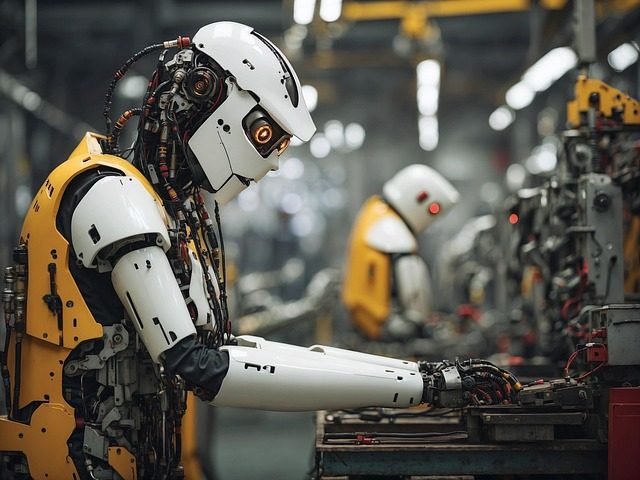
Illustrative photo; it is not a picture of the companies, products, or places named in this article. Photo on Pixabay, Pixabay Content License.
As aerospace and AI ventures pitch orbital server constellations as an escape hatch from terrestrial power and permitting bottlenecks, Amazon Web Services CEO Matt Garman is drawing a hard engineering line. In an official statement released on November 13, 2026, Garman publicly dismissed the concept of deploying AI data centers in orbit, calling the idea both economically and physically impractical, according to Emergent.
The timing of Garman's remarks is notable. They landed the same week AWS announced fresh expansions to its flagship Virginia and Oregon data center clusters—and amid heightened industry debate over whether space-based compute can ever compete with ground-based hyperscale buildouts. Rather than treating orbital compute as a serious near-term alternative, Garman used the pushback to underscore AWS's terrestrial roadmap: next-generation Graviton processors tuned for AI inference and liquid-cooling pilots engineered to slash water use.
The Physics and Economics Case Against Orbit
Garman's critique rests on four foundational constraints that separate orbital server proposals from commercial cloud economics, as detailed by Emergent:
Launch Cost Per Kilogram: Even with reusable launch vehicles, putting heavy racks, power electronics, and radiation-shielded hardware into orbit still costs thousands of dollars per kilogram—an immediate capital penalty before a single token is generated.
Heat Dissipation in a Vacuum: Hyperscale AI accelerators generate immense thermal loads that terrestrial facilities shed using air or liquid cooling loops. In the vacuum of space, convective air cooling does not exist, forcing orbital designs to rely on massive radiative surfaces that add mass, complexity, and failure modes.
Maintenance and Hardware Refresh Cycles: AI infrastructure evolves on aggressive 12-to-24-month silicon cycles. Ground data centers allow technicians to swap failed DIMMs, replace liquid-cooling manifolds, or upgrade entire accelerator generations in days. In orbit, hardware faults cannot be serviced easily without costly retrieval missions or writing off obsolete satellites.
Latency and Radiation Overhead: Real-time AI inference workloads frequently demand millisecond response times that conflict with round-trip signal travel to and from low Earth orbit, while radiation shielding and orbital debris risks add further weight and reliability penalties.
Taken together, Garman argued that the cost-benefit math for space-based AI data centers fails on every operational metric compared with upgrading infrastructure on Earth.
Why Space Keeps Coming Up: Grid Strain and Local Pushback
If the physics are so unforgiving, why has orbital computing gained fresh attention in 2026? Because building AI data centers on the ground has become an acute energy and political bottleneck.
As Emergent notes, surging power demand from AI training and inference clusters has strained regional electric grids, prompting some local jurisdictions to impose permitting moratoriums on new data center construction. Community groups have increasingly challenged hyperscale projects over water consumption for evaporative cooling, environmental impact, and local grid burdens.
Those terrestrial pressures have created an opening for aerospace startups pitching niche satellite edge computing—such as onboard processing for remote sensing or maritime connectivity—as well as bolder proposals for orbital AI factories. Garman's statement draws a clear boundary between those specialized edge applications and hyperscale cloud AI: while small satellites may process local sensor data in orbit, general-purpose AI training and inference belong on Earth.
AWS's Ground Roadmap: Graviton Inference and 40% Less Water
Rather than looking skyward, AWS is betting that silicon efficiency and thermal engineering will unlock terrestrial capacity faster and cheaper. Alongside his November 13 remarks, Garman pointed to two core pillars of AWS's ground strategy, per Emergent:
Inference-Optimized Graviton Silicon: AWS is advancing next-generation custom Graviton processors tailored for AI inference workloads, aiming to extract higher performance per watt within existing power envelopes.
Low-Water Liquid Cooling: AWS is running liquid-cooling pilots that reduce water consumption by 40% compared with traditional air-cooled systems—directly targeting one of the biggest community objections to new data center permits.
Regional Cluster Expansion: AWS continues to pour capital into core terrestrial hubs, including the newly announced expansions in Virginia and Oregon, alongside multi-billion-dollar renewable energy contracts and compact modular facility designs.
A Broader Cloud Consensus—For Now
Garman's stance mirrors the broader capital allocation of America's largest cloud providers. As Emergent observes, Microsoft, Google, and Meta have all committed multi-billion-dollar investments to terrestrial data centers for 2026 and 2027, focusing on power density, liquid cooling, and energy procurement rather than orbital deployment. Aside from exploratory academic partnerships, none of the major hyperscalers has committed production cloud budgets to space-based AI clusters.
For enterprise AI buyers planning 2027 and 2028 capacity, Garman's message is pragmatic: relief from AI compute bottlenecks will come from better chips, closed-loop cooling, and grid integration on the ground—not from servers in orbit.
Sources
- Emergent: AWS CEO Dismisses AI Data Centers in Space as Impractical
- Pixabay Image: AI Infrastructure Concept (Alexandra Koch)
How this edition was merged
This story combines overlapping drafts prepared for DailyMech from the daily-mech GitHub repositories and the Claude and Gemini Drive folders. Where those drafts disagreed, the more specific figure is attributed to the source named in the copy. Figures that a draft already marked unverified stay unverified here.
DailyMech used AI tools to help research and draft this article; it was fact-checked by our editors.